logo
PJSC Rosneft Oil Company
logo
Integrated Energy
/ Moscow
26 Bolshaya Gruzinskaya Ulitsa
https://www.rosneft.com/
Insight Articles
#EN126

Description

Public Joint-Stock Company (PJSC) “Rosneft Oil Company” (Russian name: ПАО «Нефтяная компания «Роснефть») was established by government decree as a state enterprise in 1993, transformed into an open joint-stock company in September 1995, and re-registered as a public joint-stock company (PJSC) under Federal Law 208-ФЗ in May 2014.


Ownership

Full shareholding timeline:

Period Russian
State (Rosneftegaz)
BP QH Oil (Qatar/
Glencore)
Float / Other Notes
1995–2004 ~100% State-owned, no external shareholders
Jul 2006 ~75% ~25% IPO on London Stock Exchange (GDR listing) 
Mar 2013 ~69.5% 19.75% ~10.75% BP acquires 19.75% stake as part of TNK-BP acquisition by Rosneft; BP receives $12.5bn cash + shares 
Dec 2016 50.00% (via Rosneftegaz) 19.75% 19.5% ~10.75% Privatisation: 19.5% sold to QH Oil Investments LLC (consortium of Qatar Investment Authority + Glencore) for €10.2bn — Rosneftegaz reduces from ~69.5% to 50%+1 share 
Sep 2022 40.40% (Rosneftegaz) 19.75% 18.46% ~21.4% Rosneftegaz further reduced; treasury shares (RN-NeftKapitalInvest 9.6% + RN-Capital 0.76%) built up; BP freezes its stake post-Ukraine invasion but retains legal ownership 
2022–present 40.40% 19.75% (frozen) 18.46% ~21.4% BP declared intent to divest in Feb 2022 post-Ukraine invasion but has been unable to sell; stake legally retained 


Current Structure (as last officially published, July 2021 — no update since)

Shareholder Stake
JSC Rosneftegaz (100% Russian state) 40.40%
BP Russian Investments Ltd. 19.75%
QH Oil Investments LLC (Qatar / Glencore) 18.46%
LLC RN-NeftKapitalInvest (treasury) 9.60%
National Settlement Depository (float) 10.70%
LLC RN-Capital (treasury) 0.76%
Russian Federation direct <0.01%
Other minorities 0.33%


Strategic Status

Rosneft holds the status of a strategic enterprise of the Russian Federation, conferring direct state oversight and protection from hostile acquisition — a designation that also underpins its privileged access to Arctic and offshore licence areas reserved for national champions. The company commands a fully integrated value chain spanning exploration, appraisal, development, production, refining, petrochemical processing, pipeline and marine transportation, retail marketing, and export sales of crude oil, natural gas, LPG, and the full spectrum of refined and petrochemical products.

Rosneft's operational footprint spans all major Russian hydrocarbon provinces — Western Siberia, Eastern Siberia, the Volga-Ural basin, Krasnodar Krai, the Arctic shelf, and the Russian Far East — and extends to more than 20 countries across the Middle East, Latin America, Southeast Asia, Africa, and Europe, through upstream equity participations, technical service agreements, and downstream assets including its German refinery portfolio.


Production & Reserves

Rosneft ranked as the world's largest publicly listed oil producer by output in 2024, delivering total hydrocarbon production of 255.9 million tonnes of oil equivalent (Mtoe), comprising approximately 184 million tonnes of liquids and 87.5 billion cubic metres (bcm) of natural gas. The liquids figure alone — equivalent to roughly 3.7 million barrels per day — exceeds the entire output of several OPEC member states.

Proven and probable (2P) reserves stood at 11.4 billion tonnes of oil equivalent under PRMS classification, providing a reserve life index well in excess of 20 years at current production rates. The company achieved a reserve replacement ratio above 100% in 2024, confirming that new discoveries and revisions more than offset production drawdowns — a metric of particular strategic significance given Western sanctions limiting access to Western oilfield services and technology.


Refining & Marketing

Rosneft's downstream infrastructure is the largest in Russia, encompassing 13 major refineries3 petrochemical complexes4 gas processing plants3 catalyst manufacturing units, and a dedicated services entity. Combined crude throughput in 2024 reached 82.6 million tonnes, sustaining Rosneft's position as the dominant supplier of motor fuels, aviation fuel, fuel oil, and bitumen to the Russian domestic market.

The retail network comprises approximately 3,000 filling stations across 62 Russian regions, progressively being upgraded to multi-energy hubs: as of end-2024, the network included 82 EV fast-charging points and 35 compressed natural gas (CNG) stations, reflecting a measured transition strategy that preserves liquid fuel volumes while positioning the brand for post-combustion markets. Outside Russia, the downstream presence is most significant in Germany — through Rosneft Deutschland GmbH's stakes in PCK Schwedt (54.17%), MiRO Karlsruhe (25.00%), and Bayernoil (28.57%) — currently held under German state trusteeship.


Innovation & Technology

Rosneft operates one of the largest corporate research and development networks in the global oil industry through its Scientific-Engineering Complex: 30 specialised institutes staffed by approximately 18,500 scientists, engineers, and technical specialists. The complex develops proprietary subsurface modelling, reservoir simulation, and process optimisation software across 17+ software modules, reducing dependency on Western geoscience platforms such as Schlumberger Petrel and Halliburton Landmark — a strategic imperative accelerated by post-2022 sanctions. Core R&D priorities include hard-to-recover reserves (Bazhenov, Achimov formations), Arctic shelf technology, and AI-assisted field management.


ESG & Environmental Commitments*

Rosneft has formalised its sustainability commitments under the Rosneft-2030 Strategy, with carbon footprint reduction, circular economy principles, water stewardship, and biodiversity protection as its four pillars. Water recycling rates exceed 90% across industrial operations. A dedicated biodiversity programme has seen the cultivation and planting of 37 million tree seedlings since 2021 across reforestation sites in key production regions.

Capital allocation to environmental projects reached ₽74 billion in 2024 alone, bringing the cumulative total since 2021 to ₽200 billion (~$2.2 billion at current exchange rates). These investments span low-carbon flaring reduction, methane leak detection, wastewater treatment upgrades, and soil remediation at legacy sites — areas where Rosneft's environmental performance has historically attracted scrutiny from international ESG frameworks.

Note: ESG data reflects Rosneft's own disclosures. Independent third-party verification is limited following the withdrawal of Western audit and assurance firms post-2022.


Insight Articles
Insights from our Experts

2026/05/17 03:31 PM

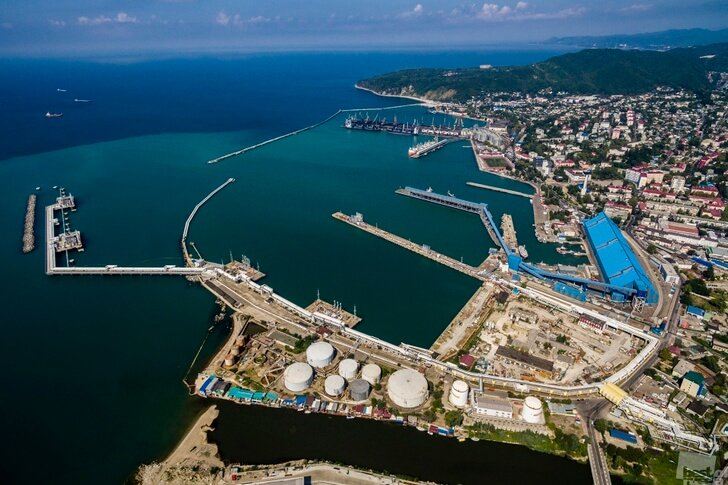
Tuapse Sea Port | Source: RestGeo


Market Insights | ppPLUS Intelligence Series • Geopolitics & Supply Chains | May 2026


The Tuapse Oil Refinery, operated by LLC RN-Tuapse Oil Refinery — a wholly-owned subsidiary of...

Click here for full content
  Sites Quick Access
Site Location Country
Achinsk Refinery Krasnoyarsk
Kuibyshev Refinery Samara
Syzran Refinery Syzran
Entity Settings

Category
Main Holding Company or Operations
Status
A
V
P
Sh
UoM
Tons
Currency
USD
Content provided by
Transaction Name Date
Modified by UserPic   Kokel, Nicolas 5/18/2026 7:04 AM
Added by UserPic   Marks, Steve 1/15/2021 12:00 AM