Product
Aluminium Ores
Segment
Extractive Industry Products
Main-Family
Ores
Sub-Family
Metallic Ores
Link
Insight Articles
#PS752

Description

Aluminium ores are naturally occurring rocks or mineral assemblages in which aluminium is the principal economic commodity, present in concentrations that allow commercially viable extraction of alumina and ultimately aluminium metal. Although aluminium is the third most abundant element in the Earth’s crust (around 8% by weight), it is highly reactive and occurs bound in stable compounds, so only a limited number of minerals function as practical aluminium ores.


Key ore types and roles

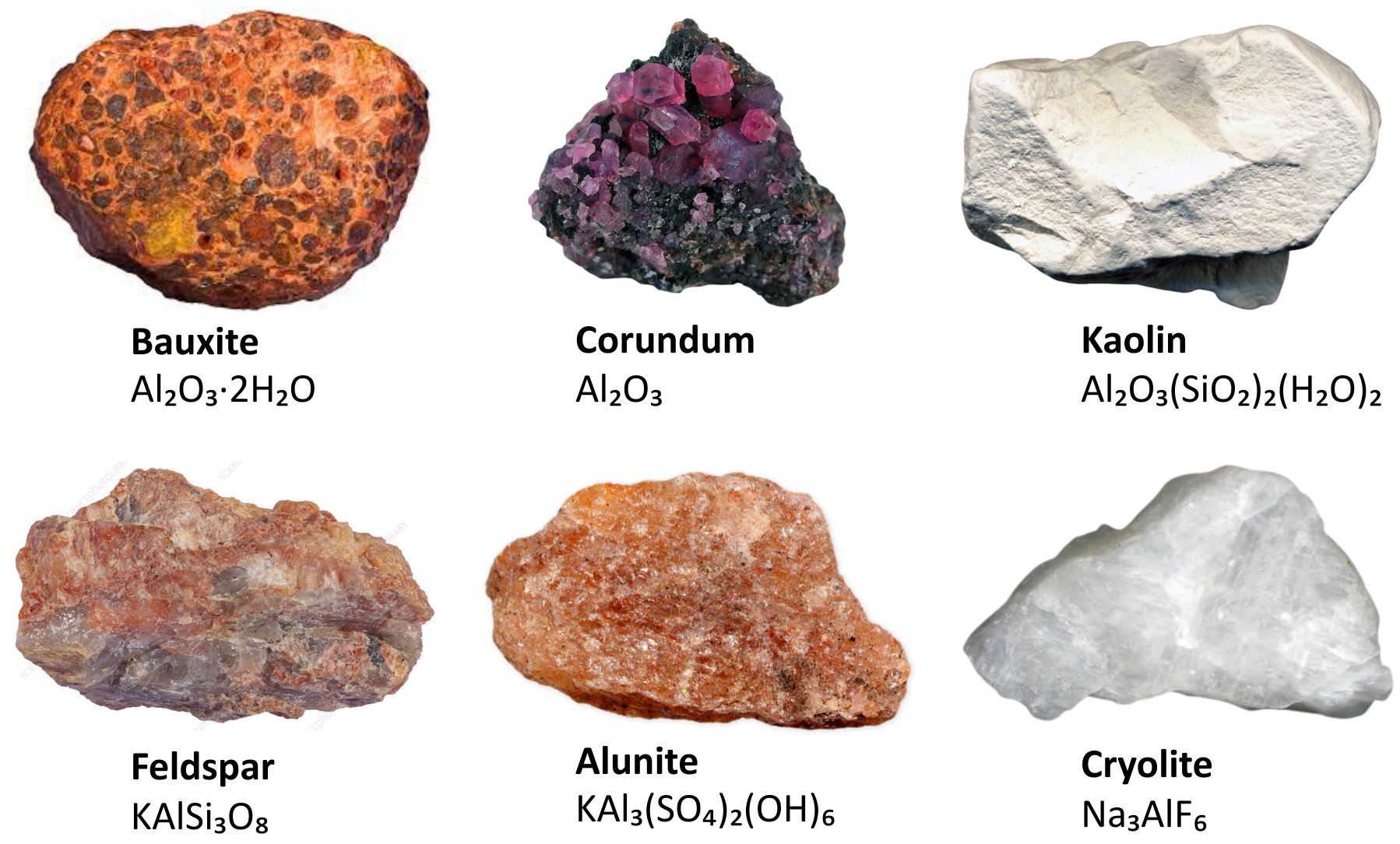
  • Bauxite (Al₂O₃·2H₂O, broadly):
    Not a single mineral but a heterogeneous rock mainly composed of the aluminium hydroxide and oxyhydroxide minerals gibbsite, boehmite and diaspore. It is by far the dominant and, in practice, the only primary ore used for commercial alumina and aluminium production today, typically containing about 40–60% Al₂O₃ equivalent.

  • Corundum (Al₂O₃):
    The natural crystalline form of aluminium oxide. Because of its extreme hardness (Mohs 9) it is exploited mainly as an abrasive and in technical ceramics, and gemstone varieties (ruby, sapphire) are valued as gemstones rather than as aluminium ore. It is not used as a large‑scale feedstock for aluminium metal.

  • Cryolite (Na₃AlF₆):
    A sodium aluminium fluoride mineral historically mined (notably in Greenland) as a flux and solvent for alumina in the Hall–Héroult smelting process. Natural deposits are now essentially exhausted; cryolite remains important in aluminium production but is manufactured synthetically rather than mined as an ore.

  • Alunite (KAl₃(SO₄)₂(OH)₆):
    A potassium aluminium sulphate hydroxide mineral that can serve as an alternative aluminium source where bauxite resources are limited. It has seen use in certain regions (for example, parts of Russia and China), and may also be exploited for its potassium and sulphate content, but it remains secondary compared with bauxite.

  • Other aluminium‑bearing minerals (e.g. feldspar, kaolin):
    Minerals such as feldspars and kaolinite are abundant aluminosilicates and important industrial minerals, but they are not normally treated as aluminium ores in a metallurgical sense because recovering aluminium from them is not economically competitive with bauxite‑based routes under current technology and market conditions.


References

  1. Britannica. aluminium processing > ores (page  version: Sep 19, 2018)
  2. Arkansas Geological Survey. Bauxite (Accessed Feb 24, 2026)
  3. Wikipedia. Bauxite (page version: Dec 31, 2025)
  4. European Commission, Joint Research Centre (2020). Aluminium and Bauxite: Critical Raw Materials Factsheet
  5. The Aluminium Association. Bauxite 101 (Accessed Feb 24, 2026)
  6. EBSCO Information Services. Aluminum deposits (Accessed Feb 24, 2026)

Insight Articles
Your insights will be shown here

Samples of aluminium ores
Settings

Status
A
Unit of Measure
Metric tonne (1,000 kg)
Physical State

Solid

Content provided by
Transaction Name Date
Modified by UserPic  Kokel, Nicolas 4/19/2026 5:29 AM
Added 2/24/2026 9:25 AM