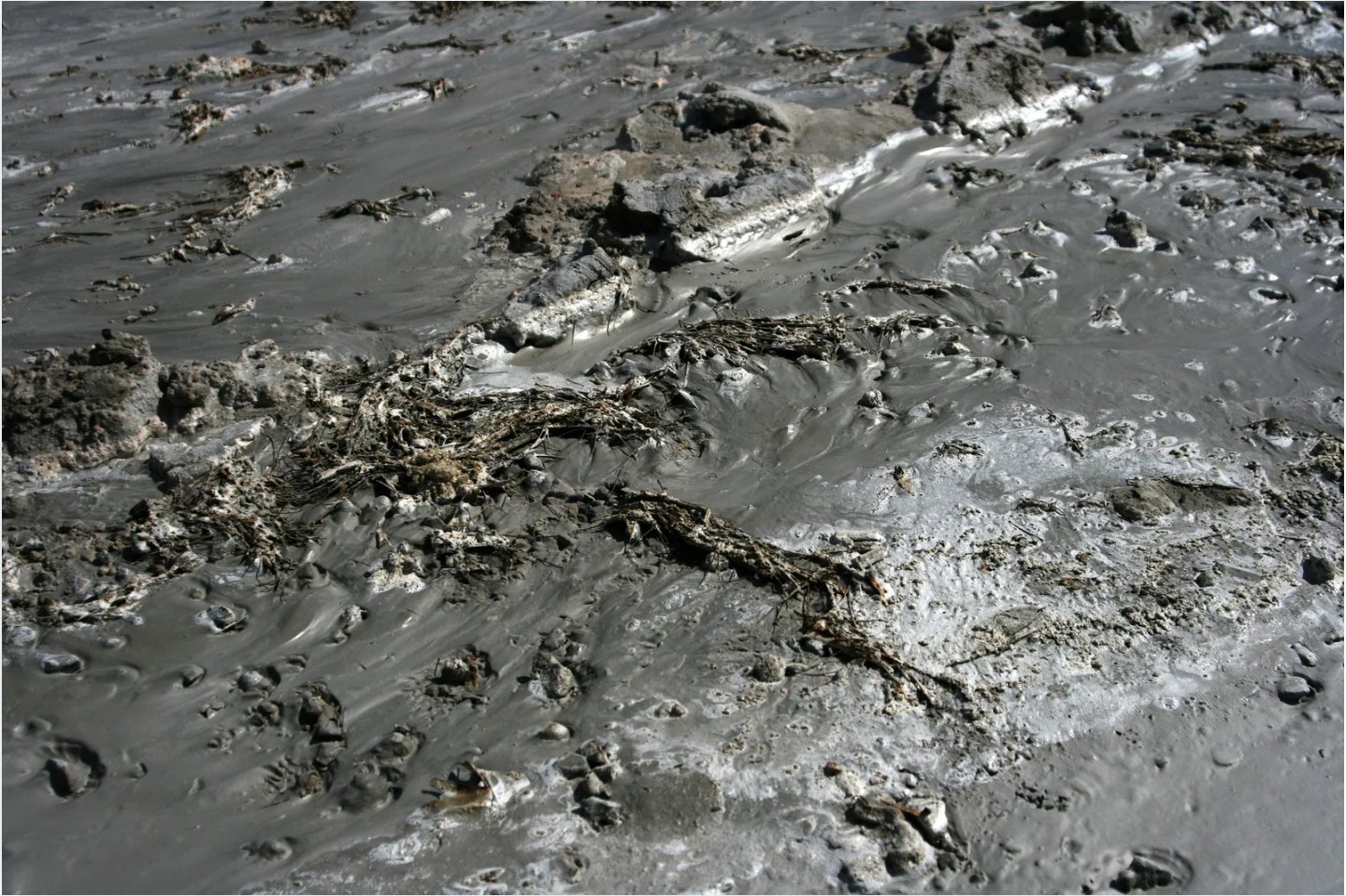
Muds and sludges are viscous, semi-liquid residues generated as unavoidable by-products across a broad range of industrial processes, particularly in mineral extraction, hydrometallurgical refining, water treatment, and chemical manufacturing. They consist of fine solid particles — mineral grains, precipitates, or colloidal matter — suspended or entrained within a liquid medium, most commonly water or a process liquor, at solid contents typically ranging from 5% to 60% by weight.
Characteristics
Despite their diverse origins, industrial muds and sludges share a number of defining physical and chemical characteristics:
- High moisture content — water or process liquor constitutes the dominant phase by volume
- Fine particle size — solids are typically colloidal to fine-grained, inhibiting natural settling and drainage
- Variable and complex composition — reflecting the parent process; may include metal hydroxides, oxides, silicates, sulfates, organic matter, and residual process chemicals
- Elevated pH or chemical reactivity — many industrial sludges are strongly alkaline, acidic, or contain soluble heavy metals, posing environmental challenges
- Thixotropic behaviour — many sludges behave as non-Newtonian fluids, appearing solid at rest but flowing under agitation
Industrial Sources
Muds and sludges arise across numerous sectors:
| Source |
Example |
| Alumina refining |
Red mud (bauxite residue) from the Bayer Process |
| Water & wastewater treatment |
Clarifier sludge, coagulation residues |
| Mining & mineral processing |
Tailings slurry, flotation froth residues |
| Steel & metal production |
Blast furnace sludge, pickling sludge |
| Oil & gas production |
Drilling mud, produced water solids |
| Chemical manufacturing |
Neutralisation sludge, filter cake |
| Phosphoric acid production |
Phosphogypsum slurry |
Handling, Dewatering & Disposal
Due to their volume and composition, muds and sludges require dedicated management strategies including thickening, filtration, centrifugation, and drying to reduce moisture content prior to disposal or reuse. Residues with hazardous characteristics — elevated heavy metal content, radioactivity (TENORM), or extreme pH — are subject to strict regulatory controls governing storage, transport, and landfill disposal.
Valorisation
Growing regulatory pressure and resource scarcity are driving increasing interest in converting industrial sludges from waste streams into secondary raw materials, including recovery of metals, use as construction materials, and application as soil amendments.