Product
Silicium Oxides
Segment
Chemicals
Main-Family
Inorganics
Sub-Family
Inorganic Oxides
Link
Insight Articles
#PS757

Description

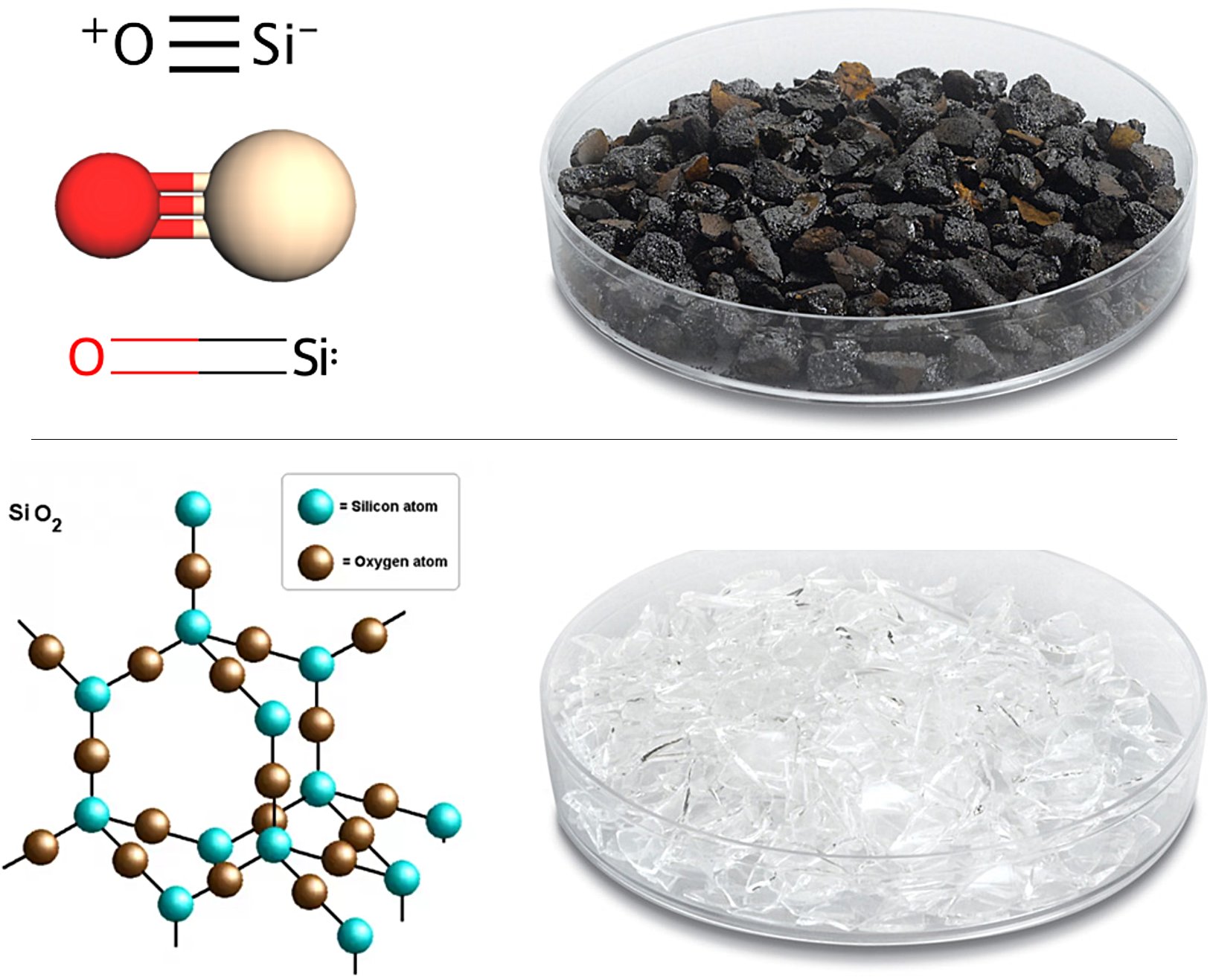
Silicium oxides are the family of inorganic compounds formed by the combination of silicon (Si) and oxygen (O), primarily silicon monoxide (SiO) and silicon dioxide (SiO₂). These are among the most industrially important inorganic compounds on Earth.

Silicon Dioxide (SiO₂)

Silicon dioxide — commonly known as silica — is the most abundant and commercially significant of the silicon oxides, occurring widely in nature as quartz, cristobalite, and tridymite, as well as in amorphous forms such as silica gel. Its molecular structure is a three-dimensional tetrahedral network where each Si atom is bonded to four oxygen atoms, giving it exceptional hardness, a very high melting point (~1,710°C), chemical inertness, and excellent electrical insulating properties.

Silicon Monoxide (SiO)

Silicon monoxide (SiO) is a less common oxide where silicon is in the +2 oxidation state. In bulk form it is a brown/black amorphous glassy solid produced by heating silicon and silica in vacuum; in the vapor phase it is a diatomic molecule, and notably has been described as the most common oxide of silicon in the universe — detected in stellar environments.


References

  1. ScienceDirect. Silicon Oxide (Accessed Feb 27, 2026)
  2. AlfatestLab (Oct 5, 2020). An introduction to Silicon dioxide (silica) forms and applications
  3. LibreTexts Chemistry (Jul 18, 2023). 5.5.5: Structure - β-Cristobalite (SiO₂)
  4. Wikipedia. Silicon monoxide (Page version Dec 13, 2025)

Insight Articles
Your insights will be shown here

Silicon oxides molecular structure (left) and appearance (right) | Various sources
Settings

Status
A
Unit of Measure
Metric Ton
Physical State

Solid

Content provided by
Transaction Name Date
Modified by UserPic  Kokel, Nicolas 2/27/2026 8:04 AM
Added 2/27/2026 7:40 AM