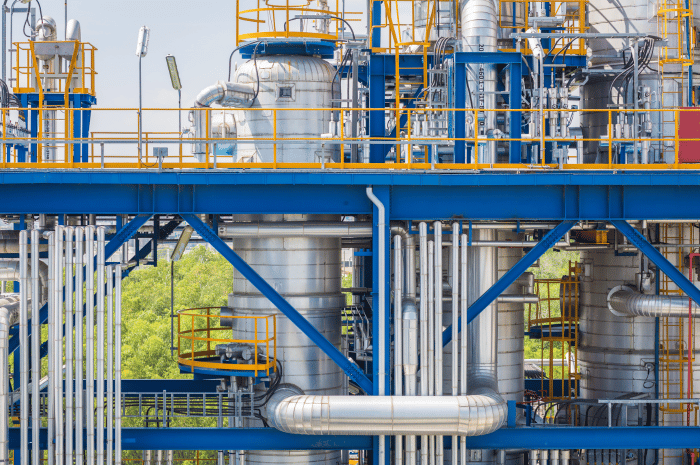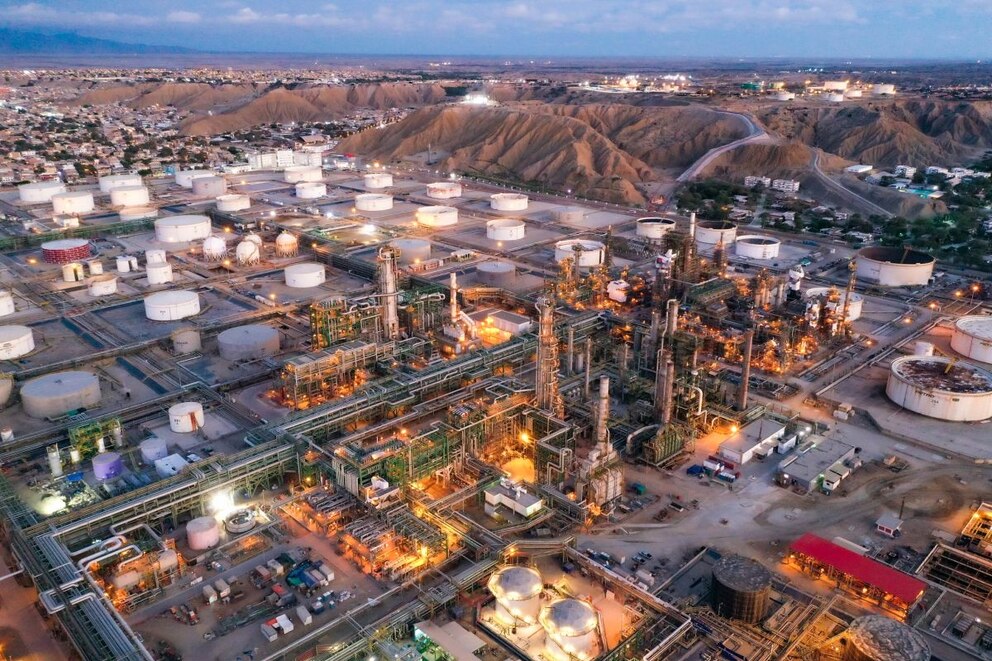
The New Talala Refinery started up in April 2022 | Source: Infobae
The New Talara Refinery (NRT), located in the city of Talara in the Department of Piura, approximately 1,185 km north of Lima, is Peru's largest and most complex refinery. Operated by PetroPeru, it was completely modernized through the Talara Refinery Modernization Project (PMRT) at a total investment of USD 5.3 billion, executed by Spanish EPC contractor Técnicas Reunidas.
Key Facts
| Attribute |
Details |
| Location |
Talara, Piura Region, Peru |
| Operator |
PetroPeru (100% state-owned) |
| Site area |
128.9 hectares |
| Crude capacity |
95,000 bbl/d |
| Nelson Complexity Index |
7.84 (old refinery: 3.76) |
| EPC Contractor |
Técnicas Reunidas (Spain) |
| Total PMRT investment |
USD 5.3 billion |
| Number of process units |
16 process units + 5 auxiliary packages |
| Sulfur specification |
<50 ppm (Euro V equivalent) |
History
The original Talara Refinery dates back to 1917, when it was established with a capacity of only 10,000 bbl/d. Key milestones include installation of Thermic Cracking Units (1926), a Catalytic Cracking Complex post-nationalisation (1969), and a new Liquid Cargo Dock (1995). The PMRT modernisation project was launched in May 2014, growing the refinery from a simple three-unit topping operation to the current 16-unit deep-conversion complex, with start-up commencing in April 2022 and full commissioning completed by end-2023.
NRT Process Units — Capacities & Technology Detail
The 16 NRT process units span physical separation, quality improvement, and deep conversion, with technology from four major licensors:
| Unit |
Name |
Capacity |
Licensor |
Technology / Notes |
| DP1 |
Primary (Atmospheric) Distillation |
90,000 bbl/d |
— (revamp) |
Expanded from 63,000 bbl/d; separates crude into naphtha, kerosene, diesel, AGO, AR |
| DV3 |
Vacuum Distillation |
46,000 bbl/d |
— (revamp) |
Revamped from 28,000 bbl/d; processes AR to produce VGO and vacuum residue for conversion units |
| FCK |
Flexicoking |
~25,000 bbl/d (residue feed) |
ExxonMobil
(USA) |
FLEXICOKING™ — integrated fluid coking + gasification; converts vacuum residue to liquids + Flexigas; one of only ~8 units worldwide |
| FCC |
Fluid
Catalytic Cracking
|
25,000 bbl/d |
Honeywell
UOP
(USA) |
Exact sub-variant (FCC / RFCC / PetroFCC) not confirmed in public sources; processes VGO; produces high-octane gasoline (93/100 RON), LPG, diesel |
| RCA |
Catalytic Reforming |
23,000 bbl/d |
Axens
(France) |
Upgraded from 19,000 bbl/d; likely CCR Platforming variant (partial-burn regenerator replacement noted); produces reformate for high-octane gasoline blending |
| HTN |
Naphtha Hydrotreating |
10,000 bbl/d |
Axens
(France) |
Pre-treats straight-run naphtha before reforming; exact Axens process name (e.g., Prime-N) not confirmed in public sources |
| HTD |
Diesel Hydrotreating (Medium Pressure) |
30,000 bbl/d |
Axens
(France) |
Produces <50 ppm sulfur Euro V diesel; exact process name (e.g., Prime-D / HyK) not confirmed in public sources |
| HTF |
Cracked Naphtha Hydrotreating |
~8,800 bbl/d |
Axens
(France) |
Treats FCC cracked naphtha for sulfur removal; likely Prime-G+ variant (standard Axens cracked naphtha HDS process), not confirmed explicitly |
| ISO |
Isomerization |
3,000 bbl/d |
— |
Light naphtha isomerization for gasoline octane improvement; licensor not confirmed in public sources |
| SRU |
Sulfur Recovery Complex |
40,000 t/d |
Haldor Topsøe
(Denmark) |
Modified Claus + TGTU; processes H₂S from amine units |
| AM2 |
Amine Regeneration |
— |
Haldor Topsøe
(Denmark) |
Acid gas treating — absorbs H₂S/CO₂ from process gas streams |
| PHP |
Hydrogen Production Plant (Auxiliary) |
30 MMscfd |
Haldor Topsøe
(Denmark) |
SMR-based hydrogen plant using Danish Topsøe catalyst/process; feeds hydrotreaters |
RG1/
RG2 |
Gas Recovery Units |
— |
— |
LPG and fuel gas recovery/fractionation |
| TGL |
LPG Treatment |
— |
— |
Mercaptan removal / sweetening |
| TKT |
Turbo A-1 Treatment |
— |
— |
Jet fuel finishing / sweetening |
| OX / TNS |
Soda / Solvent Treatment |
— |
— |
Caustic treating |
The auxiliary units (hydrogen plant, cogeneration, utilities) are primarily licensed by Haldor Topsøe. Hydrogen supply, operation, and maintenance is contracted to Matheson Global HYCO Peru SRL (Nippon Sanso Group).
Feedstocks
The NRT is designed for feedstock flexibility, processing crude grades from very heavy Napo (Ecuador) and Amazon heavy crudes to light WTI, with the Flexicoking unit enabling economic processing of heavily discounted heavy crude residues.
Production Capacities & Output
The NRT increased crude throughput capacity by 45% versus the old refinery (from ~65,000 to 95,000 bbl/d). In 2023, the refinery produced:
-
2.2 million barrels of regular and premium gasoline
-
5.23 million barrels of low-sulfur diesel
-
797,000 barrels of Turbo A-1 jet fuel
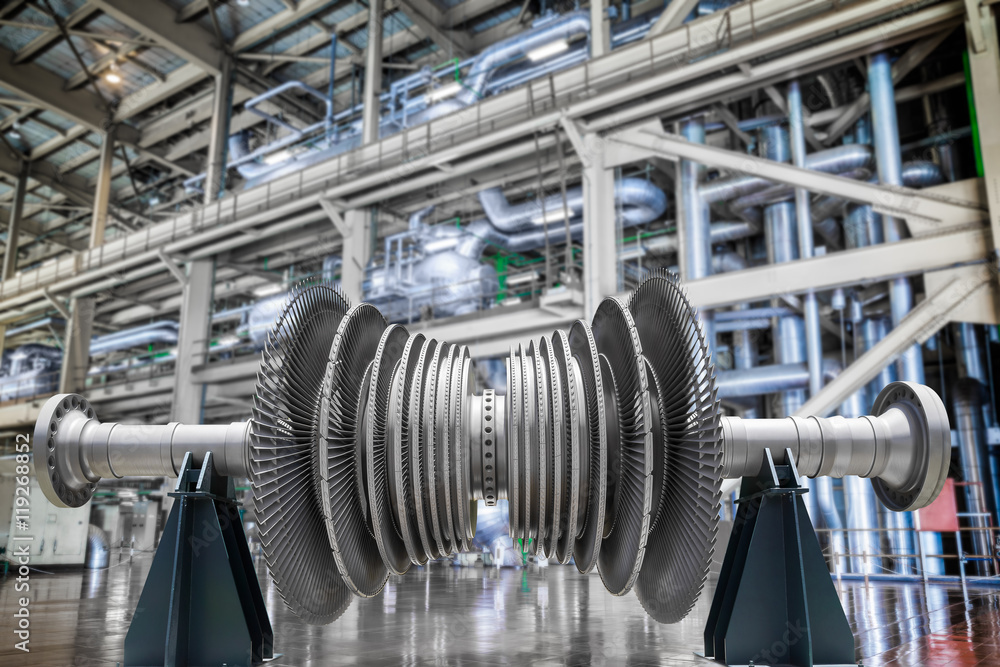
All gasoline and diesel produced at the NRT are low-sulfur (<50 ppm), meeting Euro V standards. The on-site cogeneration power plant (Doosan Škoda Power steam turbines, 110 MW) produces up to 102.34 MW for internal refinery use, fueled primarily by Flexigas from the FCK unit.
Infrastructure
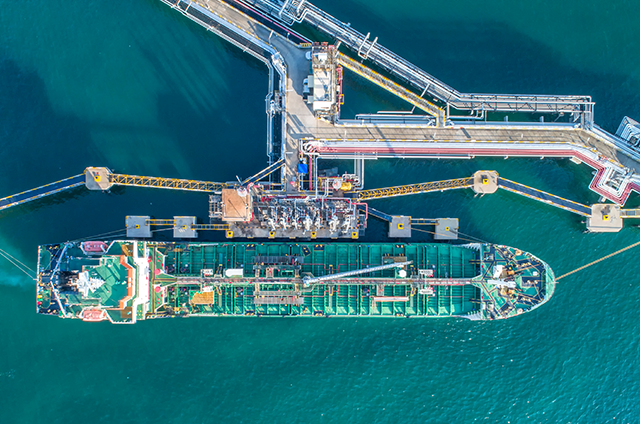
In addition to its 16 process units, the NRT includes 21 new storage tanks with a combined capacity of 1.5 million barrels, two marine liquid cargo docks (MU2), modern laboratories, and a backup electrical transmission line. The desalination plant is operated and maintained by ACCIONA (Spain).