Gasification Options vs CFBC for Pet Coke/Pitch Upgradation – Dream Project

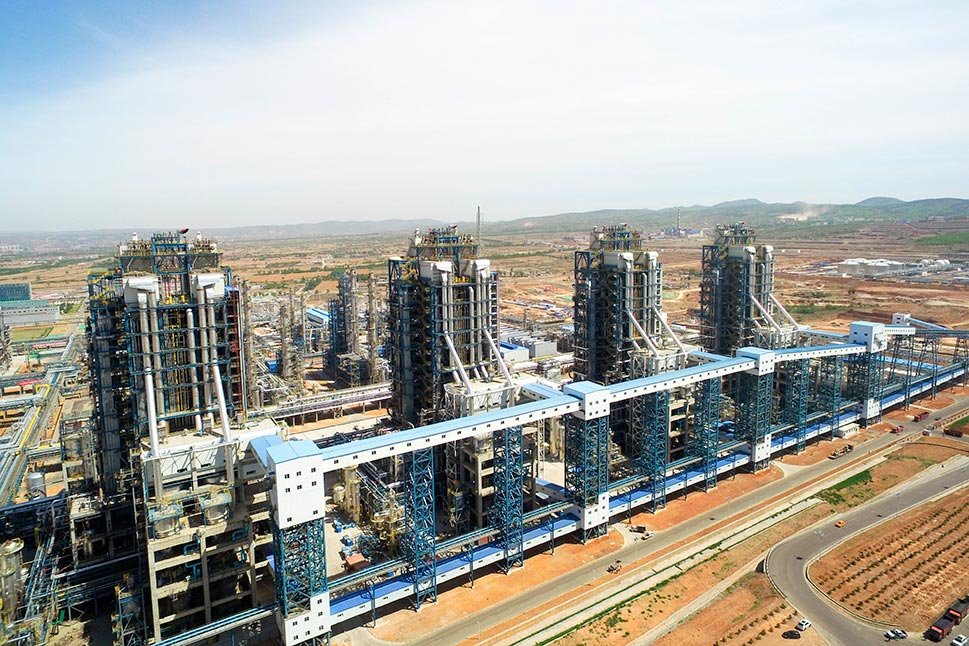
Photo: Air Products' Lu'an coal gasification project located in Shanxi Province, China
|
|
|
During the interactive live session held on PP plus platform on the DREAM Refinery Project, and various subsequent communication held on LinkedIn and ppPLUS articles, readers have shared some reflections with respect to the Gasification alternative to meet the Hydrogen requirements of the complex while disposing of the pet-coke, apart from meeting the complex steam and power requirements. This is an important subject and has generally not been discussed in detail hitherto, as in general, Refineries in India have apparently been a little reluctant in pursuing the Gasification options, in view of the perceived large Capex, utility requirements, and operation and maintenance related issues. Reliance refineries though, has been an exception who have incorporated a massive Gasification facility in their complex.
The Circulating Fluidized Bed Combustion (CFBC) option co-firing a blend of pet-coke and coal, was one of the alternatives discussed in several refineries as also in the dream project preliminary configuration. In general, the Refiners in India preferred to dispose pet-coke to steel plants, cement kilns, or mixed with coal to an extent of 8 % for co-firing in utility power plants.
Given the repeated references to Gasification and its utility as a bottoms of barrel initiative, it was considered prudent to examine the options, and carry out a study to examine the pros and cons of CFBC vs Gasification option to arrive at some directional inferences on the subject. To carry out the study, a brief design basis was created for the dream project to draw the comparison between the two alternatives:
Overall Design Basis & Parameters considered for the study
A. Steam requirement
The CFBC or the Gasification facility is expected to cater to the following process steam requirements. This process steam requirement however, excludes the steam required to meet the Power Generation requirement from the system.
1. VHP Steam - (125 bar / 535°C) - 500 TPH
2. HP steam - ( 42 Bar/ 390 Deg C) – Not required from CPP. The process is expected to be self sufficient in the same.
3. MP Steam (15 bar) – 800 TPH to be met preferably as turbine extraction steam.
4. LP Steam - including pegging steam 400TPH to be also met via turbine extractions.
5. Total Process Steam Demand - 1,700 TPH
B. Electrical Power Requirements:
1. Process Power export from CPP- 450 MW
2. Internal CPP Auxiliary Load – 20 MW for CFBC option
3. Total Gross Generation of Power required – 470 MW
C. Hydrogen
1. Production Target for the complex 300 KTPA to be sourced from a gas based SMR facility.
2. SMR Natural Gas Requirement to support the hydrogen/syn-gas capacity 3.40 MMSCMD.
3. Gas price considered conservatively as $12/ MMBTU.
4. Pet Coke Price $100/ ton and Coal $ 110/ton
The above requirements would be considered for both CFBC and Gasification Options. Importantly, to meet the high Process Steam and Power requirements from CPP, coal as additional fuel may be required. The co-firing of Pet-coke and Coal will additionally help in meeting the NGT requirements to consider blended fuels for CFBC plants.
Base Option CFBC – Total Steam generation
To generate 470 MW of power and provide 1,700 TPH of process steam, the total high-pressure steam required from the boilers would be more than 2,400 to 2,500 TPH at 125 bar / 535°C. This generation level was preferred as it would be the highest steam generation pressure in the Olefin plant, as well. Besides for Petro FCC, the major compressor drives for main Air Blower and Wet gas Compressors shall also utilise VHP steam for the extraction cum condensing turbines of the compressors. The total fuel that will be required for steam generation would be a mix of Pet Coke and Coal.
1. Pet Coke: Fixed - 700 kTPA from DCU will supply the base thermal load with sulfur capture systems active. The calorific value considered - 8000 K cal/kg.
2. Coal : Coal to the tune of 200 to 220 TPH of coal with calorific value of 4,500 kcal/kg.
To meet the above steam generation requirements large CFBC boiler systems arranged in 5+1 configuration with each boiler of 500 TPH MCR capacity is considered. The multi-fuel CFBC boilers would be generating steam at 125 bar and 535°C with N+1 configuration and shall be equipped with facilities for in-situ sulfur capture via limestone injection as part of the FGD system. The system evidently will involve a lot of material handling facilities.
Steam Turbine Generator (STG) Configuration
For a total power generation of 470 MW the turbine generation system proposed is 3×160 MW dual Extraction-Condensing STGs with a total gross operating capacity of 480 MW. The estimated broad steam flow may be split as below:
a. 500 TPH of VHP steam to be directly sent to process.
b. Controlled extractions from STGs to supply 800 TPH MP to process header.
c. LP extraction flows including pegging steam 400 TPH LP header.
d. Condensing fractions ensure the electrical power output to maintain 450 MW process export + 20 MW internal CPP load.
Considering an N+ 1 configuration 3+1 STG each of 160 MW power generation capacity shall be installed to meet the Project requirements, with adequate reliability and appropriate redundancy. Shell-and-tube High metallurgy based Surface Condensers to be used for condensing steam and recycling turbine surface condensate to deaerator.
The cooling water to the condenser will be high. The CPP may have a dedicated WWTP to combine the Cooling tower blow down to be recycled via Ultrafiltration and High-Recovery RO to supply high-purity DM makeup water. STG condensate and process condensate after polishing could also be routed to the deaerator for generation of boiler feed water.
The CFBC Steam and Power generation is a compact system with fuel handling facilities Boilers and STGs in the power island and a FGD system incorporated at the tail end of the flue gas system. The auxiliary systems would comprise of the Cooling water system, a WWTP and a Tertiary treatment plant designed to process all the effluent and the cooling tower blow downs to produce the DM water for the BFW system of the steam generation system.
Capex / Opex
The total order of magnitude capex of the CFBC based Steam and power generation System on the above lines would be upwards of $ 1 billion. Additionally the capex towards the hydrogen generation unit may be to the tune of $270-300 Million. Considering Coke price as $100/ton and Coal as $110/ton and gas as $ 12/MMBTU the total Opex may be about $850 M / per annum including nominal fixed variable costs.
Gasification Option
This option evaluates the transition from a Natural Gas Steam Methane Reforming (SMR) option to an advanced Pet Coke and Coal Gasification route for the complex. For comparison on a one to one basis the Pet coke and Coal is considered identical to the CBFC option. The option would attempt to completely eliminate import of natural gas, satisfy the continuous process steam and power requirements of the process plant. Additionally, the option would produce 300 KTPA of high-purity hydrogen, and monetize surplus syngas through a co-located Urea plant while fulfilling carbon capture and sulfur recovery through production of sulphuric acid. It may be noted that the internal power consumption of the gasification island would be high and therefore the total power generation from the gasification island would increase to 625–640 MW.
Key requirement for Gasification
The Gasification system warrants availability of high quality Oxygen for the gasifier to facilitate production of syngas from the blended pet coke + coal feed. High-purity (99%) oxygen plant of a very high capacity will be required to meet the requirement of the high capacity, high-reliability multi-train units.
Gasification & Acid Gas Removal (AGR)
1. Gasifiers: Entrained-flow slagging gasifiers operating at high pressure (50 bar) and temperature (>1,400∘C), converting carbon into raw syn-gas and melting ash into slag would be required.
2. AGR & Sulfur Recovery: Acid Gas Removal scrubs out sulfur compounds resulting from pet coke's high sulfur content to produce commercial grade Wet Sulfuric Acid plus high-pressure steam.
3. Operating Days 330 days/year
4. The Gasification Technology would preferably be Pressurized Entrained-Flow Gasification, dry-feed or high-solid slurry-feed. Pet coke has high carbon content, high sulfur, low ash, and very high ash fusion temperatures.
5. 3+1 configuration may be considered with a standby Train. The dedicated spare/standby train will ensure continuous operation during refractory inspections, burner replacements, or routine maintenance.
Balance-of-Plant
Pet coke and coal must be co-ground and thoroughly blended. If using a dry-feed system like Shell technology, raw materials are dried and pulverized; if using a slurry system like GE they are wet-ground with water or recycled process water. Pet coke has very low ash content and high melting points, mixing it with coal helps in generation of sufficient ash for slag tapping.
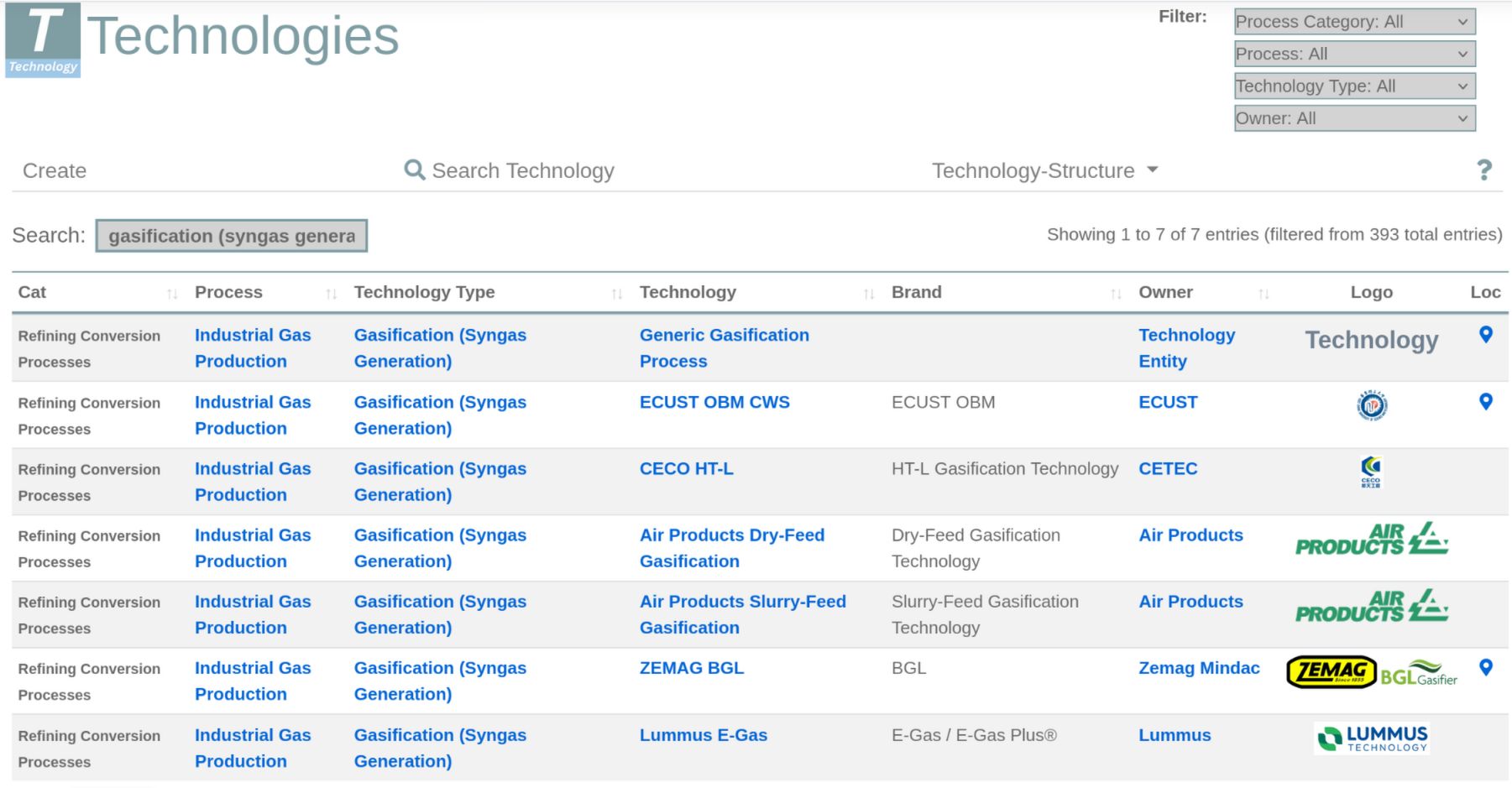
Gasification Licensors for Hydrogen Maximization
For solid feeds like coal and pet coke targeting high hydrogen yields, and downstream water-gas shift applications, the leading global technology licensors are:
1. Shell Catalysts & Technologies : A dry-feed entrained-flow technology is known for high thermal efficiency, low methane and tar production. Provides excellent conversion of high-sulfur pet coke and coal blends.
2. Air Liquide (Former Lurgi): Offers advanced entrained-flow gasification solutions well-suited for large-scale chemical and hydrogen complexes.
3. GE Gasification (formerly Texaco) E-gas : A widely deployed wet slurry feed entrained-flow technology that handles high-pressure operations well, making it ideal when downstream synthesis requires elevated pressures.
4. ThyssenKrupp Industrial Solutions (Uhde / PRENFO): Known for dry-feed entrained-flow gasification, efficient for high-ash coals and pet coke blends.
5. Chinese Domestic Licensors (e.g., ECUST, others): prominent in mega-projects utilizing dry pulverized coal/pet coke feeding.
Gasification Licensors on ppPLUS
Operating Pressure
For a plant designed towards maximization of hydrogen production, operating at high pressure is essential to minimize downstream compression costs for gas purification, acid gas removal, and pressure swing adsorption (PSA). Typical common pressure range 40–60 bar for slurry feeds like GE, and up to 65–85 bar for dry-feed systems like Shell or PRENFO.
Typical Run Length/Availability
Entrained-flow slagging gasifiers operating on solid abrasive fuels like coal and pet coke experience severe thermal and chemical wear on refractories or cooling screens. Continuous Run Length typically ranges between 1year to 18 months between major overhauls for modern dry-feed. Commercial units target an annual plant availability of 90% to 95% i.e. about 330–350 operating days per year, heavily dependent on spare train.
References of Gasification Units for Chemicals
When Gasification is integrated directly into downstream chemical complexes, such as Ammonia/Urea, Methanol, Oxo-alcohols specific industry references predominantly are from China.
1. Shenhua Ningxia (China): Operates one of the world's largest coal-to-chemicals complexes using massive entrained-flow gasifiers for high-value chemicals.
2. Yulin Chemical / Yankuang Group (China): Utilizes large-scale gasifiers to feed syngas loops for methanol and downstream olefin (CTO) production.
3. Sasol Secunda Complex (South Africa): Uses Lurgi dry-bottom fixed-bed gasifiers for synthetic fuels and high-value chemicals.
4. Eastman Chemical Company (Kingsport, Tennessee, USA): A commercial unit using coal gasification to manufacture acetic acid.
5. Reliance India: E gas perhaps the worlds largest pet coke Gasification facilities
Boiler & Steam Turbine Generator (STG) Island
The Gasification process certainly is attractive in spite of high Capex, higher maintenance, larger land requirements and perhaps a psychological barrier associated with Gasification. Refiners we note are reluctant to handle solids. The fact that Gasification offers significant advantages in terms of reducing fossil fuel import, rationalizing cost of hydrogen and flexibility to produce Urea while sequestering Co2, besides meeting Steam and power requirements of the complex suggests that Gasification route can be explored further. Given its advantages Gasification block may replace the CFBC in dream Refinery conceptualization. The gasification technology offers additional advantages as below:
1. In high-temperature entrained-flow gasification, the raw syngas exits the reactor with massive amounts of sensible heat. Passing this syngas through high-pressure radiant and convective Syngas Coolers recovers a significant fraction of thermal energy directly as high-pressure steam before the gas is cleaned or shifted.
2. Accounting for this direct gasifier-island generation the complex's steam architecture would lead to Reduced Auxiliary Boiler Load and savings in the Boiler nos and configuration can be achieved. This will enable more syn gas to be available for chemical production.
3. STG Island: 5×160 MW Extraction-Condensing Steam Turbines (4+1) delivering 640 MW gross power may have to be considered to account for additional internal loads.
4. Water & Cooling Infrastructure: Closed-loop system featuring high metallurgy surface condensers, a circulating cooling water system and a Tertiary Recycle Plant integrating Cooling Tower Blow down and wastewater via UF/RO to supply high-purity DM makeup water will have to be augmented appropriately as compared to CFBC option.
Capex and Opex
1. The Capex of the Gasification, ASU, additional AGR, Sulphuric acid, about 1200- 1300 KTPA of urea will invite an additional investment of almost another $1 b over the CFBC option.
2. The savings in the Opex because of elimination of the SMR units and the import of Natural gas will be significant saving. Additional revenues will accrue because of production of Urea and sulphuric acid. A broad estimate reveals that the opex savings including additional product revenues to the tune of $ 625 M per annum which can be a game changer.
Final take away
Weighing the technical comparison, capital exposure, and long-term operational economics, the Pet Coke/Coal Gasification + Ammonia/Urea Route, is more attractive. It is a fact though, that the gasification option invites high capex but this alternative is positively attractive. The key factors which influence this inference are :
1. Natural Gas Price Volatility: Given the uncertainty associated with gas price the SMR economics would always remain vulnerable. Significant savings upwards of $ 500 M can be foreseen purely on gas feed stock. By shifting to Gasification process this is recognized as very relevant for India, which is heavily dependent on gas imports.
2. With high-pressure Syngas Coolers (SGCs) in the gasification island the auxiliary boiler island down gets downsized for capex savings.
3. The surplus syngas available after meeting the steam and power requirements of the complex could support an integrated Ammonia plant, with the high-purity CO2 captured from the Acid Gas Removal (AGR) unit.
4. Even with a significant increment in the Capex the overall savings more than justify the gasification block with a simple payback period of 20 to 21 months accounting for savings on gas and additional product sales of urea from the complex.
5. Built-In Carbon & Sulfur Compliance: Pet coke and coal gasification are carbon- and sulfur-intensive, which would normally trigger environmental concerns. The addition of Sulphuric acid and urea to the complex obviates the concerns associated with Co2 emissions:
a. Sulfur: Recovered via the WSA plant into 155 KTPA of commercial sulfuric acid.
b. Carbon (CO2): valorized into ∼1200-1300 KTPA of Urea
Partial Oxidation (POX) unit to support Gasification
Since the general direction seemed to emerge in favour of Gasification, it became imperative to do a subjective overview of the POX option as well. In case Gasification is to be pursued as an objective to meet Gas, Hydrogen, chemicals requirement of the complex, the SDA- Pitch Gasification is another route worth looking at a little more closely. This process is particularly useful to lift petrochemical make in the complex, and eliminate a DCU if need be.
Gasifier Intent
For the Integrated projects the Gasification would broadly intend to address the following objectives.
1. Ensure that all the Process steam and Power requirements of the complex are met through the system. The total pool of steam could be a combination of the steam generated in the gasifier syn gas coolers and the steam generated in syn gas boilers. A combined Cycle plant can also be considered though it is expensive. The VHP steam so generated could be passed through STGs to extract the process and pegging steam as required, before condensing to generate the power required for the complex. Multiple boilers and STGs can be used to serve the purpose.
2. The syn gas after clean up and shift shall completely meet all the hydrogen requirements of the complex through PSAs to ensure that no gas is imported to the complex. This can be a significant plus.
3. The balance syn gas depending upon the capacity of the gasifier shall be used to produce Ammonia with Nitrogen being supplied from the Air separation plant. Entire ammonia produced can be used to produce Urea in the complex by utilizing the Co2 produced in the Gasifier.
4. A small slip stream of the syn gas from the gasifier could be routed to the Acrylates plant to eliminate the need of separate syn gas generation facilities in the complex.
5. On a one to one basis, the Capex and Opex of the POX unit would be lesser than a comparable pet coke based gasifier. Besides, there is good chance that it will possibly be able to additionally support the chemical complex if the quantum of syn gas is in excess.
SDA unit Splits
Instead of sending raw VR to DCU, the heavy bottoms could be routed to a solvent extraction unit while using propane, butane, or pentane as a solvent to affect the following splits:
1. Deasphalted Oil (DAO) is extracted from the unit which has significantly lower metals, lower CCR, and lower asphaltenes as compared to raw VR, making it an excellent, highly paraffinic feed for VGO hydrotreater to generate additional feed for PFCCU to maximize propylene and ethylene from the same. Alternatively, the DAO can be routed to a Hydrocracker for maximization of middle distillates and lubes.
2. The remaining heavy asphaltic pitch which holds all the heavy metals and asphaltenes is routed to a Gasifier -POX to produce synthesis gas for hydrogen generation, steam and/or power generation, or support chemicals production to achieve zero fuel oil production.
The right recovery from SDA
Typically, for the units where a good balance is to be established on the quality of the DAO feed to hydroprocessing unit vs optimization of pitch quantity for Gasifier, a 65% recovery is generally preferred. In case a higher DAO recovery say 75% is pursued, the solvent extracts heavier, more polar molecules, driving up Conradson Carbon Residue, asphaltenes, and metals like Nickel and Vanadium in the DAO pool, which is neither desirable for the hydroprocessing unit, nor the PFCCU which is close coupled with it. For PFCCU operating at high-severity >650∘C riser temperatures to maximize light olefins, high-metal and high-CCR feed will rapidly poison the zeolitic cracking catalysts and initiate runaway coke formation. A 65% recovery ensures that the DAO remains paraffinic and clean enough for the VGO HDT to handle the same to generate a goog feed for PFCCU.
Captive Hydrogen Self-Sufficiency via Gasification
Major Refining integrated complexes are massive hydrogen consumers due to severe hydro processing requirements. Routing the heavy pitch to the gasifier provides an ideal carbon feedstock for partial oxidation (POX) syngas generation. Depending on the quantity of the pitch, gasification could yield enough hydrogen to satisfy the needs of the complex eliminating external natural gas dependency. Pushing recovery lower than 60% would dump too much pitch into the gasifier, leading to loss of value. At 65% recovery, the highest-quality paraffinic chains are recovered that crack well into ethylene and propylene in PFCCU. Besides, this would isolate the refractory, polycyclic aromatic asphaltenes into the pitch fraction, where thermal/catalytic cracking would otherwise be adversely affected and produce heavy fuel oil.
POX (Partial Oxidation)
Partial Oxidation (POX) for heavy residues is a non-catalytic, high-temperature thermal Gasification process. In this configuration, the SDA pitch is reacted with high-purity oxygen and a controlled amount of steam inside a refractory-lined reactor vessel at severe conditions with temperatures between 1,300∘C to 1,500∘C and pressures ranging from 40 to 80 bar. Because of high temperatures the pitch cracks and oxidizes the heavy hydrocarbons into a raw syn-gas composed primarily of Carbon Monoxide (CO) and Hydrogen (H2), along with small amounts of CO2 , H2O, and trace H2S/COS.
POX can be compared with the Pet coke or Petcoke/coal Gasification to draw some comparisons:
1. The pitch is generally handled hot and it is pump-able. In contract the Pet-coke is handled solid and requires dry grinding mills, nitrogen-inerted storage, and solid lock-hopper feeding systems.
2. In the SDA pitch there if higher hydrogen-to-carbon (H/C) ratio and volatile matter as compared to pet-coke, resulting in smoother burner ignition and slightly lower specific oxygen consumption.
3. The SDA pitch concentrates VR metals like Ni, V and ash, which form a molten slag tapped continuously through a bottom water quench chamber. The Pet coke gasification also accumulates high nickel/vanadium which require a slag handling or wet scrubber cleanup systems. This is an important area for Gasifier performance.
4. Pet coke contains higher concentrations of abrasive ash, vanadium, and nickel, coupled with a higher carbon-to-hydrogen ratio. This causes severe erosion on burner tips, valves, and refractory linings, demanding specialized metallurgy and more frequent maintenance turnarounds.
5. Pet coke yields a syngas with a lower initial hydrogen-to-carbon monoxide ratio and significantly higher sulfur content (≈4–6% vs. ≈3% in pitch), which implies a heavier load on the Acid Gas Removal and Water-Gas Shift units
6. SDA pitch is highly viscous, heavy asphaltic material and becomes brittle solid at ambient temperatures. The firing system has to be properly controlled. To maintain pumpability and smooth flow the pitch storage, piping, and burner feed lines are maintained between 220∘C to 260∘C using high-pressure steam/ electric tracing.
7. POx could eliminate solid handling thereby reducing maintenance and environmental concerns.
8. DCU is a severe thermal cracking process that breaks VR completely into gas, coker naphtha, light/heavy coker gas oils and solid petroleum coke. While DCU eliminates residual fuel oil, the liquid products are highly olefinic, unstable, and laden with sulfur and nitrogen, requiring hydrotreating before they can be either used as fuels or as feed for petrochemicals. Furthermore, rejecting carbon as solid pet coke is invariably the biggest disposal challenge.
9. SDA operates continuously with higher on-stream reliability, requiring periodic solvent washing and valve/pump maintenance. On the contrary DCU suffers from cyclic thermal stress like switching drums between coking and decoking cycles, requiring intensive maintenance on high-pressure water pumps, decoking cutting tools, and automated drum top/bottom heads.
10. SDA has simpler metallurgies due to lower temperatures. DCU warrants exotic metallurgy due to high temperature and high corrosion and fatigue mitigation measures.
Major Licensors for POX amp; Residue Gasification
Partial Oxidation (POX) and entrained-flow gasification technology for heavy oil residues, SDA pitch and pet coke are offered by few major technology licensors:
1. Shell Catalysts & Technologies (Shell Gasification Process - SGP)
2. GE Energy / Formerly Texaco (Texaco Gasification Process / E-Gas)
3. ThyssenKrupp Uhde (Uhde Entrained Flow / PRENFLO)
Several large-scale operational projects have been installed to justify heavy residue and pet coke POX/gasification:
1. Reliance Industries – Jamnagar Refinery (India) -- The world's largest pet coke and heavy residue gasification complex. It Processes over 6 MMTPA of pet coke using high-capacity entrained-flow gasifiers to produce clean syngas for captive power generation, high-purity hydrogen for clean fuels, and substitute natural gas (SNG) for petrochemical integration.
2. Shell – Pernis Refinery (Rotterdam, Netherlands) - Gasifies heavy refinery residues and vacuum residues to supply high-pressure steam, power, and hydrogen directly to the refinery for energy optimization.
3. Sinopec & CNPC Mega-Refineries (China) - Multiple widespread installations . Chinese mega-refineries utilize residue and pitch POX gasification blocks to completely eliminate heavy fuel oil production, fueling local hydrogen networks and chemical synthesis chains.
4. Repsol – Puertollano Refinery Complex (Spain) - Integrated IGCC (Integrated Gasification Combined Cycle) project utilizing heavy feedstock gasification (Prenflo technology) for power, steam, and synthesis gas for chemical units.
Conclusion
1. For a country like India which is heavily dependent on import of fossil fuels, it makes immense sense to look at gasification as a bottoms of the barrel technology.
2. Even while the Capex of the gasification units is high, it more than compensates for it by supplying Hydrogen and Chemicals, and syn gas for acrylates. This is over and above meeting all the steam and power requirements of the complex. Gas import to the complex can be completely eliminated.
3. In the overall scheme of things when the Complex is to have a petrochemical bias, the SDA seems to be a better option than Coker as it produces paraffinic feed for hydrotreatment and additional PFCC feed, saves hydrogen.
4. The SDA pitch to gasifier eliminates all solid handling and feed preparation facilities to the gasifier. The Hydrogen to carbon ratio is higher and therefore, the oxygen consumption and the net overall syngas efficiency is higher.
5. Both plants Pet-coke-Coal gasifier/ pitch Gasifier can meet the total steam and power requirements of the complex, either through a combined cycle power plant or a boiler/ STG configuration. In both the cases advantage of high pressure steam in Syn gas coolers in he gasification island can be availed.
6. Pitch based Gasifiers may be relatively simpler to operate and perhaps may have lesser maintenance. Also Coal may not have to be imported to the complex.
All queries are welcome! Click the 'Add Comment / Reply' button here below 👇 👇 👇
#refinery #integratedcomplex #coalgasification #petcokeupgrading