Improved Crude Oil Desalting and Dehydration Technology Profile
- Technology
- Generic Crude Desalting

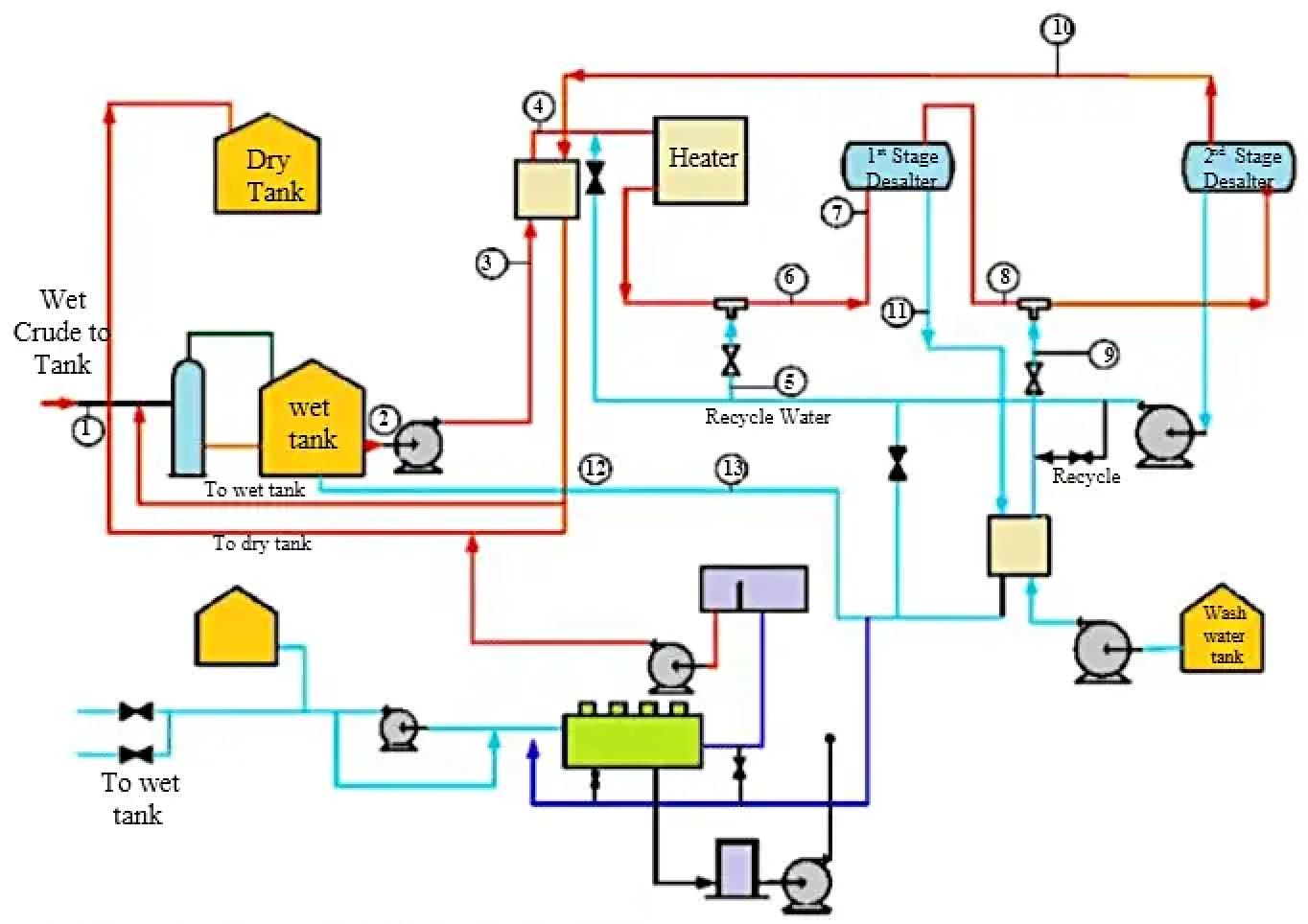
Simplified Process Flow Diagram of Crude Dehydration and Desalting
Crude oil received after transportation contains dissolved salts trapped in small brine droplets dispersed throughout the oil volume. These droplets are too small for self-extraction and gravity settling. In addition to salts, crude oil contains other oleophobic impurities:
- Salts: Mainly chlorides and sulfates of sodium (Na), potassium (K), calcium (Ca), and magnesium (Mg)
- Sediments: Silt, sand, mud, iron oxide, sulfides, and corrosion products
- Water: Present in soluble, emulsified, and finely dispersed forms
- Organic salts: Heavy amine hydrochloride salts derived from asphaltene fractions
If crude oil is left untreated before processing, these contaminants can cause severe operating failures and maintenance problems, including corrosion, fouling, catalyst poisoning, and equipment damage. Crude oil dehydration and desalting is a critical initial processing step in refineres:
- Crude oil dehydration removes water present in the crude oil
- Desalting removes dissolved salts by extracting them from the oil phase into a water phase
- Since inorganic salts are dissolved in the brine droplets, effective water removal also achieves desalting
The process also removes a considerable percentage of suspended solids (sand, clay, soil particles, and corrosion products from pipelines and upstream equipment).
#crudeoil #desalting #dehydration