The Largest Carbon-Based Polymer Material on Earth is Not Man-Made


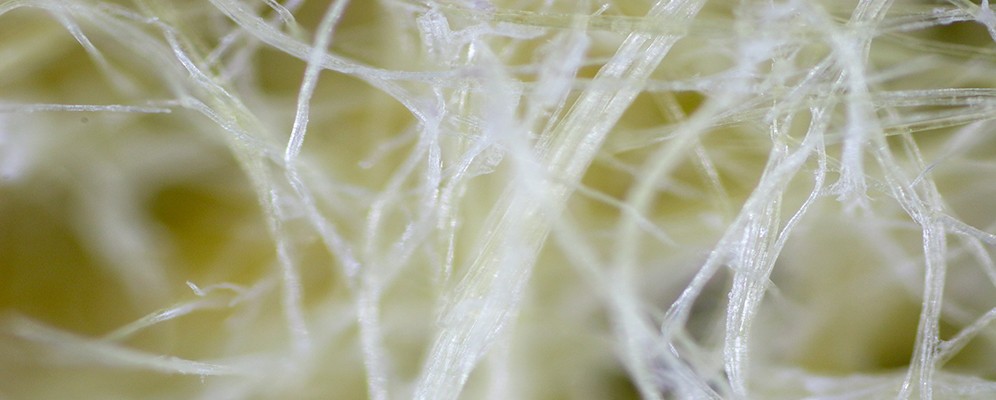
Credit: FutureBridge
In 2017 the chemical industry produced about 420 million Tonne of plastics, synthetic fibres and synthetic rubbers.
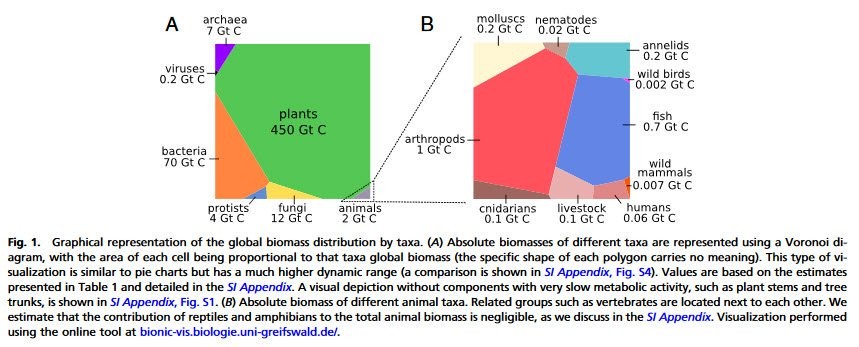
By comparison the plants biomass is estimated from different sources at about 450 Gigatonne of carbon-based molecules (not accounting for moisture content in plants).
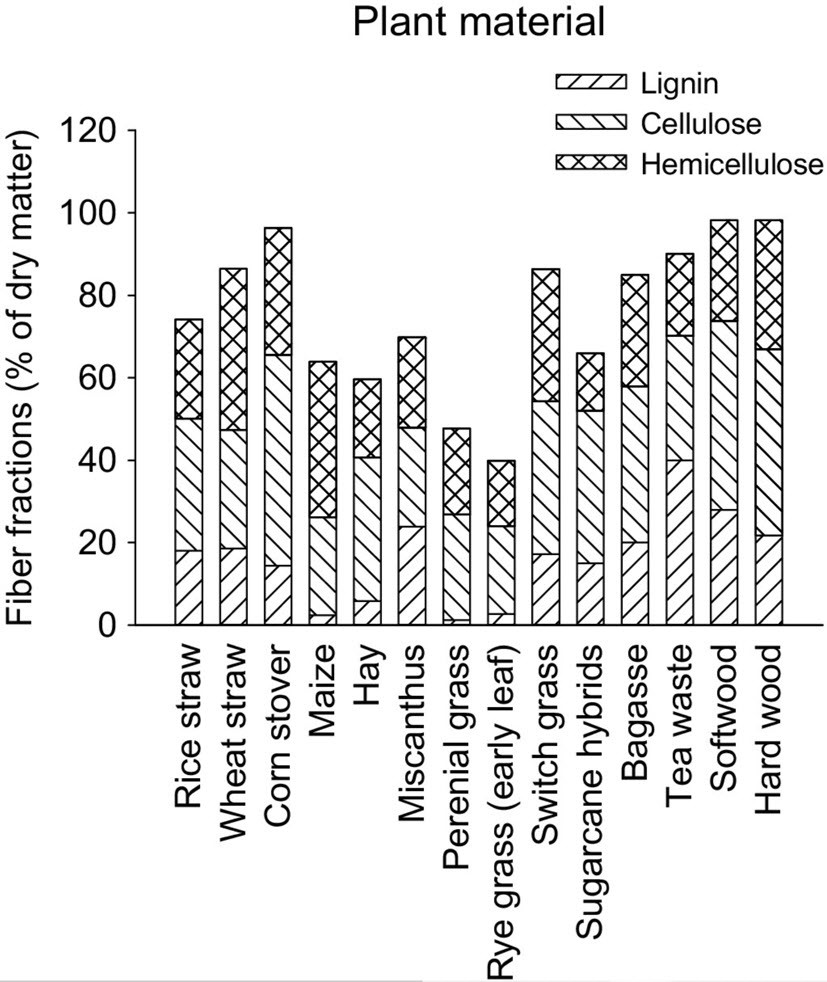
Plant cell wall is constituted by mainly 6 components: (i) cellulose, (ii) hemicellulose, (iii) lignin, (iv) water soluble sugars, amino acids and aliphatic acids, (v) ether and alcohol-soluble constituents (e.g. fats, oils, waxes, resin and many pigments), and (vi) proteins. These components build up plant biomass. Components (i) to (iii) constitute the structural lignocellulosic fiber materials of plant cells. Cellulose and hemicellulose are polymers of sugar molecules. Lignin has a more complex, semi-aromatic polymeric composition.

Lignocellulose concentration in agricultural plant residues typically composes of 50%–90% of total organic matter but it makes almost 100% of the most widespread woody biomass. It is therefore safe to assume that the total quantity of lignocellulose polymers is of the order of 95% of the total plant biomass or about 430 Gigatonne of natural polymeric fiber materials.
References
- IEA. Report: The Future of Petrochemicals (Oct 4, ober 2018)
- Y.M. Bar-On Y.M., Phillips R., & Milo, R.. The biomass distribution on Earth (May 21, 2018). Proc. Natl. Acad. Sci. U.S.A. 115 (25) 6506-6511. DOI: 10.1073/pnas.1711842115
- Uhrenholt Jensen C.. Fundamentals of Hydrofaction™: Renewable crude oil from woody biomass - Scientific Figure on ResearchGate
- Spawn, S.A., Sullivan, C.C., Lark, T.J. et al.. Harmonized global maps of above and belowground biomass carbon density in the year 2010 (Apr 6, 2020). Sci Data 7, 112 (2020). DOI: 10.1038/s41597-020-0444-4
- Biocyclopedia. Composition of Biomass
- ScienceDirect. , Lignocellulose
#biomass #cellulose #lignocellulose #wood #lignin #hemicellulose