
Product
Branched Alkylbenzenes
Abbreviation
BABs
Names
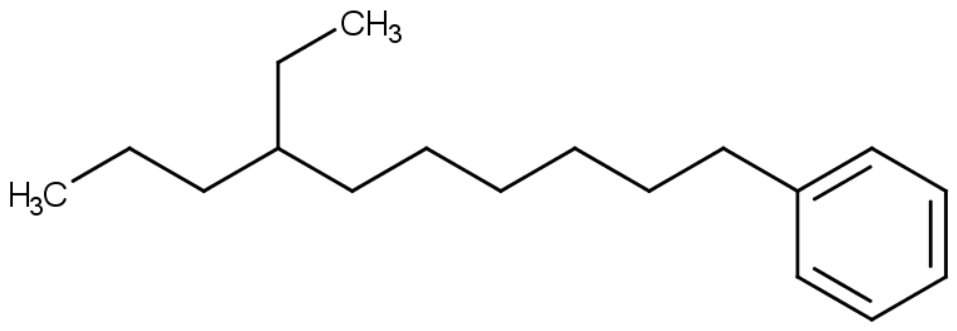
Alkyl benzenes, branched; 7-ethyldecylbenzene
Insight Articles
#PS139
Main Product
Alkylbenzenes
Segment
Chemicals
Main-Family
Aromatics
Sub-Family
Benzene & Homologues
Physical State

Liquid

Description

Branched Alkylbenzene (BAB), also known as branched dodecylbenzene (DDB), is a petrochemical compound consisting of a benzene ring with one or more branched alkyl side chains attached, typically produced by the alkylation of benzene with propylene tetramers to yield predominantly C12-range products. The branched molecular structure—characterized by methyl or longer branches along the hydrocarbon chain—distinguishes BAB from linear alkylbenzenes (LAB) and imparts properties such as high solvency, thermal stability, oxidative resistance, and hydrolytic stability.​

Chemical Structure and Production

BAB has the general alkylbenzene formula CnH2n-6, where the alkyl substituent contains branching points that result in a non-linear hydrocarbon chain attached to the aromatic ring. Commercial BAB production uses propylene oligomers (typically propylene tetramers, C12) as the alkylating agent reacted with benzene in the presence of acid catalysts such as aluminum chloride or hydrogen fluoride. The branched nature causes the molecule to fragment preferentially at branching points under conditions such as electron impact, with the positive charge remaining on the more highly substituted carbon atoms.

Properties and Applications

BAB is a clear, limpid, non-corrosive liquid with high oxidative and thermal stability combined with excellent hydrolysis resistance. Its branched structure provides superior solvency power and lubricating properties compared to linear alkylbenzenes, though this same structure impedes biodegradation because microorganisms cannot efficiently process non-linear chains through beta-oxidation pathways.

Primary applications include:​

  • Base stocks for metalworking fluids and cutting oils
  • Specialty solvents in industrial formulations
  • Chemical intermediates and additives
  • Surfactant precursors (though largely replaced by LAB in detergents due to biodegradability concerns)
  • Plasticizer intermediates

The branched alkylbenzene sulfonate (ABS) derivatives were historically important in detergent formulations but environmental persistence led to their replacement by linear alkylbenzene sulfonates (LAS) beginning in the 1960s.


References

  1. Equilex. Branched Alkyl Benzene (BAB)
  2. Wikipedia. Alkylbenzene
  3. Elchemy. Linear Alkyl Benzene Explained: Production, Properties, and Industrial Applications (Dec 22, 2025)
  4. Campos-García J. et al.. The branched-chain dodecylbenzene sulfonate degradation pathway of Pseudomonas aeruginosa W51D involves a novel route for degradation of the surfactant lateral alkyl chain. Appl Environ Microbiol (Aug 1999). 1999 Aug;65(8):3730-4. DOI: 10.1128/AEM.65.8.3730-3734. PMID: 10427075. PMCID: PMC91560

Insight Articles
Your insights will be shown here

Branched chain alkyl benzene typical structure (7-ethyldecylbenzene) https://www.guidechem.com/encyclopedia/benzene-mono-c12-13-branched-a-dic233405.html
  Product Communicator
Identifiers

logo CAS Number
151911-57-8
Chemical Data

Chemical Formula

C18H30

Molecular Weight (g/mol)
246.438
Boiling Point (°C)
327.2
Sulfur Content (wt%)
0
Specific Gravity
0.86
Crude Data

API Gravity
33.8
Country
Product Settings

Default
Status
A
Content provided by
Transaction Name Date
Modified by UserPic   Kokel, Nicolas 1/27/2026 1:33 PM
Added by UserPic   Kokel, Nicolas 9/21/2021 10:07 AM