
Product
Uranium dioxide
Abbreviation
UO2
Names
Uranium(IV) Oxide; Urania; Uranous oxide
Insight Articles
#PS718
Main Product
Uranium Oxides
Segment
Chemicals
Main-Family
Inorganics
Sub-Family
Inorganic Oxides
Physical State

Solid

Description

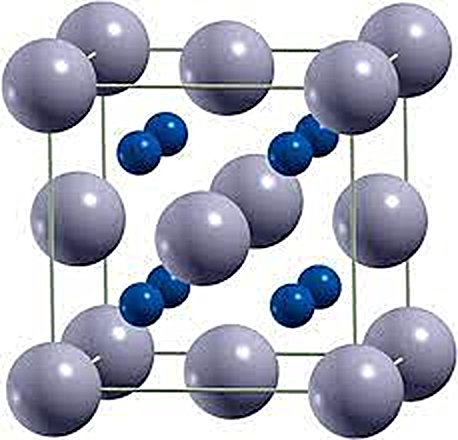
Uranium dioxide (UO₂), also known as urania or uranium(IV) oxide, is a black, radioactive, crystalline powder that naturally occurs in the mineral uraninite and serves as the primary material used in nuclear fuel rods for nuclear reactors. The compound has a molecular weight of 270.03 and exhibits a face-centered cubic fluorite crystal structure, with a very high melting point of approximately 2,858-2,898°C (5,176-5,248°F) and a density of 10.96 g/cm³. UO₂ is insoluble in water and dilute acids but dissolves in nitric acid and concentrated sulfuric acid. The material exhibits semiconducting properties and possesses a remarkably high dielectric constant of about 21.5, nearly twice that of silicon, which makes it attractive for potential high-temperature electronics applications.

Chemical Behavior

Uranium dioxide readily oxidizes in the presence of oxygen to form triuranium octoxide (U₃O₈) at temperatures around 250°C, and the oxidation rate increases in the presence of water. At high temperatures, UO₂ reacts with carbon to produce uranium carbide (UC₂) and carbon monoxide, though this process must be conducted under inert atmosphere due to the ease with which uranium carbide re-oxidizes. The stoichiometry of the material significantly influences its electrical properties, with slight deviations from ideal UO₂ composition causing orders of magnitude differences in electrical conductivity at elevated temperatures.​

Nuclear Fuel Applications

As a ceramic material capable of withstanding extremely high temperatures (about 2,300°C), UO₂ serves as the standard fuel in most commercial nuclear power reactors. When mixed with plutonium dioxide, it forms mixed oxide (MOX) fuel used in certain reactor types. The compound's high melting point, refractory nature, and open crystal structure that accommodates oxygen vacancies make it particularly suitable for nuclear fuel applications where materials must maintain structural integrity under intense radiation and thermal stress.

References

  1. Wikipedia. Uranium dioxide (last edited on Nov 9, 2025)
  2. U.S. Department of Energy (DEA), NBL Program Office. SAFETY DATA SHEET - URANIUM OXIDE (UO2) (June 23, 2020)
  3. DeVetter, B. M. et al.. (2018). Optical and chemical characterization of uranium dioxide (UO₂) and uraninite mineral: Calculation of the fundamental optical constantsThe Journal of Physical Chemistry A122(35), 7062-7070. DOI: 10.1021/acs.jpca.8b05943
  4. American Elements. Uranium Oxide
  5. Britannica. Uranium dioxide

Insight Articles
Your insights will be shown here

Unit cell of uranium dioxide https://is.gd/b8aqJw
Identifiers

logo CAS Number
1344-57-6
logo EC Number
215-700-3
logo ECHA InfoCard
100.014.273
logo IUPAC Name
Uranium dioxide
logo PubChem ID
10916
Chemical Data

Chemical Formula

UO2

Molecular Weight (g/mol)
270.03
Melting Point (°C)
2865
Sulfur Content (wt%)
0
Specific Gravity
10.97
Crude Data

API Gravity
-118.6
Country
Product Settings

Default
Status
A
Content provided by
Transaction Name Date
Modified by UserPic   Kokel, Nicolas 1/12/2026 8:59 AM
Added by UserPic   Fournier-Paradis, Jacob 1/10/2026 7:52 PM