
Product
Aluminium
Abbreviation
Al
Names
Aluminum (US, Canada)
Insight Articles
#PS751
Main Product
Light Metals (Al, Mg, Ti, Be, Li)
Segment
Chemicals
Main-Family
Inorganics
Sub-Family
Metals
Physical State

Solid

Description

Aluminium is the most widely used non-ferrous metal and the second most used metal overall after steel. It combines a unique set of physical, chemical, and mechanical properties that make it indispensable across virtually every major industrial sector.

Basic Identification

Property Value
Appearance Silvery-white, lustrous
Chemical symbol Al
Atomic number 13
Category Light Metal; Non-Ferrous Metal
Natural occurrence Never found as free metal in nature; occurs as oxides and silicates


Physical & Chemical Properties

Property Value
Density 2.70 g/cm³
Melting point 660.3°C
Boiling point 2,519°C
Hardness (Mohs) 2.5–3.0
Electrical conductivity ~37.7 × 10⁶ S/m (~61% of copper)
Thermal conductivity 205 W·m⁻¹·K⁻¹
Tensile strength (pure) ~90 MPa
Tensile strength (alloyed) 200–700 MPa
Crystal structure Face-centred cubic (FCC)


Key Characteristics


Aluminium owes its commercial dominance to an exceptional combination of properties:

  • Low density — approximately one-third the density of steel, enabling significant weight savings in structural applications
  • Corrosion resistance — a thin, self-healing aluminium oxide (Al₂O₃) passivation layer forms instantly on any exposed surface, providing excellent resistance to atmospheric and aqueous corrosion
  • High electrical conductivity — the preferred conductor for high-voltage overhead power transmission lines where weight is critical
  • Thermal conductivity — excellent heat dissipation properties used in heat exchangers and electronics cooling
  • Recyclability — can be recycled indefinitely without loss of properties; recycling requires only ~5% of the energy needed for primary production
  • Non-magnetic — valuable in electronics, medical equipment, and applications requiring magnetic neutrality
  • Non-toxic — safe for food and pharmaceutical contact applications

Production

Primary aluminium is produced exclusively via the Hall–Héroult electrolytic process, in which alumina (Al₂O₃) — derived from bauxite ore via the Bayer Process — is dissolved in molten cryolite (Na₃AlF₆) at approximately 960°C and subjected to a high direct electrical current. Aluminium deposits at the carbon cathode while oxygen is released at the carbon anode. The production chain therefore runs:

Bauxite → Alumina (Bayer Process) → Aluminium (Hall–Héroult Process)

Approximately 4–5 tonnes of bauxite yield 2 tonnes of alumina, which in turn produces 1 tonne of primary aluminium. Primary aluminium production is highly energy-intensive, consuming approximately 13–15 MWh of electricity per tonne.

Commercial Forms

Aluminium is traded and supplied in a range of physical forms:

  • Primary aluminium ingots — standard LME-traded form (P1020 grade)
  • Billets — cylindrical feedstock for extrusion
  • Slabs — flat feedstock for rolling into sheet and plate
  • Wire rod — feedstock for electrical conductor wire
  • Foundry alloys — liquid or solid alloys for casting
  • Powder & flake — for pyrotechnics, coatings, and powder metallurgy

Alloying & Grades

Pure aluminium (>99% Al) has limited mechanical strength and is used primarily in electrical conductors and foil. For structural applications, aluminium is alloyed with other elements, organised into standardised series:

Series Principal Alloying Element Typical Applications
1xxx None (>99% Al) Electrical conductors, foil, chemical equipment
2xxx Copper Aerospace structures, aircraft skin
3xxx Manganese Beverage cans, cooking utensils
4xxx Silicon Welding wire, brazing alloys
5xxx Magnesium Marine structures, automotive panels
6xxx Magnesium + Silicon Architectural extrusions, structural profiles
7xxx Zinc High-strength aerospace components
8xxx Other elements (Li, Fe) Lithium-aluminium aerospace alloys, foil


Applications

Aluminium's versatility makes it present across virtually every sector of the economy:

  • Transport — automotive body panels, aircraft fuselages, railway carriages, ship superstructures
  • Packaging — beverage cans, food foil, pharmaceutical blister packs
  • Construction — window frames, curtain walling, roofing, structural profiles
  • Electrical — overhead transmission lines (ACSR and AAAC cables), busbars, transformer windings
  • Machinery & engineering — heat exchangers, pressure vessels, pistons
  • Consumer goods — electronics casings, bicycles, sports equipment
  • Defence & aerospace — structural airframes, armour plate, missile components

World Production & Trade

Global primary aluminium production exceeds 70 million tonnes per year, with China accounting for approximately 55–60% of global output. Aluminium is one of the most actively traded industrial commodities globally, with primary aluminium (P1020 grade) traded on the London Metal Exchange (LME) and the Shanghai Futures Exchange (SHFE). The leading producing countries outside China include India, Russia, Canada, the UAE, and Australia.

Sustainability & Recycling

Aluminium is one of the most sustainable industrial metals. Approximately 75% of all aluminium ever produced remains in active use today, a testament to its recyclability. Secondary (recycled) aluminium accounts for roughly one-third of global supply and requires only ~5% of the energy of primary production, making recycling a critical component of the aluminium industry's decarbonisation strategy.


References

  1. Wikipedia. Aluminium (Page version: Feb 24, 2026)
  2. Royal Chemical Society. Aluminium (Accessed Feb 24,2026)
  3. AZoM. (May 17, 2020) Aluminium properties, production and applications: An introduction
  4. AZoM — AZO Materials (May 17, 2005). Aluminium: Specifications, properties, classifications and classes
  5. Advanced Refractory Metals. Top 10 Properties of Aluminium and Its Applications (Accessed Feb 24,2026)
  6. Righton Blackburns (Feb 24, 2021). Properties and applications of aluminium
  7. London Metal Exchange (LME). LME Aluminium (Accessed Feb 24,2026)
  8. International Aluminium Institute (Apr 11, 2024). Primary aluminium production statistics
  9. Home A., Reuters. (Sep 19, 2025). Aluminium's years of plenty are drawing to a close
  10. Wikipedia. LME Aluminium (Page version: Feb 22, 2026)

Insight Articles
Your insights will be shown here

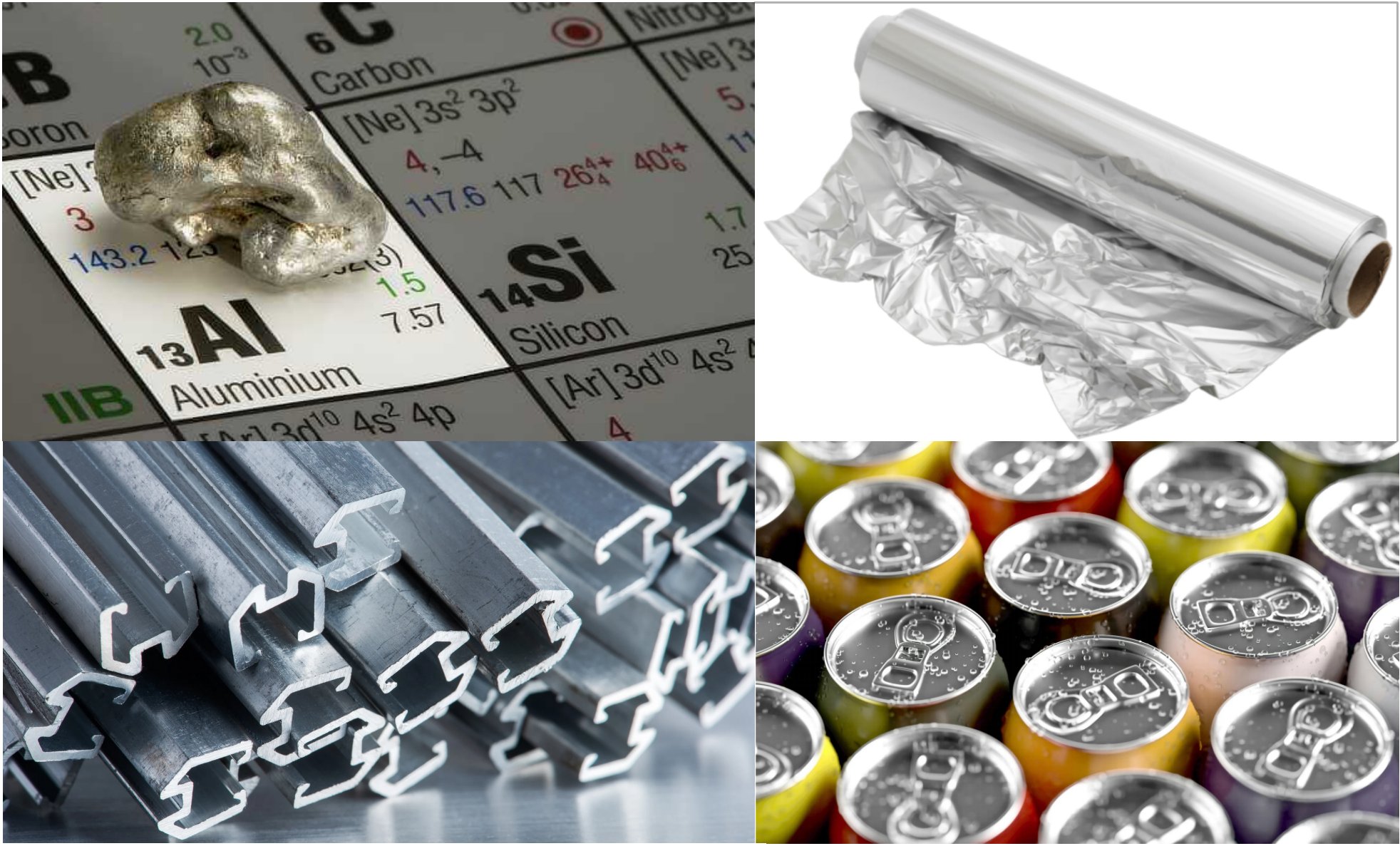
Aluminium metal and products made thereof
Identifiers

logo CAS Number
7429-90-5
logo EC Number
231-072-3
logo ECHA InfoCard
100.028.248
logo IUPAC Name
Aluminium
logo PubChem ID
5359268
Chemical Data

Chemical Formula

Al

Molecular Weight (g/mol)
26.98
Boiling Point (°C)
2519
Melting Point (°C)
660.3
Sulfur Content (wt%)
0
Specific Gravity
2.70
Crude Data

API Gravity
-79.09
Country
Product Settings

Default
Status
A
Content provided by
Transaction Name Date
Modified by UserPic   Kokel, Nicolas 2/24/2026 2:10 PM
Added by UserPic   Fournier-Paradis, Jacob 2/24/2026 7:28 AM