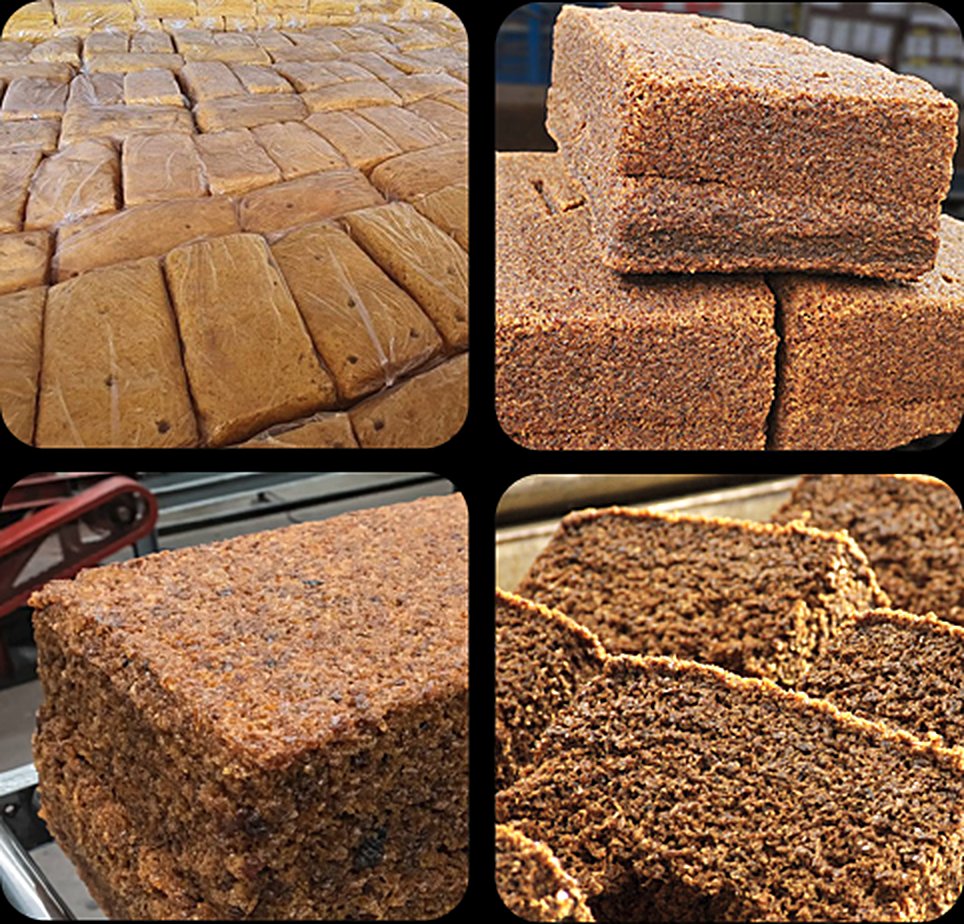
Technically Specified Rubber (TSR), also commonly referred to as block rubber, is the most widely traded commercial form of natural rubber, representing the dominant portion of global natural rubber supply. Unlike older grading systems that relied on visual inspection, TSR is classified and traded based on precise, laboratory-measured technical parameters, making it the preferred choice for large-scale industrial procurement.
Definition & Production
TSR is produced by processing natural rubber latex, field coagulum (rubber that has naturally coagulated in collection cups), or a blend of both, into uniform compressed blocks — typically 33.3 kg — wrapped in polyethylene film. The production process involves coagulation, milling, granulation, drying in hot-air tunnel ovens, and final compression into blocks before quality testing and dispatch.
Technical Grading Parameters
What distinguishes TSR from all other natural rubber grades is its reliance on measured, objective specifications rather than appearance. Each grade is classified against the following parameters:
- Dirt content — maximum allowable insoluble particulate matter (% by weight)
- Ash content — residue remaining after combustion
- Nitrogen content — related to protein levels
- Volatile matter — moisture and other evaporable compounds (typically ≤0.8%)
- Wallace Plasticity (P₀) — measure of initial hardness/processability
- Plasticity Retention Index (PRI) — resistance to oxidative degradation during processing
Grade Classification
TSR grades are designated by numbers that directly correspond to maximum allowable dirt content:
| Grade |
Max. Dirt Content |
Primary Use |
| TSR CV |
Controlled viscosity |
Tire treads, precision goods |
| TSR L |
Light-colored, low impurities |
Light-colored products, footwear |
| TSR 5 |
0.05% |
Aircraft tires, medical devices |
| TSR 10 |
0.10% |
Automotive tires, engineering goods |
| TSR 20 |
0.20% |
General tire manufacturing, industrial |
| TSR 50 |
0.50% |
Lower-grade industrial products |
TSR-Specific Technical Parameters
These are the quality-control parameters measured per ISO 2000 for TSR grading:
| Parameter |
TSR 5 |
TSR 10 |
TSR 20 |
| Dirt content (max %) |
0.05 |
0.10 |
0.20 |
| Ash content (max %) |
0.60 |
0.75 |
1.00 |
| Nitrogen content (max %) |
0.60 |
0.60 |
0.60 |
| Volatile matter (max %) |
0.80 |
0.80 |
0.80 |
| Wallace Plasticity P₀ (min) |
30 |
30 |
30 |
| Plasticity Retention Index PRI (min %) |
60 |
50 |
40 |
Physical Properties
| Property |
Value |
| Appearance |
Pale yellow to amber solid blocks (33.3 kg bales) |
| Density (raw polymer) |
0.906–0.916 g/cm³ |
| Density (processed TSR block) |
~0.93–0.96 g/cm³ |
| Refractive Index (n²⁰/D) |
1.521 |
| Glass Transition Temp. (Tg) |
−70 °C to −73 °C |
| Softening point |
64 °C |
| Flash point |
>110 °C (>230 °F) |
| Water solubility |
<1 mg/mL (practically insoluble) |
| Solvents |
Soluble in turpentine, naphtha, benzene, carbon disulfide |
Mechanical Properties (Vulcanized NR Compound)
| Property |
Typical Value |
| Tensile strength |
17–24 MPa (up to 30 MPa in optimized compounds) |
| Elongation at break |
500–800% |
| Hardness (Shore A) |
30–90 (depending on formulation) |
| Elastic modulus |
Low (highly elastic, strain-dependent) |
| Resilience |
>80% rebound |
| Operating temperature range |
−50 °C to +80 °C (continuous); up to +100 °C short-term |
Key Applications
TSR's standardized, consistent quality makes it indispensable across several industrial sectors:
- Tire manufacturing — the single largest consumer, covering passenger car, truck, and aircraft tires
- Industrial belts and hoses — conveyor belts, hydraulic hoses, and pneumatic systems
- Seals, gaskets, and O-rings — automotive and mechanical precision parts
- Footwear — shoe soles and other flexible components
- Pharmaceutical and food-grade applications — high-grade TSR 5 used where purity is critical
Advantages Over Traditional Grades
TSR offers several practical advantages over RSS and crepe grades:
- Easier material selection and quality assurance through objective specifications
- Consistent batch-to-batch uniformity, critical for automated manufacturing
- Better protection against degradation during storage and transport
- Cost-effectiveness due to bulk standardized processing
- Globally interchangeable — a manufacturer can source TSR 20 from Thailand, Malaysia, or Indonesia with identical guaranteed specifications
References
- Agriculture Institute (Dec 25, 2023). Processing and Grading of Technically Specified Rubber (TSR)
- Madapally Trading. Technically Specified Rubber (Accessed Mar 4, 2026)
- Akrochem. natural rubber — technically specified & specialty grades (Document version: Jun 3, 2022)
- Malani Y., L.D. College of Engineering. Rubber Technology (Accessed Mar 4, 2026)
- DataUncover Solutions Insights (Oct 11, 2025). Technically Specified Rubber in the Real World: 5 Uses You'll Actually See (2025). Linkedin post
- RubbLatex (Sep 22, 2024). Technically Specified Rubber (TSR) Supplier UK & Worldwide
- ChemScr. Natural Rubber (Accessed Mar 4, 2026)
- ECHEMI. Natural Rubber (Accessed Mar 4, 2026)
- Piotrowski R., Power Rubber (Jan 16, 2026). Rubber Density
- Oriental Rubber. TSR 20 Technically Specified Rubber (Accessed Mar 4, 2026)