
Product
Limestone
Insight Articles
#PS785
limestone calciumcarbonate carbonaterock dolomite
Main Product
Caclium Ores
Segment
Extractive Industry Products
Main-Family
Ores
Sub-Family
Metallic Ores
Physical State

Solid

Description

Limestone is a sedimentary rock composed predominantly of calcium carbonate (CaCO₃) in the form of the mineral calcite, and sometimes aragonite. It is one of the most abundant and widely distributed rocks on Earth's surface, and arguably the single most economically important non-metallic mineral commodity in the world. Its chemical versatility, wide geographic availability, and ease of quarrying make it a foundational raw material across dozens of industries.

Chemical & Physical Properties

Property Value
Main mineral Calcite (CaCO₃)
Chemical formula CaCO₃ (with minor MgCO₃, SiO₂, Fe₂O₃)
Color White, grey, cream, buff, yellow
Density 2.5–2.7 g/cm³
Mohs hardness 3–4
Solubility Sparingly soluble in water; readily soluble in acids
Calcination temp. ~900°C (→ CaO + CO₂)


Limestones containing a notable proportion of MgCO₃ (>15%) are classified as dolomitic limestone, while those exceeding 45% MgCO₃ transition into dolostone. Impurities such as clay, silica, and iron oxides give rise to the wide color variation seen in commercial deposits.​

Types and Grades

Commercial limestone is marketed in several grades and forms depending on its intended application:

  • High-calcium limestone (>95% CaCO₃) — preferred for chemical, pharmaceutical, and metallurgical uses
  • Dolomitic limestone — used in steelmaking and agriculture
  • Crushed limestone — aggregate for road base, concrete, and asphalt
  • Ground calcium carbonate (GCC) — finely milled for fillers, coatings, and plastics
  • Precipitated calcium carbonate (PCC) — chemically synthesized from limestone for high-purity applications in paper and pharma
  • Calcined limestone (quicklime, CaO) — produced by calcination for steel, cement, and chemical industries
  • Hydrated lime (Ca(OH)₂) — produced by slaking quicklime with water

Mining & Processing

Limestone is extracted almost exclusively by open-pit (quarry) mining due to its typically shallow, thick, and laterally extensive deposits. Post-extraction processing involves:

  • Crushing and screening — size reduction to aggregates or fines
  • Grinding — to produce GCC for industrial fillers (median particle size 1–100 µm)
  • Calcination in rotary or shaft kilns — to produce quicklime (CaO)
  • Hydration — quicklime + water → hydrated lime Ca(OH)₂
  • Precipitation — for high-purity PCC production

Industrial Applications

Limestone is used across virtually every major industrial sector:

Construction & Infrastructure

  • Primary raw material for Portland cement (limestone + clay, kiln-fired to form clinker)
  • Crushed stone aggregate in concrete, asphalt, road base, and rail ballast
  • Dimension stone for building facades, flooring, and monuments

Iron & Steel

  • Used as a fluxing agent in blast furnaces to remove silica and alumina impurities as slag
  • Maintains slag basicity ratio (CaO/SiO₂) of ~3 in basic oxygen steelmaking
  • Applied as a desulfurizing agent and in sinter plant operations​

Glass Manufacturing

  • Acts as a flux to lower the melting point of silica
  • Provides calcium oxide (CaO) to stabilize glass and improve durability​

Agriculture

  • Agricultural lime (ground limestone) neutralizes soil acidity and raises pH
  • Improves soil structure, water retention, and nutrient availability for crops​

Environmental Applications

  • Flue gas desulfurization (FGD) — reacts with SO₂ in power plant exhaust to reduce acid rain​
  • Neutralizes acid mine drainage (AMD) in passive treatment systems
  • Water treatment — adjusts pH and precipitates heavy metals​

Chemical Industry

  • Feedstock for production of soda ash, calcium carbide, calcium hypochlorite, and citric acid​
  • Production of precipitated calcium carbonate (PCC) for paper coatings, plastics, and rubber

Pharmaceuticals & Consumer Products

  • Calcium carbonate derived from high-purity limestone used in antacid tablets, calcium supplements, and toothpaste​

Global Production & Market

Limestone is the most mined rock on Earth by volume. Global production exceeds 4–5 billion metric tons per year, driven primarily by cement demand. Key producing countries include China (dominant, >50% of global cement-grade production), the United States, India, Russia, Brazil, and Germany. The USGS classifies limestone as a critical industrial mineral given its irreplaceable role across construction, steel, and chemical supply chains.


References

  1. BYJU'S. (Jul 27, 2018). Different uses of limestone
  2. Satyendra (Ju 7, 2017). Limestone – its processing and application in iron and steel industry. IspatGuru
  3. National Lime Association. (Feb 6, 2025). Uses of lime 
  4. Pontotoc Sand and Stone. (May 2, 2024). The versatile rock: Exploring limestone uses in various industries 
  5. Science Learning Hub. Limestone uses (Accessed: Mar 8, 2026) 
  6. Bliss J.D., Hayes T.S., & Orris G.J. (2008). Fact Sheet 2008-3089: Limestone: A crucial and versatile industrial mineral commodity. U.S. Geological Survey
  7. Wikipedia. Limestone (Accessed: Mar 8, 2026) 
  8. Hebei Yayang Spodumene Company (Sep 10, 2024). 9 important uses of limestone powder 

Insight Articles
Your insights will be shown here

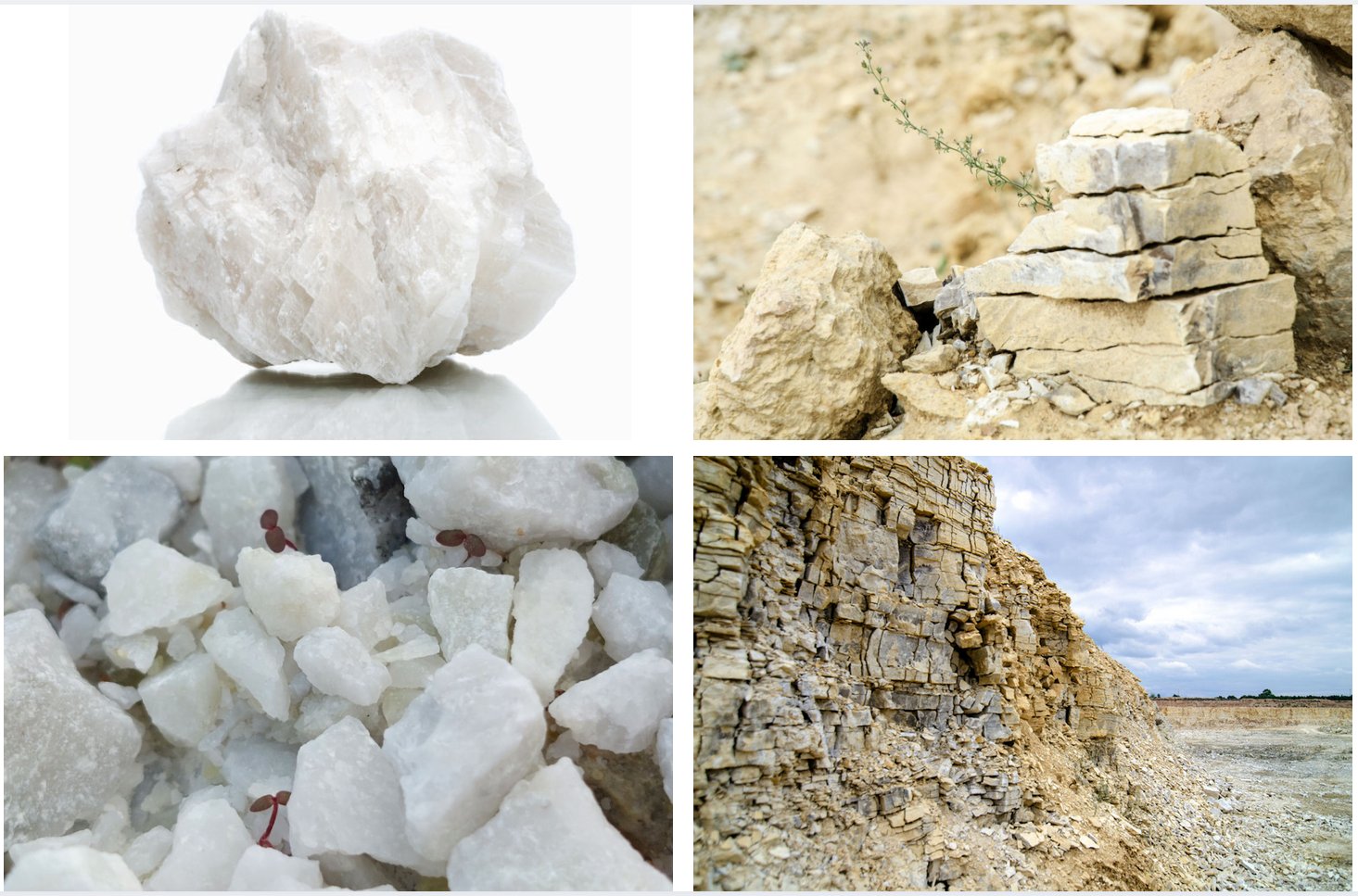
Limestone photos | Source: Nordkalk https://www.nordkalk.com/general-information-about-limestone/
Identifiers

logo CAS Number
1317-65-3
logo EC Number
215-279-6
logo ECHA InfoCard
100.013.741
logo IUPAC Name
Calcium carbonate
logo PubChem ID
10112
Chemical Data

Chemical Formula

CaCO3

Molecular Weight (g/mol)
100.09
Melting Point (°C)
825
Specific Gravity
2.70
Crude Data

API Gravity
-79.09
Country
Product Settings

Default
Status
A
Content provided by
Transaction Name Date
Modified by UserPic   Kokel, Nicolas 3/8/2026 5:06 PM
Added by UserPic   Kokel, Nicolas 3/8/2026 10:24 AM