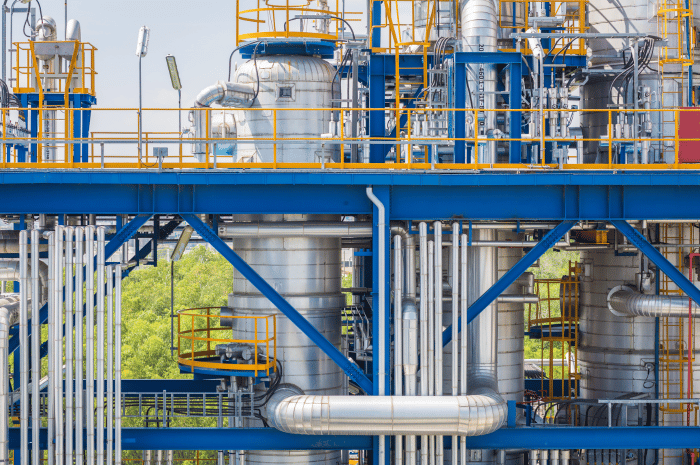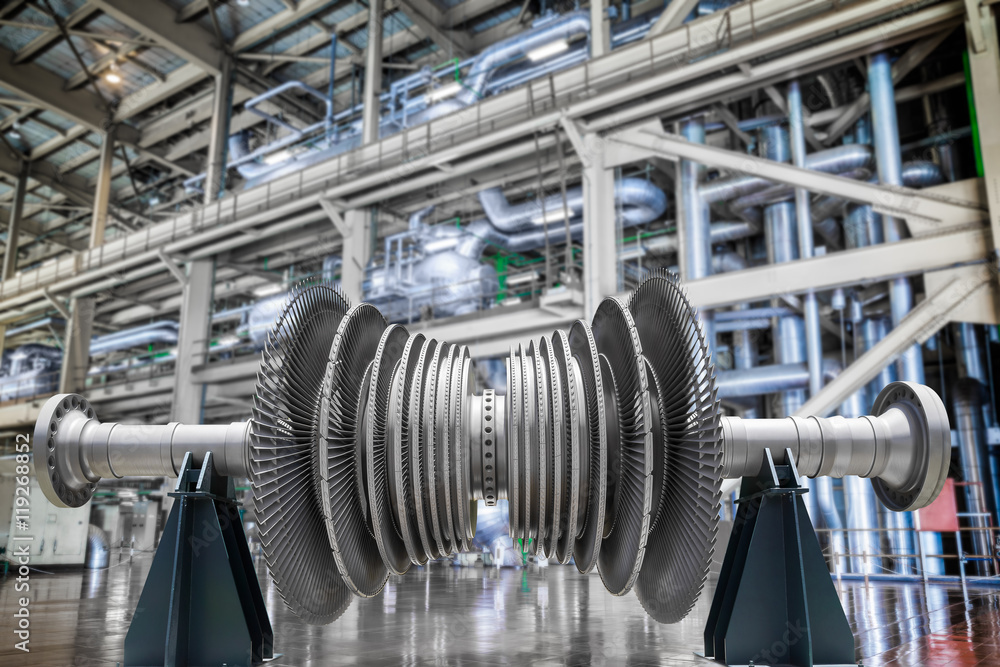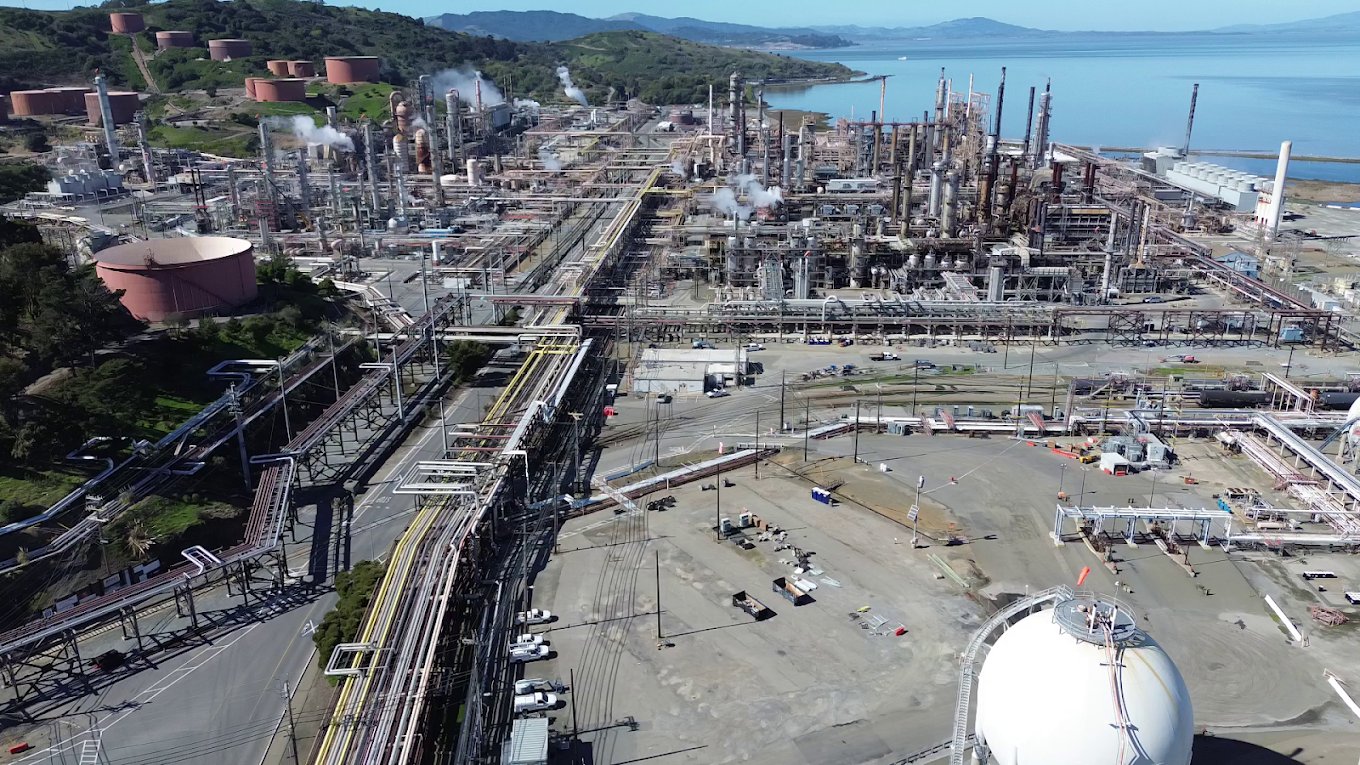
Richmond refinery | Credit: Matthew (Dec 2025)
The Chevron Richmond Refinery is one of the largest and oldest petroleum refineries on the US West Coast, located on San Francisco Bay in Richmond, California, approximately 25 miles from San Francisco.
History & Ownership
Construction began in 1901 in the Point Richmond district, and operations started on July 7, 1902 under Pacific Coast Oil. Standard Oil acquired the facility and drove its rapid expansion; by 1915 it already covered 435 acres with a capacity of 60,000 bbl/day and employed 1,700 workers. Ownership transitioned through Standard Oil of California (Socal) until the company rebranded as Chevron in 1984 following its acquisition of Gulf Oil — at the time the largest corporate merger in US history. By its 100th anniversary in 2002, the refinery operated 30 plants and had the ability to move 340,000 bbl/day of raw materials and finished products across its long wharf.
Crude Distillation & Vacuum Unit
The refinery's atmospheric crude distillation capacity as of January 1, 2025 stands at 285,000 bbl/calendar day (290,500 bbl/stream day), making it by far the largest refinery in Northern California and among the top 10 in the US. A vacuum distillation unit with a capacity of 103,400 bbl/sd processes the atmospheric residuum into vacuum gas oil (VGO) and vacuum residuum streams. The refinery accepts a wide range of crude slates including Alaska North Slope, Arabian Light/Medium, and Iraqi Basra grades, supporting crude sulfur content up to ~3 wt%.
Process Units & Technical Capabilities
Conversion Units
| Unit |
Technology / Licensor |
Capacity (bbl/sd) |
Notes |
| FCC (Fluid Catalytic Cracking) |
Not publicly disclosed |
90,000 (fresh feed) |
Installed in 1959 at 40,000 bbl/day; converts low-sulfur VGO to high-octane gasoline, LPG, light cycle oil |
| Isomax Hydrocracker |
UOP Isomax (two-stage fixed-bed) |
71,300 (combined trains) |
Opened 1965 as world's largest hydrocracking complex at 62,000 bbl/day ; converts heavy VGO to gasoline and distillates |
| TKN Hydrocracker |
Chevron Lummus Global (CLG) proprietary |
(Included in 71,300 above) |
Separate train from Isomax; furnaces upgraded with low-NOx burners under Modernization Project |
| Lube Oil Hydrocrackers / Finishers |
Chevron proprietary Isocracking + Isodewaxing |
8,500 bbl/day base stocks |
Expanded in 1984; Isodewaxing introduced commercially in 1993; produces Group II/III high-VI lube base oils |
| Solvent De-Asphalting (SDA) |
Chevron proprietary (propane/butane solvent extraction) |
31,000–38,000 bbl/day |
World's largest SDA plant when built in 1965; produces DAO for FCC and SDA resid (HSFO) |
Reforming & Treating Units
| Unit |
Technology / Licensor |
Capacity (bbl/sd) |
Notes |
| Catalytic Reformers |
Not publicly disclosed |
64,800 (combined) |
Multiple trains; produce CARB-spec high-octane reformate; includes Reformate Splitter Unit |
| Catalytic Hydrotreating / Hydrorefining |
Standard fixed-bed |
96,000 |
Includes NHT (naphtha), JHT (jet), DHT (diesel to ULSD), and FCCFHT (FCC feed) trains |
| FCC Feed Hydrotreater (FCCFHT) |
Fixed-bed hydrotreating |
Expanded from 65,000 → 80,000 |
Post-Renewal Project expansion; new DEA amine contactor added for H₂S |
Upgrading & Blending Units
| Unit |
Technology / Licensor |
Capacity (bbl/sd) |
Notes |
| Alkylation |
HF or H₂SO₄ alkylation (not disclosed) |
65,000 |
Converts FCC LPG olefins to high-octane alkylate; feeds AvGas and motor gasoline pools |
| Isomerization (Penhex) |
Not disclosed |
34,000 |
Light naphtha C5/C6 isomerization for octane improvement |
| Butamer Unit |
UOP Butamer (likely) |
Not disclosed |
Isomerizes n-butane to isobutane for alkylation feed |
| Polymerization (Poly) |
Catalytic polymerization |
Not disclosed |
Oligomerization of light FCC olefins; low-NOx burner upgrades applied |
| Tetramer Unit |
Not disclosed |
Not disclosed |
Propylene tetramer / detergent alkylate intermediate production |
Hydrogen Plant
| Parameter |
Detail |
| Technology |
Steam Methane Reforming (SMR) + Pressure Swing Adsorption (PSA) |
| Old capacity |
2 × 90 MMSCFD + 50 MMSCFD PSA recovery = 230 MMSCFD at ~95% H₂ purity |
| New capacity (post-Renewal) |
2 × 122 MMSCFD + 50 MMSCFD PSA recovery = 294 MMSCFD at >99% H₂ purity |
| Efficiency gain |
~15% more energy-efficient per unit volume vs. the previous 45-year-old plant |
Sulfur Recovery
Three Claus-process SRU trains with combined capacity of 600 long tons/day, expandable to 900 long tons/day via oxygen enrichment. Tail gas treating units upgraded for SO₂, NOx, CO, and particulate reduction; elemental sulfur sold to agricultural and industrial users.
The refinery requires 130 megawatts of power and up to 50 million gallons of cooling water daily. Storage infrastructure includes hundreds of tanks capable of holding up to 15 million barrels of crude, gasoline, jet fuel, diesel, lube oil, and wax, connected by 5,000 miles of internal pipelines.
Products
Primary products are motor gasoline (CARB-spec), jet fuel, diesel (ULSD), lubricating base oils (Group II/III), aviation gasoline (AvGas), LPG, and elemental sulfur. Lube base stocks are distributed across the western US. The refinery also produces Techron (Chevron's proprietary gasoline additive) via its alpha olefin plant, one of the original chemical units still in operation.
Marine & Logistics Infrastructure
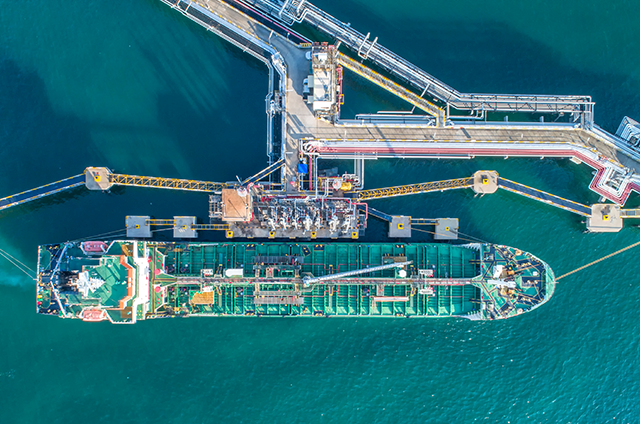
Crude is received and products distributed via a long wharf extending into San Francisco Bay, capable of handling large tankers. Internal logistics include 5,000 miles of pipelines, hundreds of tanks capable of storing up to 15 million barrels, and a former 2.25-mile narrow-gauge electric railway (replaced by trucks in 1948).
Modernization & Energy Projects
A ~$1 billion Energy & Hydrogen Renewal Project (2008–2014) delivered a new 294 MMSCFD hydrogen plant, a Cogen 3000 gas turbine replacing the old boiler plant, and an expanded FCCFHT unit. The refinery requires 130 MW of power and up to 50 million gallons/day of cooling water.
References
- Oil&Gas Advancement (Nov 16, 2015). Chevron Richmond Refinery, United States of America
- Wikipedia. Chevron Richmond Refinery (page version: Jan 6, 2026)
- Hartwig J.W., Chevron (May 23, 2011). Chevron Richmond Refinery Revised Renewal Project: Conditional Use Permit / Amended EIR Application. City of Richmond, California
- The Center for Land Use Interpretation (n.d.). Chevron's Richmond Refinery, California
- California Energy Commission (n.d.) California Oil Refinery History
- eia. Refinery Capacity Report (June 2025 With data as of January 1, 2025)