Crude Oil Dehydration and Desalting
- Technology Type
- Crude Oil Dehydration and Desalting

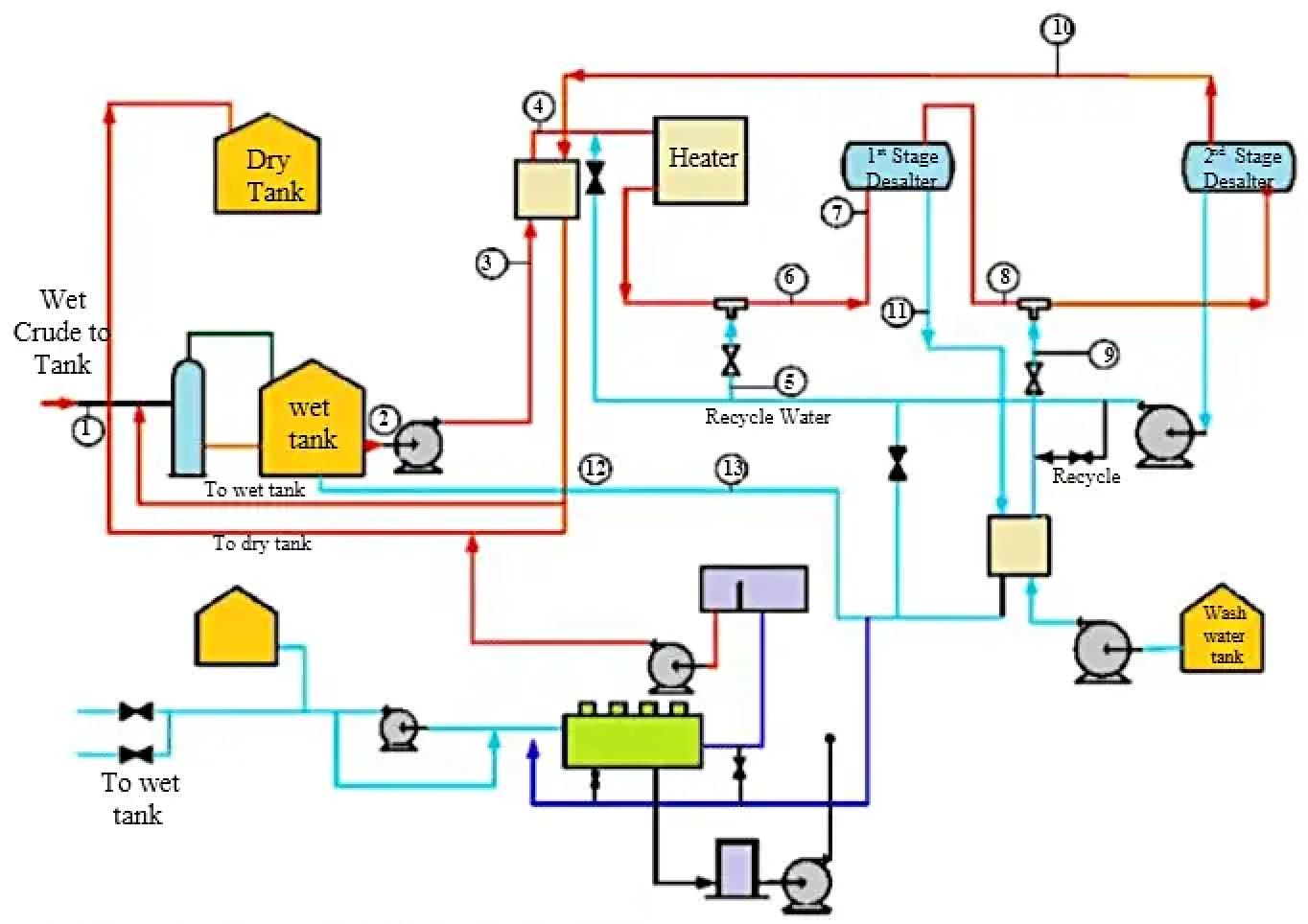
Crude oil received after transportation includes many types of salt traps in small droplets of water staggered all locations of the volume. These droplets are so small that self-extraction and settling are not possible. In general, there are three types of oleophobic Impurities found in crude oil:
- Salt: Mainly chlorides and Sulphates of Sodium (Na), Potassium (K), Calcium (Ca), and Magnesium (Mg).
- Sediments: Such as silt, sands, Mud, Iron oxide, and Sulphides.
- Water: Present as soluble, emulsified, and finely dispersed form.
If crude oil is left untreated before processing, salt present in crude oil can cause many types of operating failure and maintenance problems. Crude oil Dehydration and desalting is an important part of the refinery that helps to clean crude oil in its initial processing stage:
- Crude oil dehydration is the process of removing the water present in crude oil.
- Desalting of crude oil means the removal of the dissolved salt in the crude oil and increasing the grade of the crude oil.
- Since salt is dissolved in the water phase, dehydration is also effectively desalting.
The crude oil desalting and dehydration procedure is carried out in three steps:
- Destabilization of the emulsion
- Coalescence of small drops into large drops
- Settling out of large drops and separation of the two phases.
By this process, a considerable percentage of suspended solids (sand, clay, or soil particles, or even particles product from corrosion of pipelines and other upstream equipments) are removed.
#crudeoil #petroleum #desalting