U.S. Sanctions Hengli Petrochemical's Dalian Refinery Over Iranian Crude Purchases


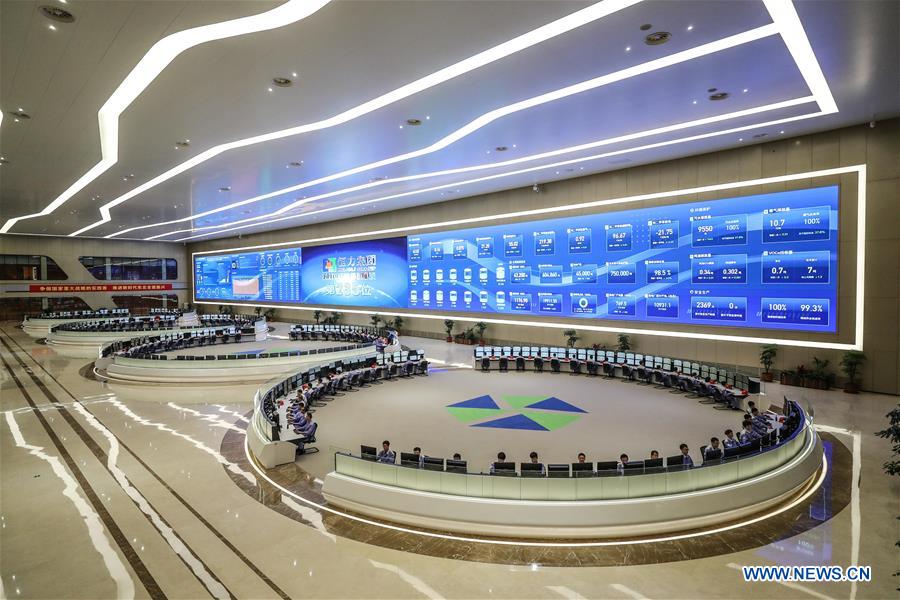
Staff members of the Hengli Petrochemical (Dalian) Refining Co., Ltd. monitor the operation of equipments on the Changxing Island in Dalian City, northeast China's Liaoning Province. Source: Xinhua/Pan Yulong (May 17, 2019)
Market Insight | ppPLUS Intelligence Series • Refining & Petrochemicals | 25 April 2026
The Targeted Facility
Hengli Petrochemical's Dalian refinery is ranked as China's second-largest independent teapot refinery, with a crude processing capacity of approximately 400,000 barrels per day (bpd). The facility is located in the port city of Dalian, Liaoning Province, giving it direct access to seaborne crude deliveries via the Bohai Sea. Teapot refineries — a colloquial term for China's independent refining sector — are known for sourcing discounted crude from sanctioned producers, including Iran, Venezuela, and Russia.
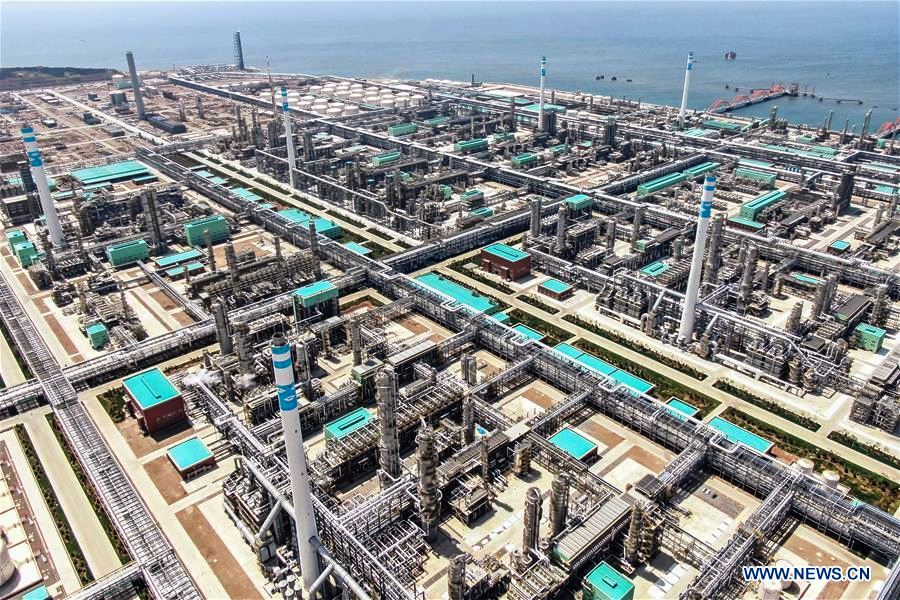
Aerial photo shows the industrial park of the Hengli Petrochemical (Dalian) Refining Co., Ltd. on the Changxing Island in Dalian City, northeast China's Liaoning Province. Source: Xinhua/Pan Yulong (May 17, 2019)
Iranian Crude Supply Chain
According to the Treasury Department, Hengli has been receiving Iranian crude oil cargoes from the so designated shadow fleet vessels since at least 2023, having purchased billions of dollars' worth of Iranian petroleum products in total. Three named tankers — BIG MAG (IMO 9263215), GALE (IMO 9294240), and ARES (IMO 9174397) — are specifically cited as having delivered over five million barrels of Iranian crude to the Dalian facility.
Critically, OFAC established that a portion of Hengli's Iranian crude purchases was sourced through Sepehr Energy Jahan Nama Pars Company, a firm identified by U.S. authorities as a commercial front operating on behalf of Iran's Armed Forces General Staff. These transactions generated hundreds of millions of dollars in revenue for the Iranian military, with proceeds alleged to fund regional proxy groups and military programs.
Concurrent Vessel Designations
Alongside the refinery, OFAC simultaneously designated approximately 40 shipping firms and vessels as part of Iran's fleet network. Nineteen specific vessels were added to the Specially Designated Nationals and Blocked Persons (SDN) List, transporting Iranian crude oil, LPG, naphtha, HSFO, and petrochemicals to markets across China, the UAE, Bangladesh, and beyond. Notable among those vessels:
-
COVENIO (IMO 9263227, Panama-flagged) — transported more than 6 million barrels of Iranian oil to China since early 2025, owned by Hong Kong-based Extensive Shipping Limited
-
SEEKER 8 (IMO 9294329, Vanuatu-flagged) — transported over 4 million barrels of Iranian crude between January–February 2026, ultimately discharged in China
-
LPG SEVAN (IMO 9177806, Panama-flagged) — transported approximately 750,000 barrels of Iranian propane and butane to Bangladesh between August–November 2025
Political Context
The sanctions were announced on the eve of scheduled U.S.–Iran nuclear talks and just weeks ahead of a planned meeting between President Trump and China's President Xi Jinping. Treasury Secretary Scott Bessent framed the action within the broader "Economic Fury" campaign: "Treasury will continue to constrict the network of vessels, intermediaries, and buyers Iran relies on to move its oil to global markets."
The timing underscores Washington's strategy of applying financial pressure on Iran's oil revenue infrastructure while diplomatic channels remain open — a dual-track approach that simultaneously constrains Chinese refinery access to discounted Iranian feedstocks.
Sanctions Implications
All property and interests of Hengli Petrochemical (Dalian) Refinery Co., Ltd. within U.S. jurisdiction are now blocked. Any entity 50% or more owned by a designated person is also blocked. Third-party financial institutions and trading firms engaging with Hengli risk secondary sanctions exposure. For Chinese independent refiners still sourcing Iranian crude, the designation represents a significant escalation in enforcement risk.
Sources: U.S. Treasury / OFAC Press Release SB0472 (24 April 2026); Fox News; Channel News Asia; Bloomberg; KSL/AP.