
Product
Resin
Insight Articles
#PS748
Main Product
Pitch
Segment
Refined Products
Main-Family
Refinery Residues
Sub-Family
Coal & Petroleum Residues
Physical State

Solid

Description

Resin is a discrete intermediate product stream recovered from a three-stage Solvent Deasphalting (SDA) unit, positioned between deasphalted oil (DAO) and pitch in terms of hydrocarbon quality and contaminant content. It is produced by selectively precipitating an intermediate polarity fraction from a heavy residue feedstock using a light paraffinic solvent at carefully controlled temperature, exploiting the difference in supercritical precipitation temperatures between resin and asphaltene molecules. 

Feedstock

Resin can be derived from any of the following SDA unit feedstocks:

Molecular an Colloidal Character

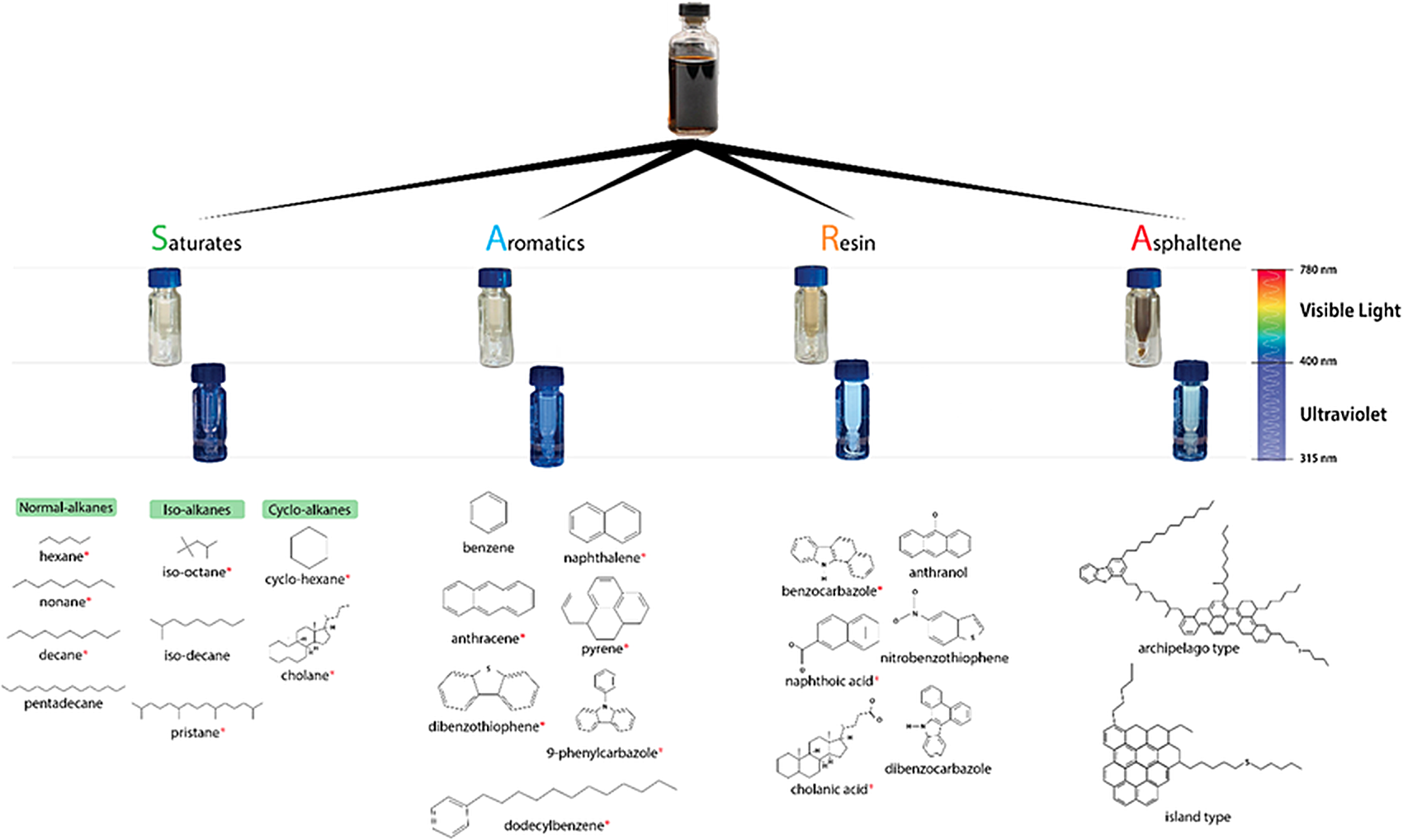
Resin molecules are predominantly high-molecular-weight polar aromatics and naphtheno-aromatic structures, with significant heteroatom content (sulfur, nitrogen, oxygen). In the SARA framework, resins rank between aromatics (weakly polar) and asphaltenes (highly polar). They are soluble in aromatic solvents but have limited solubility in light paraffinic solvents, which is the physicochemical basis for their selective precipitation in the SDA extractor.

Resin molecules act as critical peptizing agents that keep asphaltene micelles dispersed within the maltene phase. The resin-to-asphaltene ratio (R/A) governs bitumen colloidal stability — a high R/A yields fluid sol-type bitumen; a low R/A yields stiffer gel-type bitumen. 

Position in the Residue Upgrading Chain

Vacuum Residue
      │
  SDA Unit (3-stage)
      ├── DAO        → FCC / Hydrocracker / Lube base oil
      ├── Resin      → Bitumen blending / Coker / Visbreaker / Hydrotreater
      └── Pitch      → Coker / Gasifier / Fuel oil

Product Character & Typical Properties

Property Typical Range Notes
Molecular Weight 500–2,000 g/mol  
API gravity 3–12° API Heavier than DAO,
lighter than solid pitch 
Specific gravity 0.99–1.04  
Viscosity Very high; requires heating Typically handled at >100°C
Pour point 30–80°C Semi-solid at ambient temperature
CCR 15–28 wt% Intermediate between
DAO and pitch 
Sulfur Moderate–high; crude-dependent Broadly follows feed sulfur
Metals (Ni+V) 50–400 ppm Significantly lower than pitch; higher than DAO 
Asphaltene
ontent (C7)
Low–moderate Partially asphaltene-
contaminated vs. clean DAO
Nitrogen Moderate Polar heteroatom-rich molecules
Hydrogen content ~9–11 wt% Intermediate H/C ratio


Downstream Uses

  • Asphalt/bitumen blending — resin improves adhesion, ductility, and softening point of road and industrial bitumen; mixing resin and pitch to bitumen is a recognized SDA configuration objective
  • Delayed coker feed — contributes liquid yield from the coker; often co-fed with pitch​
  • Visbreaker feed — mild thermal treatment reduces viscosity, producing gas oil and a stable fuel oil blend component​
  • Hydroprocessing feed (dedicated resin HDT/RHC) — in integrated SDA/hydroprocessing schemes, the resin stream is separately hydroprocessed, recovering a significant portion as DAO-quality hydrocracker feed
  • Heavy fuel oil blending — as a high-viscosity, high-calorific-value blend component
  • Gasification feed — as part of a pitch/resin combined feed to an entrained-flow gasifier
  • FCC/RFCC feed blending — in limited cases, blended with DAO to adjust feed contaminant levels​

Handling & Commercial Notes

Resin requires heated storage and transfer (typically 120–160°C) due to its high pour point and viscosity. It is not widely traded as a commodity product but is disposed of within integrated refinery configurations or supplied to nearby asphalt blending plants. Its value lies in being a quality upgrade over pitch while extending total liquid recovery beyond that achievable in a two-stage SDA unit.


References

  1. Pörner Gruppe (accessed: Feb 21, 2026). Pörner Biturox® Bitumen
  2. Sun, S. & Fandong M. (Dec 21, 2020). Study on Solvent Deasphalting Process for Upgrading of Hydrocracking Unconverted OilIndustrial & Engineering Chemistry Research 660(1), 652–658. DOI: 10.1021/acs.iecr.0c05766
  3. Romero, S., Becht Engineering (Oct 6, 2020). The Role of Solvent Deasphalting (SDA) in Refining. Refining Community
  4. Bridjanian, H. & Sattarin, M. (Mar 20, 2006). Modern recovery methods in used oil rerefining. Petroleum & Coal, 48(1), 40–43
  5. Abdel-Halim, T., & Kellogg, R. F., Kellog Brown & Root, Inc. (2004). Chapter 10.2: The ROSE Process. In Handbook of Petroleum Refining Processes. McGraw-Hill
  6. Magomedov, R. N., Pripakhaylo, A. V., Dzhumamukhamedov, D. S., & Maryutina, T. A. (Sep 2020). Solvent deasphalting of vacuum residue using carbon dioxide-toluene binary mixtureJournal of CO₂ Utilization, 40, 101206. DOI: 10.1016/j.jcou.2020.101206
  7. Stratiev, D., Shishkova, I., Palichev, G. N., Atanassov, K., Ribagin, S., Nenov, S., Nedanovski, D., & Ivanov, V. (2022). Study of bulk properties relation to SARA composition data of various vacuum residues employing intercriteria analysisEnergies15(23), 9042. DOI: 10.3390/en15239042
  8. Zachariah, A., & de Klerk, A. (2017). Partial upgrading of bitumen: Impact of solvent deasphalting and visbreaking sequenceEnergy & Fuels, 31(9), 9374–9380.DOI: 10.1021/acs.energyfuels.7b02004
  9. Gillis D.B., Clarke R. & Woodson J. United Stated patent US9932527B2: Integration of solvent deasphalting with resin hydroprocessing. Jul 29, 2012: Application filed by Amec Foster Wheeler USA Corp
  10. Gillis D.B.. United States patent US9296959B2: Integration of solvent deasphalting with resin hydroprocessing and with delayed coking. Mar 15, 2019: Application filed by Foster Wheeler USA Corp

Insight Articles
Your insights will be shown here

Visual representation of SARA (saturates, aromatics, resins and asphaltenes) https://www.researchgate.net/publication/392958544_Accelerating_Saturate_Aromatic_Resin_Asphaltene_SARA_Analysis_for_High-Fidelity_Petroleum_Profiling_via_mSARA-HPLC
Identifiers

No Identifiers defined

Chemical Data

Molecular Weight (g/mol)
1000
Specific Gravity
1.02
Crude Data

API Gravity
7.23
Country
Product Settings

Default
Status
A
Content provided by
Transaction Name Date
Modified by UserPic   Kokel, Nicolas 2/21/2026 5:08 PM
Added by UserPic   Kokel, Nicolas 2/21/2026 3:56 PM