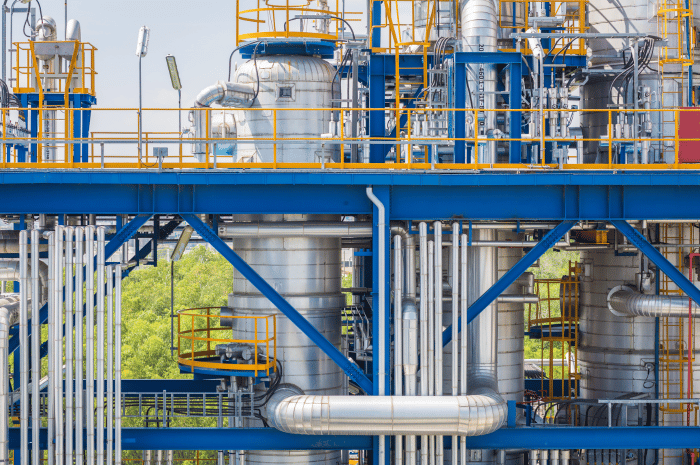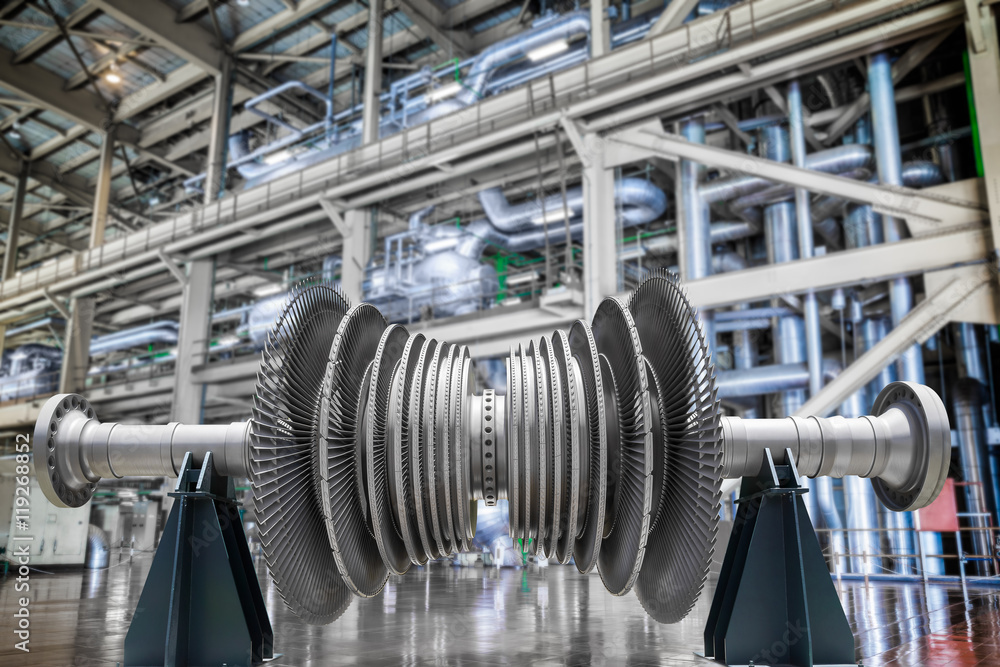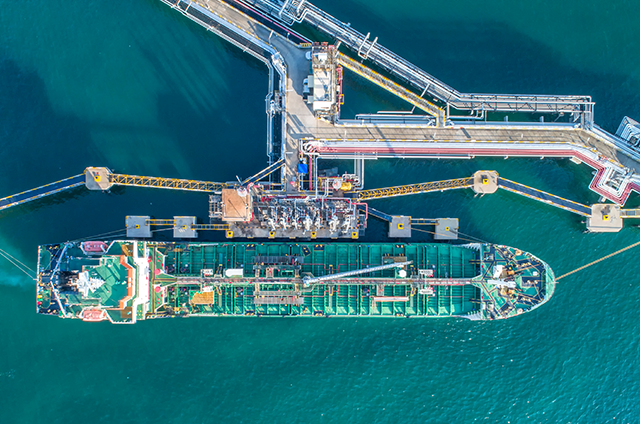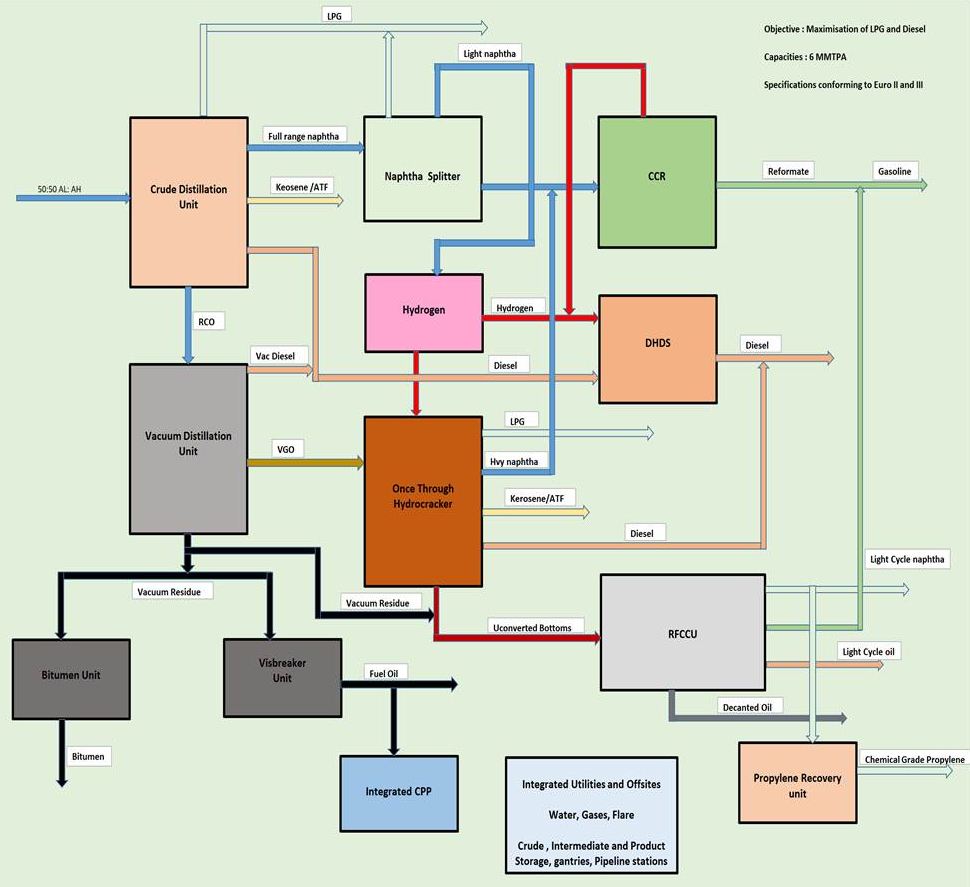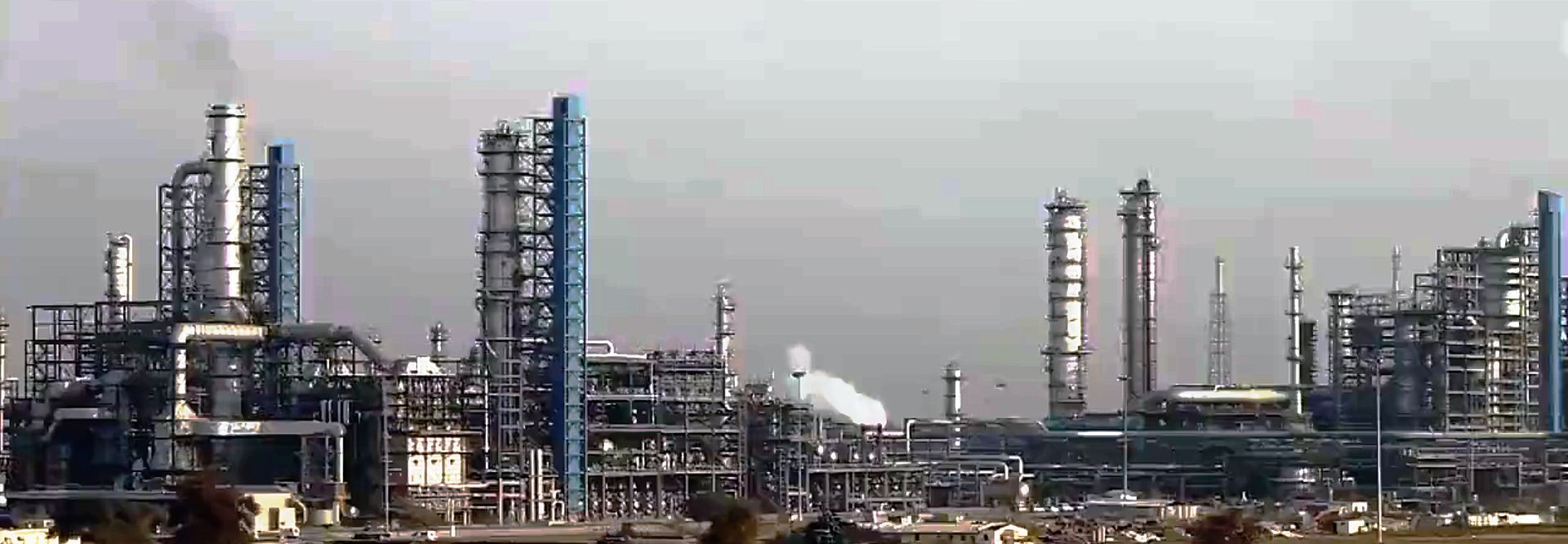
Guru Gobind Singh Refinery | Source: EIL video [2]
History
The GGSR was originally conceived as a joint venture between Saudi Aramco and the Punjab State Industrial Development Corporation (PSIDC), each holding 26%. Saudi Aramco withdrew to pursue a separate downstream venture with Shell, after which HPCL and Mittal Energy Investment Pte Ltd formed HMEL to take the project forward. Construction commenced in 2007–2008, and the refinery was commissioned in March 2012 — delivered in a record 44 months. Initial capacity was 9.0 MMTPA, subsequently expanded to the current 11.3 MMTPA (230,000 bpd).
Location & Logistics
The refinery is landlocked in northern India and depends entirely on a dedicated 1,017 km cross-country crude pipeline running from Mundra Port, Gujarat (west coast) to Bathinda. Mundra Port handles crude imports via a Single Point Mooring (SPM) buoy capable of receiving Very Large Crude Carriers (VLCCs). Finished products are distributed via three modes:
- Pipeline — Bathinda to Udhampur (J&K) pipeline
- Rail
- Road
Capacity & Complexity
| Parameter |
Value |
| Crude throughput |
11.3 MMTPA (230,000 bpd) |
| Nelson Complexity Index |
10.3 |
| Gross Refining Margin (design) |
USD 9.4/bbl (Arab Heavy / DOBA blend); USD 7/bbl (Arab Medium) |
| Captive Power Plant |
165 MW |
| Liquid Discharge |
Zero Liquid Discharge (ZLD) facility |
Processing Units
The refinery is configured as a zero fuel oil, high-distillate complex, comprising:
- CDU/VDU — 9.0 MMTPA (195,000 BPSD) — original train; expanded to 11.3 MMTPA
- Naphtha Hydrotreater (NHT) — 1.14 MMTPA
- Continuous Catalytic Reformer (CCR)
- Isomerisation Unit (ISOM)
- Diesel Hydrotreater (DHDT)
- VGO Hydrotreater (VGO-HDT)
- Fluid Catalytic Cracker (FCC)
- Delayed Coker Unit (DCU) — zero fuel oil strategy; converts vacuum residue to coke + distillates
- Hydrogen Generation Unit (HGU)
- Sulphur Recovery Unit (SRU)
- Polypropylene (PP) Unit — India's largest PP extruder at 86.4 TPH
- HDPE Plant — India's first CP-Chem licensed HDPE plant for niche grades
- Utilities & Offsites
Products
The refinery produces a full slate of BS-VI compliant transportation fuels alongside petrochemicals:
- Motor Spirit (MS / Gasoline) — BS-VI
- High Speed Diesel (HSD) — BS-VI
- Aviation Turbine Fuel (ATF)
- LPG
- Naphtha
- Kerosene / Mineral Turpentine Oil (MTO)
- Hexane
- Petroleum Coke (Pet Coke)
- Sulphur
- Polypropylene (PP)
- High-Density Polyethylene (HDPE) — niche grades
Petrochemical Integration
HMEL has progressively deepened the refinery's petrochemical integration, positioning it as one of India's most advanced integrated refinery-petrochemical complexes. The facility features India's largest Automatic Storage and Retrieval System (ASRS) warehouse with 150 KT capacity, supporting the polymer logistics operation. The combination of FCC-derived propylene feeding the PP unit, and the HDPE plant, gives HMEL a differentiated product portfolio relative to purely fuel-focused Indian refineries.
Key Engineering Facts
- Designed for 50% turndown capability while maintaining product specifications
- Configured for Euro-IV/V fuel specifications from initial design
- Zero fuel oil export — all residue converted via DCU and FCC
- Advanced process automation and analytics platform
References — Guru Gobind Singh Refinery
- HMEL Official Website — Guru Gobind Singh Refinery (Accessed Mar 28, 2026)
- Engineers India Limited (EIL) — Guru Gobind Singh Refinery Project Page (Accessed Mar 28, 2026)
- Offshore Technology — Guru Gobind Singh Refinery (GGSR), Punjab (Oct 16, 2007; updated)
- Global Energy Monitor — Guru Gobind Singh Refinery Power Station (Page version: Aug 4, 2025)
- Wikipedia — Guru Gobind Singh Refinery (Accessed Mar 28, 2026)
- VRC Group — Guru Gobind Singh Refinery – Bhatinda (Jan 27, 2025)
- Industrial Info Resources — HMEL Commissions Guru Gobind Singh Refinery in Bathinda (Apr 13, 2012)
- Global Energy NL — HMEL Mittal Energy Guru Gobind Singh Refinery (May 29, 2012)