Braskem Greenlights R$4.2 Billion Ethylene Expansion in Rio de Janeiro

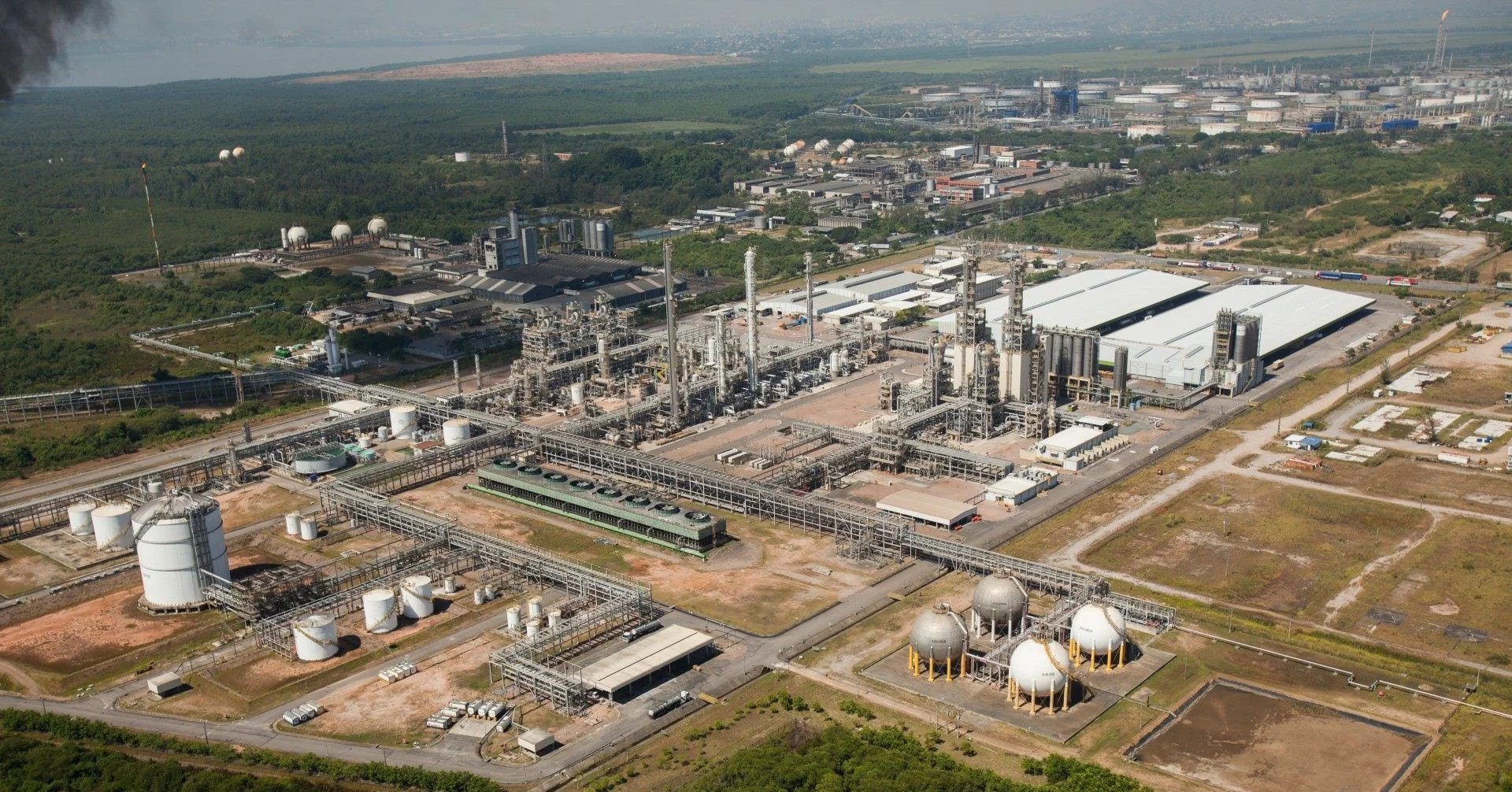
Article Image: Braskem's Operations at the Duque de Caxias Petrochemical Complex | Credit: C. Moutinho (May 27, 2024). O Patrononews
Project Scope and Timeline
The expansion targets Braskem's PE 9 DCX polyethylene unit at Duque de Caxias, located northwest of Rio de Janeiro city. Initial basic engineering had received board approval in February 2025 with a budget of R$233 million; the latest decision authorizes full execution of the project, which is expected to generate approximately 7,500 direct and indirect jobs during construction and add 230,000 tonnes per year of polyethylene output once operational.
Final investment approval remains contingent on securing additional project financing beyond resources already committed under Brazil's Special Regime for the Chemical Industry (REIQ) for 2025–2026, as well as the extension of REIQ/PRESIQ tax incentives under Bill 892/2025, currently awaiting presidential approval. Braskem has emphasized that the capital structure and financing strategy remain under active review as part of its broader Transformation Program.
Strategic Feedstock Partnership with Petrobras
A cornerstone of the project is a new long-term ethane supply agreement with Petrobras, currently in final negotiation stages. The contract will secure additional volumes of ethane feedstock processed at Petrobras' Natural Gas Complex in Itaboraí—the Boaventura Complex—and delivered via the Rota 3 pipeline infrastructure, reinforcing the integration of both companies' investments in Rio de Janeiro. This arrangement builds on existing five-year naphtha and ethane supply contracts between the two companies that run through December 2025.
By increasing the proportion of natural gas-derived ethane in its feedstock matrix, Braskem aims to lower production costs and reduce greenhouse gas emissions intensity compared to naphtha-based routes, positioning the complex as more modern, sustainable, and globally competitive. The shift toward gas feedstocks aligns with broader industry trends in the Americas and underscores Braskem's commitment to energy transition within its South American operations.
Context: Transformation Program and Industrial Competitiveness
The Rio de Janeiro expansion forms a key pillar of Braskem's multi-year Transformation Program, designed to enhance competitiveness amid a challenging global petrochemical landscape characterized by oversupply, margin compression, and the rise of low-cost Middle Eastern and Asian capacity. Stefan Lepecki, Braskem's Vice President of South America Business, emphasized that despite near-term headwinds, the company must secure its long-term survival by modernizing its asset base and improving cost structures.
"Despite the current challenging global scenario, we must ensure that Braskem remains competitive in the new global petrochemical landscape, securing its survival and long-term sustainability," Lepecki stated in the company's announcement. The investment underscores Braskem's confidence in Brazil's domestic market and its role in the sustainable reindustrialization of the country's chemical sector.
Duque de Caxias Complex Overview
The Duque de Caxias site currently hosts three Braskem industrial units—Q 4, PE 9, and PP 5 DCX—employing over 1,400 workers and contractors, with 122 local suppliers and an annual expenditure of R$80 million in regional hiring and services. The complex represents one of Braskem's largest integrated manufacturing hubs in Brazil, strategically positioned to serve domestic and export markets across Latin America.
Policy and Regulatory Environment
Execution of the project hinges in part on the extension of Brazil's Special Regime for the Chemical Industry (REIQ), a tax-incentive framework established in 2013 to exempt PIS/COFINS taxes on key petrochemical feedstocks, enhancing the sector's global competitiveness. Bill 892/2025, approved by Brazil's Federal Senate in November 2025, extends REIQ through 2026 and establishes a successor program, PRESIQ (Special Sustainability Programme for the Chemical Industry), running from 2027 to 2031, offering corporate income tax and social contribution credits for qualifying investments.
The Ministry of Development, Industry, Trade, and Services has approved Braskem's expansion project under this policy framework, signaling federal government support for the initiative. Final presidential approval of Bill 892/2025 and issuance of implementing regulations remain pending as of December 2025.
Implications for Braskem's Portfolio Strategy
The announcement comes as Braskem simultaneously pursues divestment of three U.S. polypropylene plants to Unipar Carbocloro for up to US$1 billion, underscoring a strategic reallocation of capital toward core South American operations. By exiting mature North American assets and reinvesting in lower-cost, gas-advantaged capacity in Brazil, Braskem aims to strengthen its balance sheet, reduce leverage, and focus on higher-return markets where it holds competitive advantages in feedstock access and logistics.
The Rio de Janeiro expansion, coupled with ongoing projects in Mexico and circular-economy initiatives, positions Braskem to capitalize on growing demand for sustainable polymers while maintaining its leadership position in the Americas petrochemical sector.
Note: This article was prepared using information from Braskem's official press release announcing the board approval of the R$4.2 billion expansion project, supplemented by coverage from industry publications including Commoplast, Echemi, ChemAnalyst, Investing.com, Plasticker, S&P Global Commodity Insights, Indian Chemical News, Brazil Energy Insight, and RegFollower, as well as additional details from Braskem's corporate communications regarding the Transforma Rio project presentation during Petrobras' investment ceremony in Rio de Janeiro and the company's feedstock contract renewals with Petrobras.