Kazakhstan's Refining & Petrochemicals Expansion: A $15–19 Billion Strategic Pivot

- Site
- Atyrau Refinery

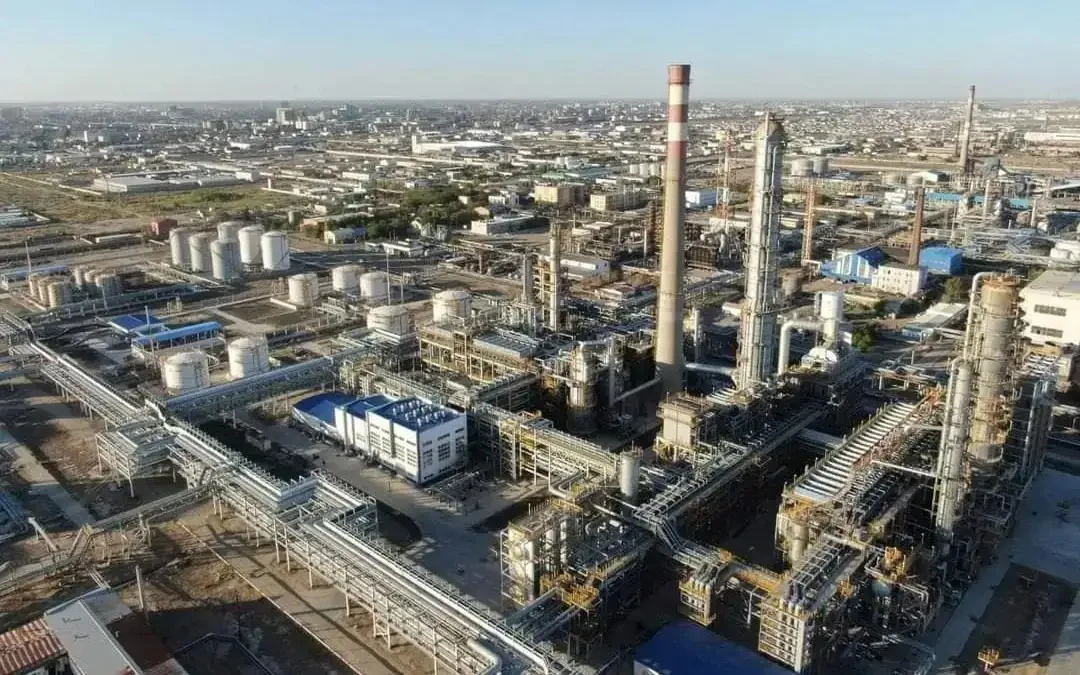
Atyrau oil refinery | Source: KAZINFORM (May 14, 2025)
Strategic Context
Kazakhstan currently processes approximately 17–18.4 MMtpy of crude oil across three operating refineries — Atyrau (110 kb/d), Pavlodar (140 kb/d), and Shymkent (120 kb/d) — giving it a combined nameplate capacity of around 370 kb/d. Despite being a major crude producer, the country has historically imported refined petroleum products from Russia to bridge domestic supply gaps, a structural vulnerability the 2025–2040 strategy is explicitly designed to eliminate. The government formally approved the national Concept for the Development of the Oil Refining Industry 2025–2040 in July 2025, setting out a phased roadmap for capacity expansion and petrochemical integration.
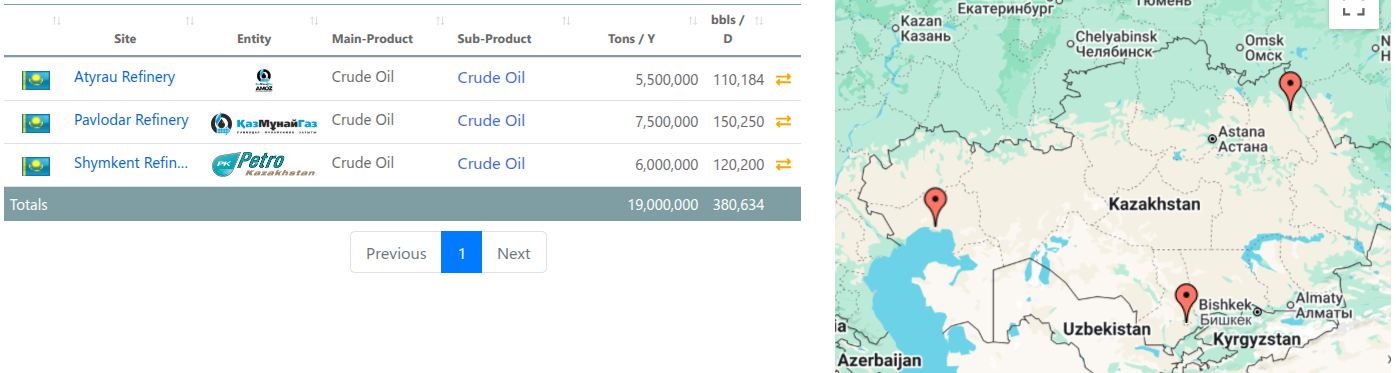
Kazakhstan refineries | Source ppPLUS refining module
The Two-Phase Expansion Roadmap
The programme is structured across two distinct phases:
-
Phase 1 (2025–2032): Upgrade and expand the three existing refineries, lifting aggregate throughput capacity from 18 MMtpy to approximately 27.7–30 MMtpy. This phase will deliver Euro-5 (K5+) fuel quality standards and push refining depth from the current ~89% to 94–95%.
-
Phase 2 (2026–2033/2040): Construct a new, greenfield refinery with a 10 MMtpy capacity in a modern fuel-petrochemical configuration, incorporating a refining depth of 95%. The new plant alone is expected to bring total national capacity to the 40 MMtpy headline target.
Notably, Kazakhstan's Deputy Minister of Energy signalled in February 2026 that the government intends to accelerate the timeline, potentially reaching the 40 MMtpy target by 2033 — seven years ahead of the original 2040 deadline.
Investment Scale and Ownership
Total investment requirements are officially estimated at $15 billion to $19 billion. Key producing entities currently active in the petrochemical segment include Kazakhstan Petrochemical Industries Inc. LLP (KPI Inc.), Neftekhim Ltd. LLP, Shymkent Chemical Company LLP, and Atyrau Refinery LLP (ANPZ). An earlier announcement in 2025 flagged a dedicated $15 billion investment in oil and gas chemicals channelled through six major projects, underscoring a parallel push to develop value-added chemical production alongside fuel refining.
A critical structural objective within the concept is improving the production-to-refining ratio from 5:1 to 2.5:1 — bringing Kazakhstan in line with OECD benchmarks — through the addition of new refining and petrochemical capacity.
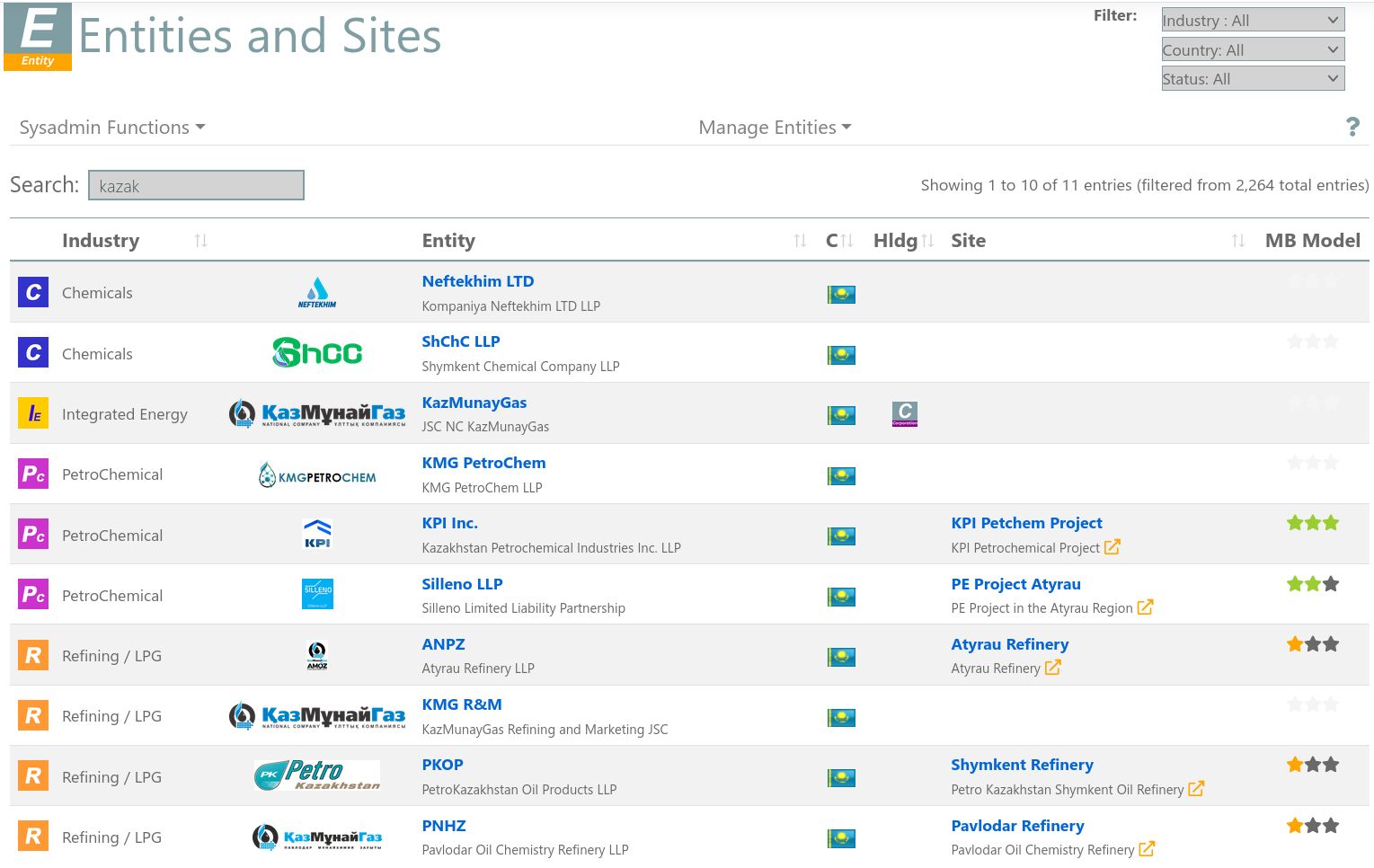
Kazakhstan Refining & Petrochemical enterprises and manufacturing sites | Source: ppPLUS Directory
Petrochemical Ambitions
The downstream expansion is not limited to fuels. Kazakhstan is actively building out a petrochemical product slate, with 2025 petrochemical output exceeding 600,000 tonnes, including polypropylene, lubricants, MTBE, paraxylene, and benzene. Projects under development or construction include plants for polyethylene, butadiene, urea, and alkylate. The strategy targets an estimated $5 billion in additional investment for new polymer and fertilizer value chains.
Export orientation is a stated priority: the government aims to raise exports to 30% of total refined production by 2040, with China, India, and Central Asian markets as primary targets.
Market Implications
| Metric | Current (2024–25) | Target (2040) |
|---|---|---|
| Refining capacity | ~18.4 MMtpy | 40 MMtpy |
| Refining depth | ~89% | 94–95% |
| Petroleum product output | ~14.5 MMt | ~29.2 MMt |
| Petrochemical output | ~540–600 kt | Significantly expanded |
| Fuel quality standard | K4 (Euro-4) | K5+ (Euro-5+) |
| Export share of production | <10% | ~30% |
The scale of this programme positions Kazakhstan as a potential regional refined products exporter, fundamentally reorienting the country from a raw crude supplier toward an integrated downstream hub. For asset trackers and corporate intelligence platforms covering Central Asian energy, the phased entry of new capacity — particularly the greenfield refinery site selection and partner structure — will be a key data point to monitor through 2026–2030.
Source references: Kazakhstan Ministry of Energy, Astana Times, Interfax, Enerdata, Times of Central Asia. All data as of Q1 2026.
#refining petrochemicals #kazakhstan