Product
Polyvinyl Chloride
Segment
Chemicals
Main-Family
Polymers
Sub-Family
Chlorinated Polymers
Link
Insight Articles
#PS457

Description

Polyvinyl chloride (PVC) is an amorphous polymer with the polymer repeating unit (CH2-CHCl)n. It is a white, brittle solid Material available in powder form or granules with no melting point and a glass transition temperature of 70-80°C.

Polyvinyl chloride is produced by polymerization in the presence of free-radical Initiators of vinyl chloride monomer (VCM), which itself is made from ethylene and chlorine via ethylene dichloride (EDC) followed by thermal cracking (the balanced chlor-alkali/EDC–VCM route). Three polymerization routes are in commercial use: suspension polymerization (~80% of production, general-purpose S-PVC), emulsion polymerization (~12%, specialty E-PVC including plastisols and latex) and bulk/mass polymerization (~8%).

The raw PVC resin has poor heat stability and decomposes before melting, so processing requires heat stabilizers, and rigid products are typically limited to ~60 °C continuous operating temperature. PVC molecular weight is a distribution characterized industrially by the K-value rather than a single figure.

Rigid (unplasticized) PVC has a density of 1.3–1.45 g/cm3; flexible (plasticized) grades run 1.1–1.35 g/cm3. It is a high strength thermoplastic material used in the construction trades, where its rigidity and low flammability are useful in pipe, conduit, siding, window frames, door frames. In combination with plasticizer (sometimes in concentrations as high as 50 percent), it is familiar to consumers as floor tile, garden hose, imitation leather upholstery, shower curtains, windshield-system components in automobiles, blood bags and tubing in health care, wire and cable insulation in electronics.

Sources:

  1. Encyclopedia Britannica Inc. — Polyvinl Chloride (PVC) (accessed: Jan 22, 2023)
  2. Omnexus — Comprehensive Guide on Polyvinyl Chloride (accessed: Jan 22, 2023)
  3. Wikipedia — Polyvinyl Chloride (accessed: Jan 22, 2023)
  4. ECHA — Substance Infocard 100.120.191 (Ethene chloro homopolymer) (accessed: Nov 16, 2026)
  5. PlasticsEurope — Eco-profiles and Environmental Product Declarations of the European Plastics Manufacturers — Vinyl chloride (VCM) and Polyvinyl chloride (PVC) (May 2015)
  6. INEOS Polymers — PVC (accessed: Nov 16, 2026)

Insight Articles
Insights from our Experts

UserPic
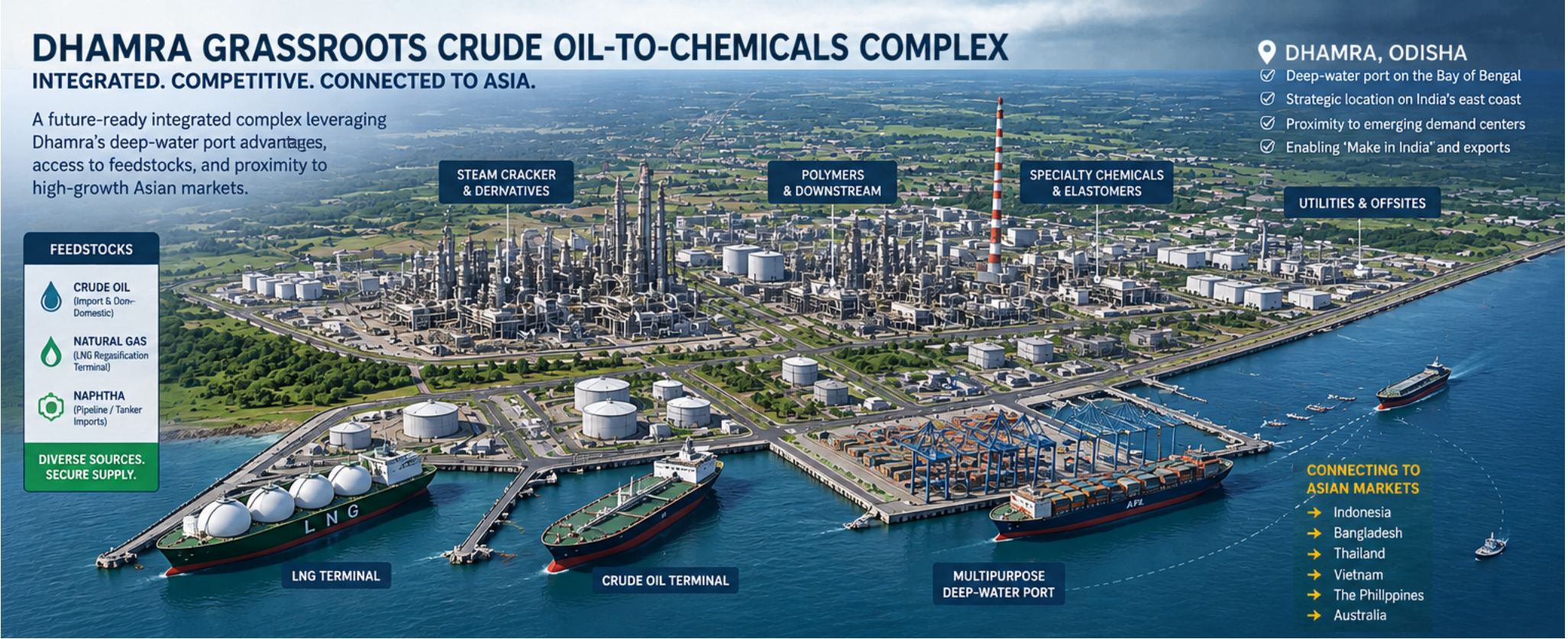
Setting up a Grassroots Complex Maximizing Advanced Petrochemicals in Eastern India Dhamra- Part II
Gupta, Sanjay • 11/19/2026 12:47:58 PM

This is part II of this article series, in which we provide a brief insight on the processes and technologies associated with niche products for the grassroots Integrated petrochemical complex in Eastern India.

The first part previously covers the background and perspective of a location where this complex can...

Click here for full content
1997, Encyclopedia Britannica Inc. https://www.britannica.com/topic/industrial-polymers-468698/Fluorinated-polymers Polyvinl Chloride (PVC) Structure
Settings

Status
A
Unit of Measure
Metric tonne (1,000 kg)
Physical State

Solid

Building Block / Value Chain Info

Value Chain-I
Ethylene
Value Chain-II
Chlorine
Content provided by
Transaction Name Date
Modified by UserPic  Kokel, Nicolas 11/17/2026 10:36 AM
Added 1/22/2023 4:32 AM
Map of Polyvinyl Chloride Products producing locations in ppPLUS

ppPLUS Insights: Please register to view the Map!
Production Analysis