
Product
Polyethylene Terephthalate
Abbreviation
PET
Names
Poly(ethylene terephthalate); Poly(oxyethyleneoxyterephthaloyl); PETE; Polyester
Insight Articles
#PS71
pet polyethyleneterephthalate polycondensation transesterification plasticbottles plasticfibers
Main Product
Polyethylene Terephthalate
Segment
Chemicals
Main-Family
Polymers
Sub-Family
Thermoplastic Polyester
Physical State

Solid

Description

Polyethylene Terephthalate (sometimes written Poly(Ethylene Terephthalate)), commonly abbreviated PET, PETE, or the obsolete PETP or PET-P, is the most common thermoplastic polymer resin of the Polyester family.

Polyethylene terephthalate is a semi-crystalline thermoplastic polyester produced by polycondensation of Purified Terephthalic Acid (PTA) with Monoethylene Glycol (MEG) — direct esterification at 2.7–5.5 bar and 220–260 °C on the PTA route — or by transesterification of Dimethyl Terephthalate (DMT route, 150–200 °C then 270–280 °C), using antimony or titanium catalysts with a phosphite stabilizer and a cobalt bluing agent; continuous melt-phase polycondensation is followed by solid-state polymerization (SSP) for bottle and high-intrinsic-viscosity grades.

PET is intrinsically slow-crystallizing: depending on the cooling regime it can be made amorphous and clear or crystalline and opaque. It is characterized industrially by intrinsic viscosity (IV, dL/g) rather than a single molecular weight: textile fibre 0.40–0.70; technical fibre 0.72–0.98; BOPET film 0.60–0.70; thermoforming sheet 0.70–1.00; general-purpose bottles 0.70–0.78*; carbonated-drink bottles 0.78–0.85; monofilament/engineering grades 1.00–2.00 (e.g. RAMAPET N180 bottle grade IV 0.80 ± 0.02). 

*The weight-average molecular weight for a bottle-grade is of the order of magnitude of 30,000 g/mol.

Other properties of PET products:

  • Melting Point: 240 to 260°C, grade-dependent (copolymer ≈240°C; homopolymer ≈250–260°C)
  • Glass Transition: 67 to 81°C
  • Specific Gravity: 1.38 at 20 °C (crystallinity-dependent; 1.370 amorphous / 1.455 single crystal)

Sources:

  1. Wikipedia, Polyethylene Terephthalate (accessed Feb 21, 2021)
  2. ECHA — Substance Infocard 100.121.858 (Polyethylene terephthalate) (accessed: Nov 16, 2026)
  3. Indorama Ventures — Technical Datasheet RAMAPET N180 (PDF created: Apr 19, 2011)
  4. Indorama Ventures — RAMAPET G1 Sales Specifications (PET copolymer, 5-gallon refillable water containers) (PDF created: May 8, 2015)
 

Insight Articles
Insights from our Experts

UserPic
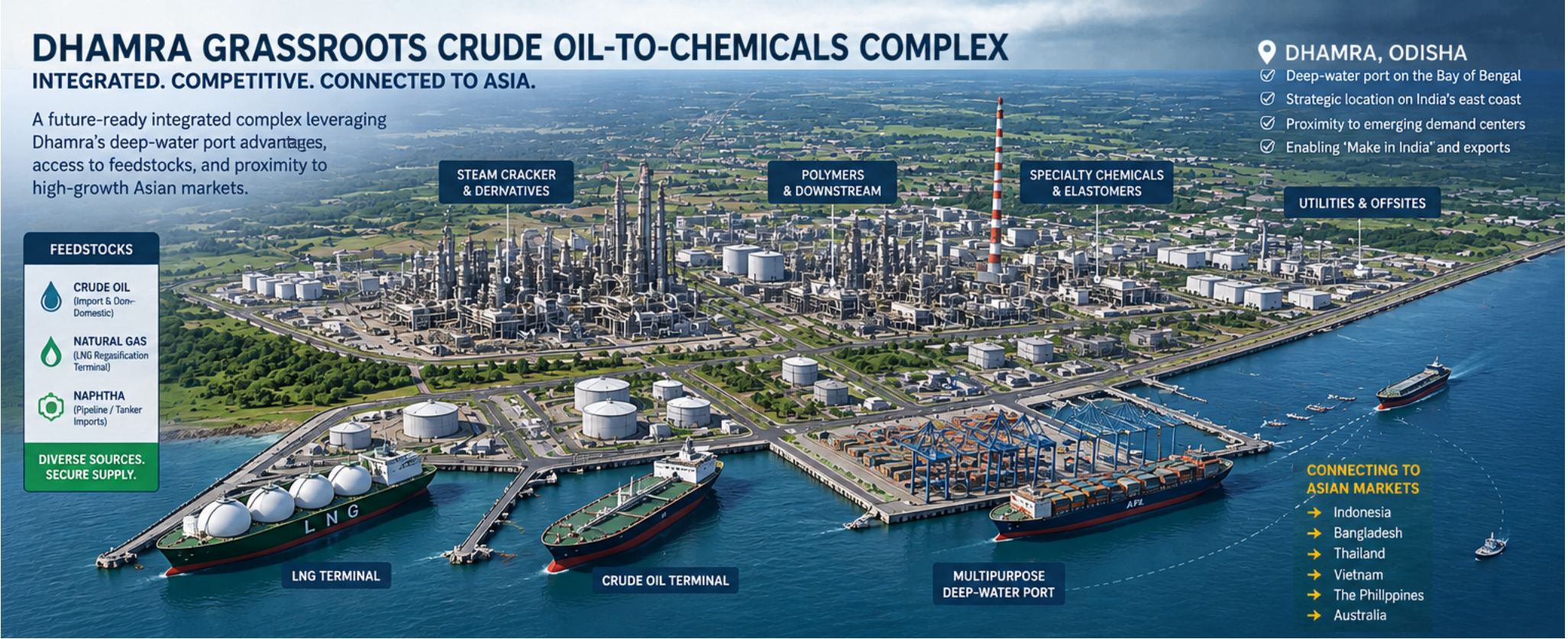
Setting up a Grassroots Complex Maximizing Advanced Petrochemicals in Eastern India Dhamra- Part II
Gupta, Sanjay • 11/16/2026 4:08:38 PM

This is part II of this article series, in which we provide a brief insight on the processes and technologies associated with niche products for the grassroots Integrated petrochemical complex in Eastern India.

The first part previously covers the background and perspective of a location where this complex can...

Click here for full content
UserPic
The Petrochemical Blind Spot
Melgoza, Alberto • 6/15/2026 7:42:11 PM
Power, Dependence, and the Missing Material Transition in Modern Civilization
Introduction: The Unasked Question of Petrochemicals

Contemporary debates about sustainability tend to focus on climate change, energy transitions, plastic pollution, and resource consumption. Governments publish...

Click here for full content
https://www.linkedin.com/in/baouch-zakarya/
  Product Communicator
Identifiers

logo CAS Number
25038-59-9
logo EC Number
607-507-1
logo ECHA InfoCard
100.121.858
logo IUPAC Name
Poly(ethylene terephthalate)
Chemical Data

Chemical Formula

(C10H8O4)n

Molecular Weight (g/mol)
30000
Melting Point (°C)
250
Sulfur Content (wt%)
0
Specific Gravity
1.38
Crude Data

API Gravity
-28.96
Country
Product Settings

Default
Status
A
Content provided by
Transaction Name Date
Modified by UserPic   Kokel, Nicolas 11/17/2026 8:30 AM
Added by UserPic   Kokel, Nicolas 2/21/2021 9:52 PM