BASF Inaugurates Zhanjiang Verbund Site: A Strategic Masterstroke in a World Turned Upside Down

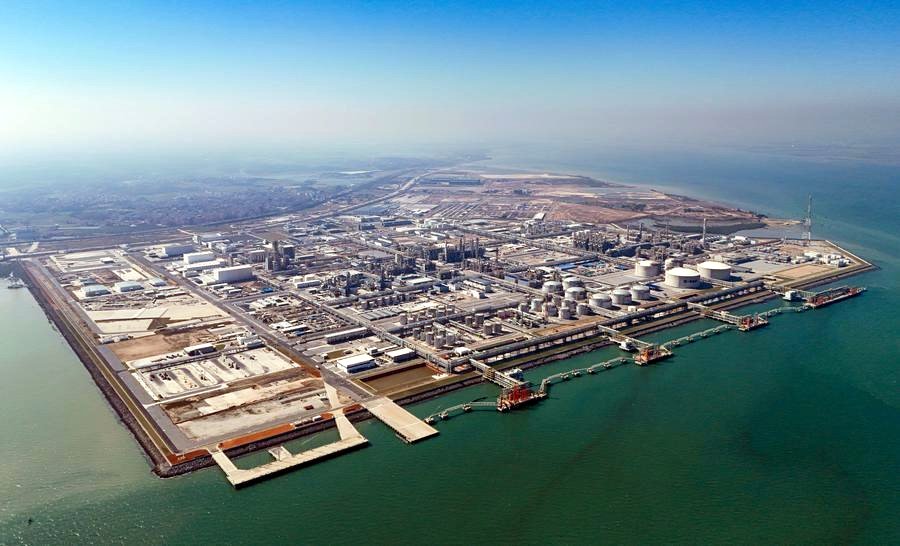
An aerial drone photo taken on Dec. 11, 2025 shows a panoramic view of BASF (Guangdong) integrated site in Zhanjiang City, south China's Guangdong Province. (Xinhua)
A Flagship for the Future of Chemistry
At the inauguration ceremony, BASF CEO Dr. Markus Kamieth described Zhanjiang as a paradigm for what the future of chemistry looks like: "efficient, digital and sustainable by design". The site operates entirely on renewable electricity, and its steam cracker — the world's first to use 100% renewable energy-powered electric drives for its main compressors — reduces CO₂ emissions by up to 50% compared to conventional facilities. Products manufactured at Zhanjiang carry lower product carbon footprints than equivalent BASF production elsewhere in Asia, making it a showcase for low-carbon industrial manufacturing at scale.
The facility produces a broad portfolio of chemicals across integrated value chains: ethylene and derivatives (ethylene oxide, ethylene glycol, polyethylene, non-ionic surfactants), acrylic acid and acrylates, oxo alcohols, neopentyl glycol, syngas, formaldehyde, and citral. These products serve key Chinese growth industries including automotive, construction, electronics, packaging, home care, and consumer goods.
Timing Could Not Be More Strategic: The Hormuz Crisis
The inauguration comes at a moment of acute geopolitical disruption in global chemical supply chains. Following US-Israeli strikes on Iran, ship traffic through the Strait of Hormuz has nearly halted since early March 2026, blocking the transit of approximately 16–20 million barrels per day of crude oil, refined products, and LNG from major Gulf producers including Saudi Arabia, the UAE, Qatar, Kuwait, Iraq, and Bahrain. The IEA has noted that around 20% of global oil and LNG supplies pass through the Strait, with no viable alternative for gas exports.
The impact on the global chemicals sector is severe. Around 84% of Middle East polyethylene capacity relies on the Strait for waterborne exports, and roughly 80% of Asia's seaborne naphtha import demand in 2025 was covered by Middle East supply. Exports of key chemicals and plastics from Saudi Arabia, Qatar, the UAE, and Kuwait have been sharply curtailed, tightening availability and pressuring prices higher on a global basis. Meanwhile, methanol — approximately one-third of whose global seaborne trade passes through the Strait — is facing supply constraints that directly threaten Chinese producers of plastics, paints, and synthetic fibres.
In this context, BASF's Zhanjiang site represents a timely and locally anchored alternative for Chinese customers. With its integrated production of naphtha-based petrochemicals on Chinese soil and powered by domestic renewable electricity, the Zhanjiang complex is structurally insulated from Middle Eastern feedstock disruptions. For Chinese downstream industries previously reliant on Middle East polymer and chemical imports, a fully operational BASF Verbund site in Guangdong offers a strategically vital domestic supply alternative precisely when it is needed most.
BASF in Europe: Contraction and Crisis
The Zhanjiang inauguration throws into sharp relief the starkly contrasting trajectory of BASF's European operations. Since 2022, soaring energy prices, declining competitiveness, and tightening regulatory costs have forced BASF into a sweeping restructuring of its European footprint. The company has committed to total annual cost savings of approximately €2.1–2.3 billion by end of 2026, with major restructuring of its Ludwigshafen headquarters site — involving significant headcount reductions, plant closures, and process simplification.
BASF's Antwerp Verbund site, once Europe's second-largest integrated chemical complex, is cutting approximately 600 jobs by 2028, affecting nearly one in five positions, as the company seeks €150 million in fixed cost savings. Plants producing ammonia and TDI at Ludwigshafen have already been shuttered due to uncompetitive energy costs. The Hormuz crisis adds further pressure: European chemical prices are rising sharply as Middle Eastern feedstock and polymer imports are disrupted, with European PE/PP producers seeking triple-digit price increases for March and April contracts.
A Pivotal Rebalancing of BASF's Global Footprint
The contrast between a shrinking, high-cost European base and a newly inaugurated, state-of-the-art Chinese Verbund site encapsulates a fundamental strategic rebalancing underway at BASF. The company's "local-for-local" China strategy — producing for China, in China — was a calculated hedge against both rising European energy costs and global supply chain fragility.
The Hormuz crisis has dramatically validated this approach. As European chemical producers face rising feedstock costs and Asian importers scramble for alternative supply, BASF's Zhanjiang complex stands as a self-sufficient, renewably powered production hub embedded in the world's largest chemical market. With the full Verbund now operational, BASF is well positioned to capture significant market share in China at a moment when competitor supply chains from the Middle East are severely disrupted.
As Dr. Kamieth stated at the inauguration: "Zhanjiang shows what the future of chemistry looks like." In a world of blocked straits, rising energy nationalism, and accelerating decarbonization, that future appears to be located squarely in southern China.
Note: This insight draws from a range of primary and secondary sources, including official BASF press releases and corporate communications (basf.com), the Guangdong Foreign Affairs Office (gdfao.gov.cn), Guangdong Environmental Protection Bureau documentation, MarketScreener and People's Daily English Edition reporting on the March 2026 inauguration ceremony, Hydrocarbon Processing, Chemistry Views, and ICIS for technical and market analysis, the World Economic Forum's April 2026 assessment of Hormuz-impacted commodities, ABN AMRO Oil Market Monitor on Strait of Hormuz ripple effects, IOM3 reporting on chemical and plastics export disruptions, Futura Sciences on European industrial implications of the Hormuz blockade, the Belgian News Agency on BASF Antwerp restructuring, C&EN and ChemAnalyst on BASF's European cost-cutting and Ludwigshafen transformation, Fluor Corporation project announcements, Linde Engineering press releases on the syngas plant, and various Chinese-language industry sources including Sina Finance and industry portals covering plant startups and operational milestones at the Zhanjiang site.
#basf #verbund #china #zhanjiangverbund #guangdong