Caustic Sweetening (MEROX) Remove or convert mercaptan sulfur (RSH) in LPG and light distillates
- Technology Type
- Caustic Sweetening

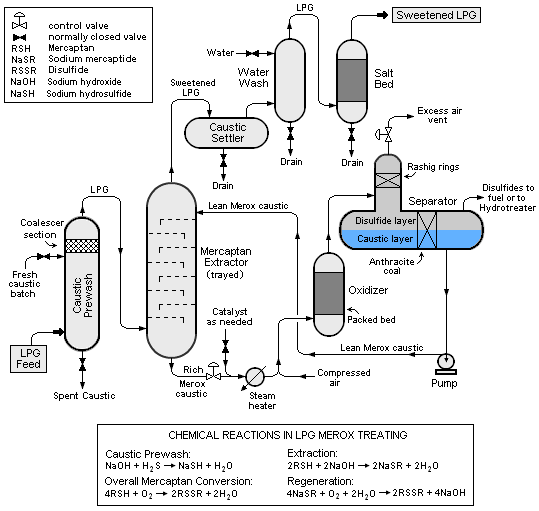
Caustic sweetening was developed to address the problem of mercaptans (thiols, RSH) in petroleum fractions — sulfur compounds that impart foul odor, cause copper-strip corrosion test failures, and degrade product stability. Early methods (1920s–1940s) relied on simple caustic washing, which extracted light mercaptans but was ineffective for heavier mercaptans and generated large volumes of spent caustic waste.
The breakthrough came in 1958–1959, when UOP (Universal Oil Products) commercialized the Merox (Mercaptan Oxidation) process, developed by UOP researchers. Merox combined caustic extraction with a cobalt-based chelate catalyst that enabled oxidation of extracted mercaptans to disulfides using air, allowing the caustic to be regenerated and recycled — dramatically reducing caustic consumption and waste. Merox rapidly became the industry standard and remains so today, with over 1,500 units licensed worldwide. Subsequent variants addressed different boiling ranges:
- Extractive Merox (LPG, light naphtha): extraction + oxidation/regeneration
- Merox sweetening (non-extractive) for heavier fractions (jet fuel, kerosene, diesel): fixed-bed catalytic oxidation, where disulfides remain in the product (acceptable since total sulfur spec is met)
- Minalk and other caustic-wash variants for specific services
Alternative and competing technologies were later introduced: Merichem's THIOLEX/REGEN systems (using proprietary fiber-film contactors, 1970s onward), Axens offerings, and various caustic scrubbing packages from Chinese (Sinopec SEI/RIPP), Indian (EIL), and Russian (VNIPIneft/Grozny institutes) licensors, often integrated into refinery standard designs.
Continue reading the detailed technology profile here.
#Refining #CausticSweetening #Merox #LPG #PetroleumRefining #ProcessTechnology #SulfurManagement #JetFuel #HydrocarbonProcessing