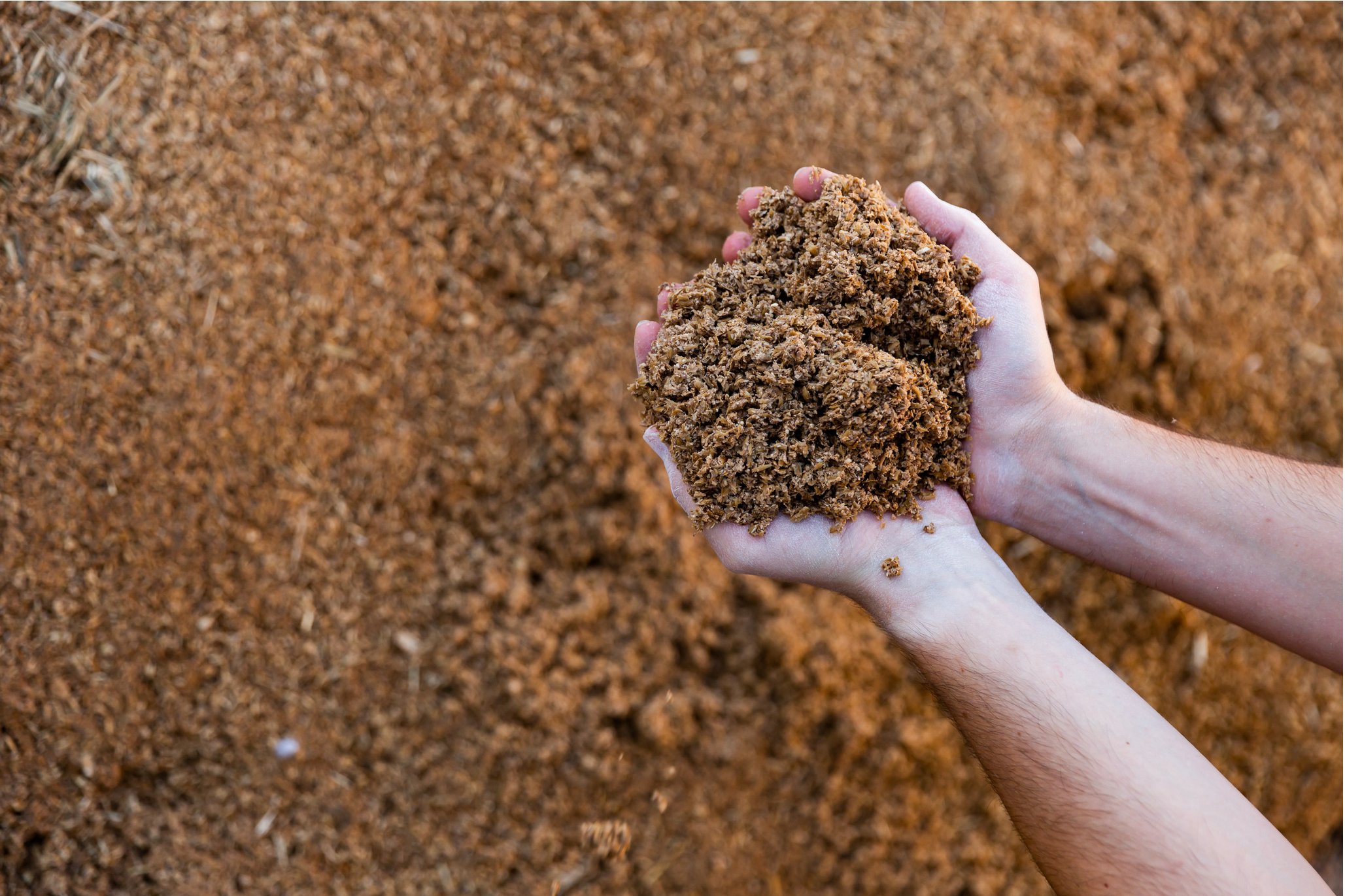
Agricultural processing residues are lignocellulosic organic materials generated as byproducts during the post-harvest processing and industrial transformation of agricultural commodities, distinguished from field residues by their generation point at processing facilities rather than in agricultural fields.
Definition and Distinguishing Characteristics
Processing residues are substances that are not the end products that a production process directly seeks to produce—they are not the primary aim of the operation, and the process has not been deliberately modified to create them. These materials arise during operations such as milling, threshing, husking, crushing, extraction, refining, and other value-added processing steps that separate usable crop components from unusable parts.
Key Distinction from Field Residues
Field residues remain directly on agricultural land after harvest (stalks, straw, stubble, leaves).
Processing residues are generated at industrial facilities during commodity transformation (husks, bagasse, bran, shells, peels, pulp).
This distinction is critical for regulatory classification, sustainability certification (ISCC, RED II), and feedstock eligibility for renewable energy programs.
Common Examples by Crop Type
Cereal Processing:
- Rice husks and bran (from rice milling)
- Wheat bran and mill dust (from flour milling)
- Corn cobs and fiber (from wet/dry milling)
Sugar Crops:
- Bagasse (from sugarcane crushing/diffusion) - 250-300 kg per ton cane
- Molasses (from sugar crystallization)
- Filter cake/press mud (from juice clarification)
Oilseed Processing:
- Seed meal and cake (from oil extraction)
- Hulls and shells (sunflower, peanut, cottonseed)
Fruit/Vegetable Processing:
- Peels, pomace, and pulp (citrus, apple, tomato processing)
- Pits and stones (olive, date, mango processing)
Fiber Crops:
- Cotton gin trash and linters
- Flax and hemp processing residues
Composition and Characteristics
Material Properties:
- Primary constituents: Cellulose (30-50%), hemicellulose (20-35%), lignin (10-25%) with crop-specific variations
- Moisture content: Highly variable (10-50%) depending on processing method and material type
- Nutrient content: Retains significant nitrogen, phosphorus, potassium, and trace minerals from parent crop
- Bulk density: Generally higher than field residues due to particle size reduction during processing
- Ash content: 2-15% depending on material (rice husks notably high at 15-20% due to silica)
Physical Properties:
- Generated in concentrated quantities at centralized facilities (unlike dispersed field residues)
- Often more uniform in size and composition than field residues due to industrial processing
- May contain processing additives or contaminants requiring consideration for end-use applications
Generation Quantities
Processing residues are quantified using residue-to-crop ratios that express the mass of residue generated per unit of primary product:
- Rice husks: 0.20-0.25 kg per kg paddy rice
- Sugarcane bagasse: 0.25-0.30 kg per kg cane (wet basis)
- Wheat bran: 0.15-0.20 kg per kg grain
- Oilseed meal: 0.50-0.85 kg per kg seed (varies by oil content)
Global processing residue generation exceeds 1 billion tons annually, with significant regional concentration near processing infrastructure.
Primary Applications and Value Chains
Energy/Fuel Applications (Dominant Use):
- Direct combustion for process heat and steam generation (e.g., bagasse in sugar mills, rice husks in parboiling plants)
- Cofiring in power plants or dedicated biomass facilities
- Pelletization for standardized solid fuel
- Second-generation biofuel feedstock (cellulosic ethanol, biodiesel)
Industrial Materials:
- Animal feed supplements (bran, meal, hulls with appropriate nutritional value)
- Pulp and paper production (bagasse, straw)
- Particleboard and fiberboard manufacturing
- Biochar and activated carbon production
Agricultural Applications:
- Organic fertilizer and soil amendment
- Mushroom cultivation substrate
- Mulching material
Advantages as Industrial Feedstock
- Concentrated availability: Generated at centralized facilities with established collection infrastructure
- Lower collection costs: No field logistics; already aggregated at processing sites
- Year-round availability: Stored at processing facilities, enabling continuous supply vs. seasonal field residues
- Reduced contamination: Often cleaner than field residues (less soil, stones, foreign material)
- Zero opportunity cost: Byproduct material with no competing food/feed value in many cases
- Energy self-sufficiency potential: On-site utilization reduces processing facility energy costs
Sustainability and Regulatory Considerations
Under European RED II and ISCC certification frameworks, processing residues receive favorable treatment as renewable feedstock that qualifies for enhanced sustainability multipliers, provided they meet the definition of not being deliberately produced and not being the primary production aim.
Key criteria for processing residue classification:
- Material must not be the primary aim of the production process
- Process must not be deliberately modified to increase residue generation
- Economic value is secondary to primary product
- Generated during transformation/processing operations (not during primary production)
Materials classified as co-products (deliberately produced with substantial economic value comparable to main product) face stricter sustainability criteria and do not receive preferential treatment.
Challenges and Constraints
Technical Limitations:
- Variable composition affects combustion characteristics and conversion efficiency
- High ash content in some residues (rice husks, wheat straw) causes slagging/fouling in boilers
- Moisture content may require drying before certain applications
- Presence of silica, chlorine, or other elements can complicate thermochemical processing
Logistical Constraints:
- Bulky nature results in low energy density (5-10 GJ/m³ vs. 20-40 GJ/m³ for fossil fuels)
- Storage requirements to buffer seasonal processing variations
- Limited transportation economics (typically viable within 50-100 km radius)
Competing Uses:
- Some residues have established feed, fertilizer, or material markets
- Trade-offs between on-site energy use vs. external sales
- Regulatory restrictions on certain residue types for specific applications
Agricultural processing residues represent a significant underutilized renewable resource estimated at 600-800 million tons globally with sustainable mobilization potential, offering opportunities for circular bioeconomy development by converting waste streams into valuable energy, materials, and chemical feedstocks while reducing disposal costs and environmental impacts for processing industries.
References
- (Dec 1, 2025). Agricultural Residues → Term. Sustainability Directory
- (2024). Processing Residues. ScienceDirect Topics
- Shapiro, E. (Jul 11, 2023). Step-by-step guide to effective crop residue management. Shapiro
- Gianvenuti A. (Feb 27, 2017). User Manual: BEFS Rapid Appraisal – Agricultural Residues. FAO Agricultural Services Bulletin
- (2021). ISCC EU 202-5 Waste and Residues. ISCC Certification Document v4.0. ISCC
- (Aug 13, 2025). Waste vs Residues vs Co-Products in Sustainable Biomass Certification. Control Union
- (2023). Agricultural residue-based bioenergy: Regional potential and scale. IRENA
- Covers: Global generation quantities, sustainable mobilization potential (600-800 million tons)
- Muller G. et al. (Jul 29, 2023). Improved Sugarcane-Based Fermentation Processes by an Isolated Yeast Strain from Colombian Bagasse. J. Fungi (Basel), 9(8), 803
- (2022). Cellulosic Biomass. ScienceDirect