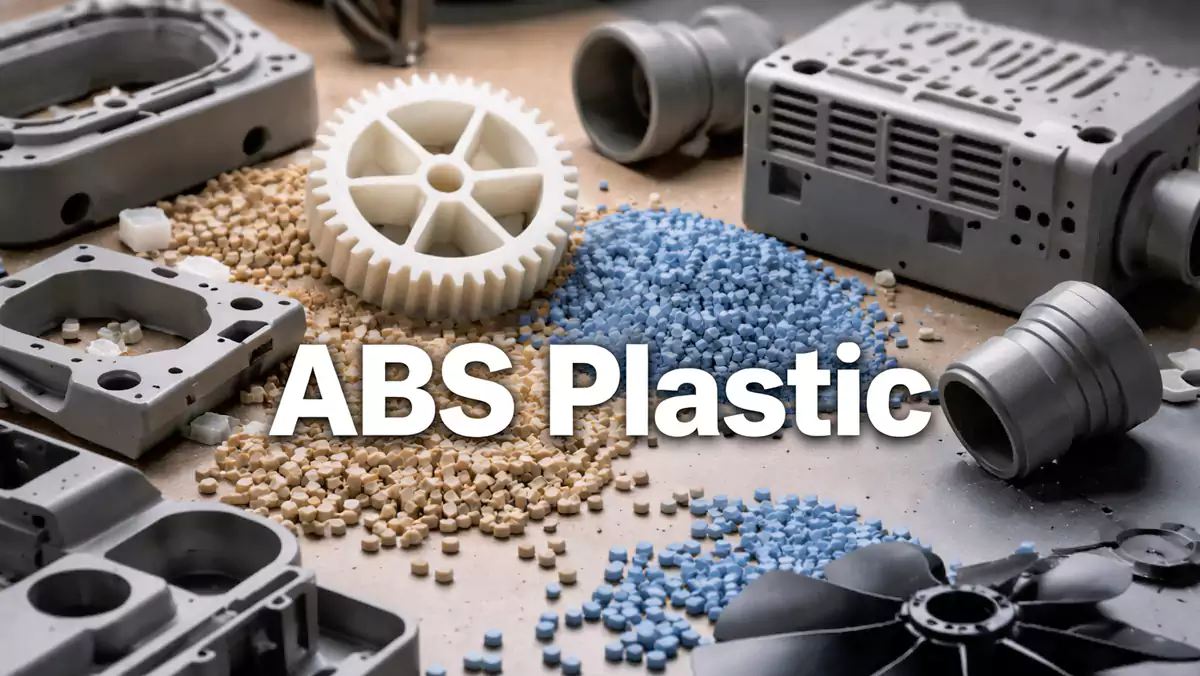
Acrylonitrile Butadiene Styrene (ABS) is a hard, tough, heat-resistant engineering thermoplastic — essentially a styrene-acrylonitrile (SAN) copolymer modified by polybutadiene rubber — that combines the resilience of polybutadiene with the hardness and rigidity of polyacrylonitrile and polystyrene.[1] It is a two-phase polymer blend: a continuous SAN phase provides rigidity, hardness and heat resistance, while submicroscopically fine polybutadiene rubber particles uniformly distributed in the SAN matrix provide toughness through rubber toughening.[2] The three monomers contribute a deliberate balance of properties: the butadiene units impart impact strength, the acrylonitrile units afford heat and chemical resistance and rigidity, and the styrene units give the copolymer its stiffness, processability and characteristic shiny, impervious surface.[1][3] Composition can vary from 15% to 35% acrylonitrile, 5% to 30% butadiene and 40% to 60% styrene, and by adjusting the ratios ABS is prepared in grades spanning high and medium impact, high heat resistance, electroplatable, flame-retardant and transparent (MABS) variants.[3][2]
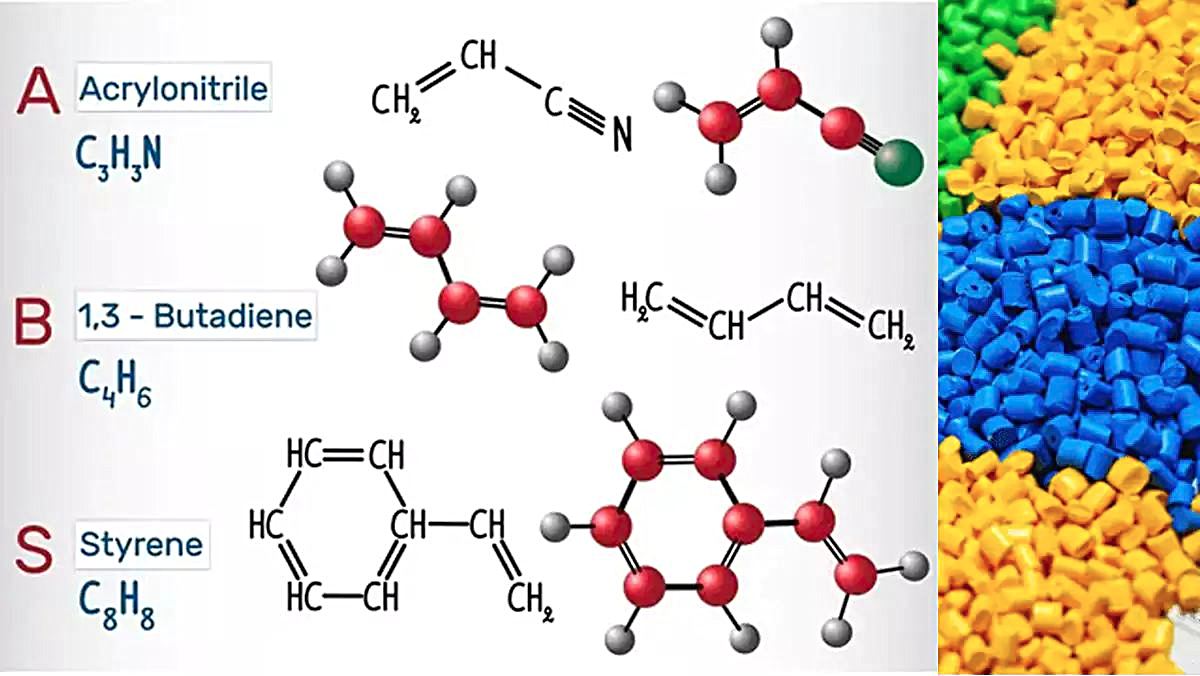
Figure 1 - Monomers used in the ABS manufacturing process (Allied Metal Solutions - What is ABS Plastic?)
ABS was patented in 1948 and introduced to commercial markets by the Borg-Warner Corporation in 1954; SAN copolymers had been available since the 1940s, and the addition of butadiene rubber as a third monomer in the 1950s created the family that has since become the most popular of the engineering polymers.[1][2] It is regarded as a good engineering plastic — a substitute for metals in structural parts — and can be injection-moulded, blow-moulded or extruded.[1]
Manufacture
ABS is produced by polymerizing styrene and acrylonitrile in the presence of polybutadiene, and commercially two technology families dominate: emulsion and continuous mass. In the emulsion route, polymerization starts from butadiene monomer, with polybutadiene prepared as an aqueous latex into which styrene and acrylonitrile are introduced and copolymerized; in the continuous mass route, a preformed rubber is dissolved in the styrene-acrylonitrile monomer phase and copolymerized in bulk.[1][4] Hybrid/emulsion technology accounts for about 97% of global ABS production.[4] The two routes give different product characters: emulsion ABS has smaller, full rubber particles, suits high-performance injection-moulding grades and yields a glossy surface, while mass ABS produces a matt finish valued in automotive interiors and offers lower production cost, no water or soap, and a consistent light base colour; the morphological difference stems from how the elastomer phase forms and distributes in the SAN matrix.[4][2]
The monomer building blocks themselves come from the petrochemical base: acrylonitrile is produced from propylene and ammonia, butadiene is recovered from the C4 fraction of steam cracking, and styrene is made by dehydrogenation of ethylbenzene — a value chain that ties ABS directly to refinery and cracker operations.[3]
Characteristics and Properties
ABS provides a favourable balance of impact resistance, toughness and rigidity; impact resistance does not fall off rapidly at lower temperatures, and stability under load is excellent at limited loads.[3] It is an amorphous solid at room temperature with no definitive melting point (chains of varying length and varying cross-linking) and a glass-transition temperature of approximately 105 °C; for the majority of applications it is used between −20 and 80 °C, since mechanical properties vary with temperature.[3] Processing conditions influence final properties — moulding at high temperature improves gloss and heat resistance, while maximum impact resistance and strength are obtained by moulding at low temperature — and glass fibres, pigments and antioxidants can be incorporated to raise stiffness, colour the material (the natural resin is a translucent ivory) and protect against UV-driven yellowing and ageing of the polybutadiene phase.[3]
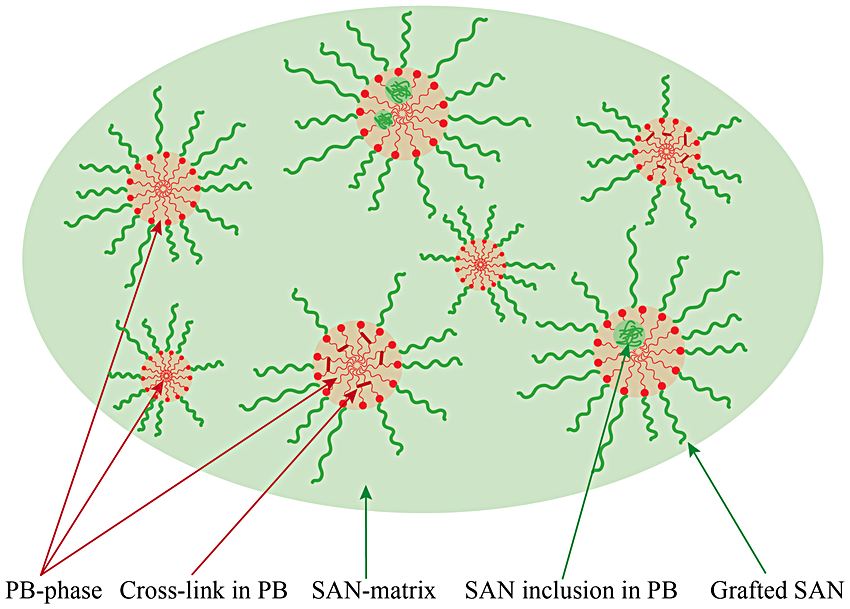
Figure 2 - General morphology of acrylonitrile butadiene styrene polymer ABS material:
green – SAN, red – PB (RSC Applied Polymers, via ResearchGate)
Chemically, ABS resists aqueous acids, alkalis, concentrated hydrochloric and phosphoric acids and animal, vegetable and mineral oils, but is swollen by glacial acetic acid, carbon tetrachloride and aromatic hydrocarbons, attacked by concentrated sulfuric and nitric acids, and soluble in esters, ketones (such as acetone), chloroform and ethylene dichloride; it offers poor resistance to chlorinated solvents, alcohols and aldehydes.[3] Its electrical properties are fairly constant over a wide range of frequencies and little affected by temperature and humidity in the acceptable operating range.[3] ABS is flammable at high fire-exposure temperatures, but pure ABS contains no halogens, so combustion does not typically produce persistent organic pollutants, the principal toxic products being carbon monoxide and hydrogen cyanide; flame-retardant behaviour is obtained through FR additives or PVC blending.[3][2] Being readily moulded and recyclable, ABS also sterilizes well by gamma radiation or ethylene oxide, supporting single-use biomedical components.[3]
Representative properties (uncoloured Terluran® GP-35 injection-moulding grade, BASF/INEOS Styrolution, ISO methods at 23 °C): density 1,040 kg/m3; tensile modulus 2,300 MPa; yield stress 44 MPa; strain at break 12%; flexural strength 65 MPa; Izod notched impact 22 kJ/m2 (7 kJ/m2 at −30 °C); HDT A 78 °C; Vicat B/50 95 °C; max short-cycle service temperature 80 °C.[5] The British Plastics Federation quotes typical ABS ranges of tensile strength 40–50 MPa, notched impact strength 10–20 kJ/m2, coefficient of thermal expansion 70–90 × 10−6, maximum continuous use temperature 80–95 °C and density 1.0–1.05 g/cm3.[2]
Uses, Applications and Markets
ABS is used wherever a good balance of toughness, strength and temperature resistance combines with ease of moulding and high-quality surface finish: domestic appliances, telephone handsets, computer and other office equipment housings, lawn mower covers, safety helmets, luggage shells, pipes and fittings, and drain-waste-vent (DWV) pipe systems.[2][6] The availability of electroplatable grades makes ABS a mainstay of automotive interior and exterior trim — dashboards, trim components, bumper bars — and wheel covers, enclosures and protective headgear.[2][6] Musical instruments, keyboard keycaps, golf club heads (shock absorbance), binoculars and monoculars, inhalers, nebulizers, medical devices (tracheal tubes, drug-delivery systems, tendon prostheses, non-absorbable sutures), toys — LEGO bricks have primarily been made from ABS since 1963 — luggage and small kitchen appliances complete the slate.[6] When extruded into filament, ABS is one of the most common 3D-printing thermoplastics, prized for being cheap, strong and dimensionally stable with versatile post-processing.[6]
In market terms, Grand View Research puts the global ABS market at USD 31,204.72 million by 2030 (CAGR 5.26% from 2025 to 2030), with the appliances segment holding the largest application revenue share (25.88% in 2024), electrical & electronics the leading application, Asia-Pacific commanding 34.58% of 2024 revenue, and North America forecast as the fastest-growing region.[6] Mordor Intelligence estimates resin-market volume at 9.35 million tonnes in 2025, rising to 9.78 million tonnes in 2026 and 12.26 million tonnes by 2031 (CAGR 4.63% over 2026–2031), with Asia-Pacific holding a 76.12% volume share in 2025, electronics the largest end-user industry (28.89%), and Chinese capacity additions of more than 1.5 million tonnes between 2024 and 2025 sustaining volume growth.[7] Key global producers include LG Chem, Asahi Kasei, CHIMEI, Formosa Plastics, Kumho Petrochemical, SABIC, Trinseo, INEOS Styrolution, BASF and DuPont.[6] Demand drivers include lightweighting and metal replacement in e-mobility platforms, smart-home appliances requiring high-gloss heat-resistant grades, electroplatable ABS in 5G radomes and halogen-free flame-retardant cockpit components.[7]
References
- Encyclopaedia Britannica — Acrylonitrile-butadiene-styrene copolymer (ABS) (latest update: Oct 2, 2026)
- British Plastics Federation — Acrylonitrile Butadiene Styrene (ABS) and Other Specialist Styrenics (accessed: Nov 16, 2026)
- Wikipedia — Acrylonitrile butadiene styrene (latest update: Nov 6, 2026)
- Gavioli S., Chiezzi L., Inglese R., Leone M.A. (Versalis/Eni) — ABS ONE-STEP® Technology — Major Improvements in Versalis' Proprietary ABS Continuous Mass Process, Chemical Engineering Transactions, 100, 451-456, DOI:10.3303/CET23100076 (Jun 9, 2023)
- BASF SE — Terluran® GP-35 Product Datasheet (Apr 2008; ABS grade now distributed by INEOS Styrolution)
- Grand View Research — Acrylonitrile Butadiene Styrene Market To Reach $31,204.72 Million By 2030 (January 2025)
- Mordor Intelligence — Acrylonitrile Butadiene Styrene (ABS) Resin Market — Size, Share & Forecast 2026–2031 (accessed: Nov 16, 2026)