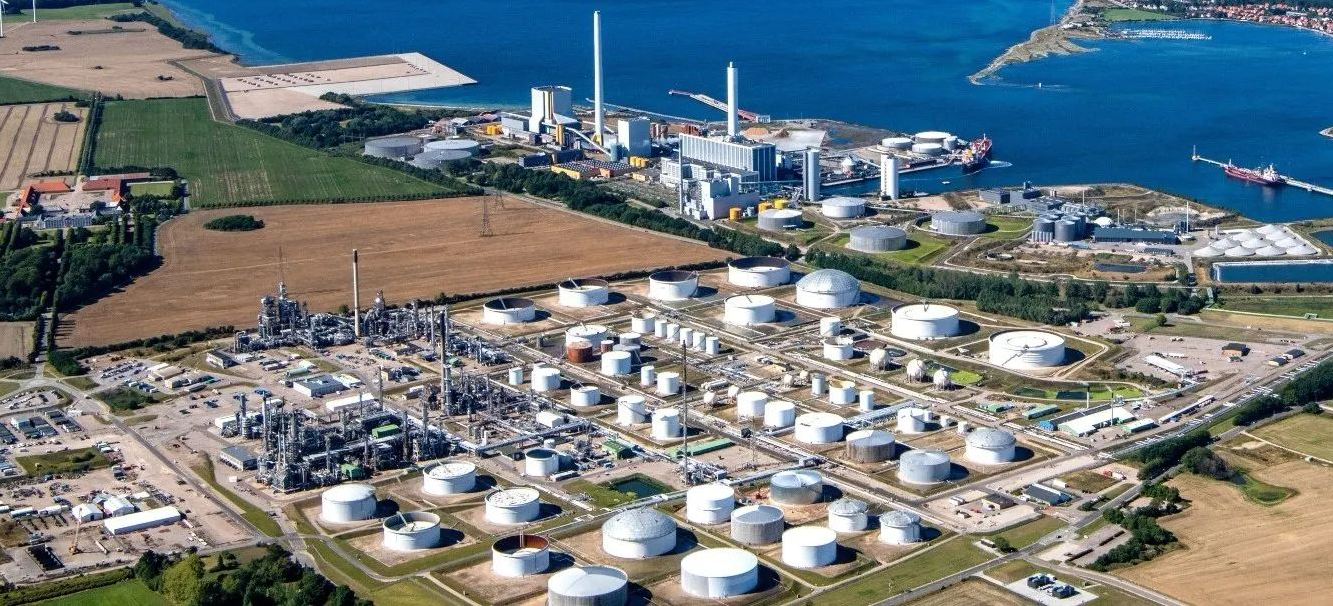
Kalenborg Refinery | Source: Kalenborg Refinery website (accessed Jun 14, 2026)
Kalundborg Refinery is Denmark's largest oil refinery, processing up to 5.5 million tonnes (~107,000 bbl/day) of crude oil, condensate, and feedstock annually, and supplying over 15% of all energy consumed in Denmark. It is owned by Klesch Refining Denmark A/S, a subsidiary of Klesch Petroleum SA (Geneva), and operates as part of the Klesch Group's European refining platform.
History
The refinery was originally built in 1961 by Tidewater Oil Company and has since been expanded and modernised by successive owners. Ownership passed through Gulf Oil and then Statoil (later renamed Equinor), under which the refinery underwent its most significant upgrades, including a major condensate distillation expansion in 1995 that enabled receipt of large volumes of light North Sea crude. A landmark Synflex diesel dearomatisation unit — licensed from ABB Lummus Global, Criterion Catalysts & Technologies, and ExxonMobil — came on stream in 2002 at a cost of DKK 400 million, producing sulphur-free diesel (≤10 ppm sulphur) with annual capacity of approximately 1 million tonnes. A fertiliser production unit utilising sulphur recovered from desulphurisation was added in 2000, designed in cooperation with Haldor Topsøe. In January 2022, Klesch Group completed the acquisition from Equinor, and the refinery was rebranded from Equinor Refining Denmark A/S to Kalundborg Refinery.
Assets & Infrastructure
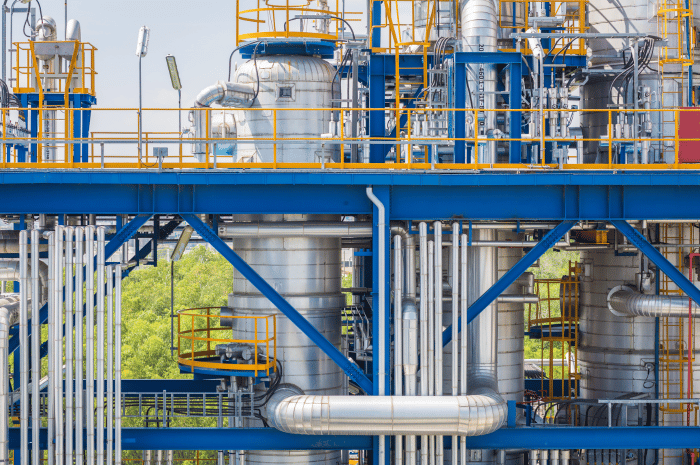
The refinery is a coking-type, non-integrated refinery located in Kalundborg, on the west coast of Zealand. Key assets and infrastructure include:
- Crude distillation unit (CDU) processing North Sea crude and condensate delivered by ship
- Condensate distillation plant (added 1995) enabling high-value light product production
- Synflex diesel dearomatisation unit for ultra-low sulphur diesel production (opened in 2002)
- Coker unit for bottom-of-barrel conversion
- Sulphur recovery unit with downstream fertiliser production (Haldor Topsøe technology)
- Sulphur and nitrogen conversion into liquid ammonium thiosulfate (ATS)
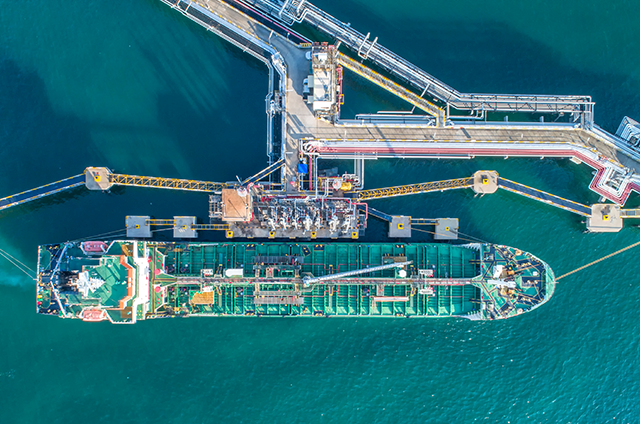
- Dedicated pier in Kalundborg harbour for crude and product tanker operations
- Two product terminals: one in Kalundborg and one in Hedehusene (greater Copenhagen area), connected by dedicated product pipeline
- Total tank capacity: 1.2 million m³ across all sites
Products
The refinery produces a full slate of transport and heating fuels:
- Petrol (gasoline), diesel, heating oil, bunker fuel (HFO)
- Propane/LPG, naphtha
- Low-aromatic diesel for the Swedish market (one of only five Nordic refineries to do so)
- Agricultural fertiliser from recovered sulphur
Workforce & Ownership
The refinery employs approximately 400 people across the refinery, pier, and two terminals. It is one of the largest industrial employers in the Kalundborg region and a participant in the internationally recognised Kalundborg Symbiosis — an industrial ecology network in which the refinery exchanges energy and material streams with neighbouring industries.
References
- Kalundborg Refinery — Key facts and history (accessed Jun 14, 2026)
- Largest Companies — Kalundborg Refinery A/S (accessed Jun 14, 2026)
- Oil&Gas Journal — Statoil to invest in green Danish refinery (Dec 11, 2000)
- Wikipedia Denmark — Kalundborg Refinery (page version Jan 19, 2026)
- Helix Lab — Kalundborg Refinery (accessed Jun 14, 2026)
- Statoil — Lalundborg Refinery (uploaded to SCRIBD on Nov 20, 2013)
- Offshore Technology — Kalundborg Refinery (Last updated Nov 6, 2024)