Australia’s Petrochemical Dependence, Why fuel security is not enough for industrial resilience


1. The refinery announcement points to a larger strategic problem
On 28 July 2026, Prime Minister Anthony Albanese announced a jointly funded A$4 million pre‑feasibility study for a new oil refinery in Western Australia, the first serious move in decades to test whether Australia can restore domestic refining capacity after allowing it to shrink from eight refineries to just two. If it proceeds, it would be the first new large‑scale refinery built in Australia since the 1960s. That matters because it is a direct response to the vulnerability created by decades of refinery closures: as domestic refining capacity eroded, Australia became more dependent on imported refined fuel and less able to absorb external shocks.
That exposure matters most in diesel. Diesel keeps freight moving, mines operating, farms working, and regional logistics functioning, so any supply shock is felt quickly and nationally. In that sense, the proposal is not simply about building another industrial asset. It is an attempt to restore a strategic capability that Australia allowed to erode, and whose loss increased the country’s dependence on imported liquid fuel, especially diesel.
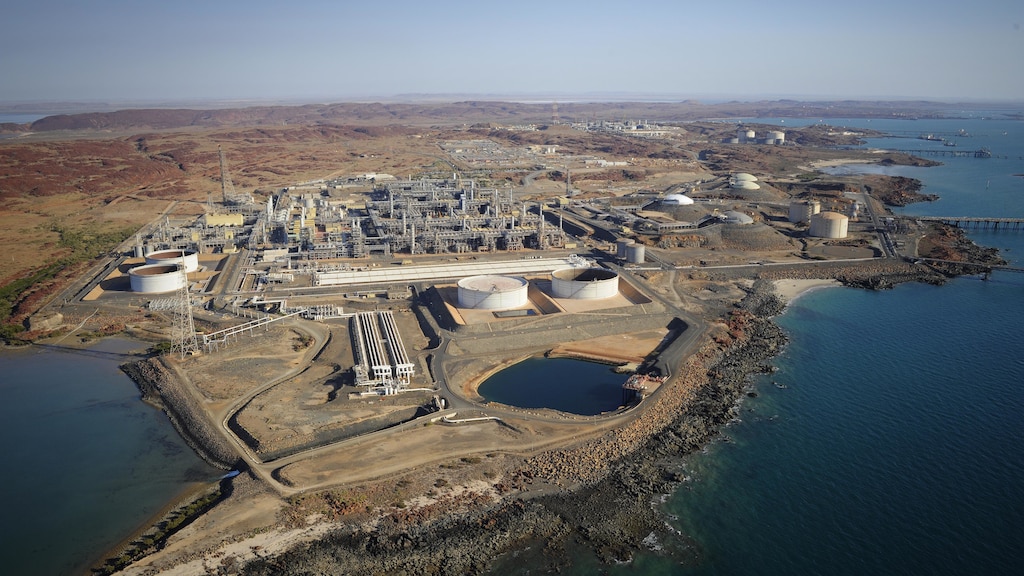
But the significance of the announcement goes beyond the refinery itself. It was made in Karratha beside Perdaman’s urea project, a major fertiliser and industrial-chemical investment, and that setting matters because it places fuel security next to a wider question of petrochemical dependence. If government is now willing to treat one part of the oil chain as strategically important, petrochemical capacity should be part of the same frame - but it is not.
The focus of this essay is to show that Australia’s dependence on the capacity to produce petrochemical products is structurally as important as its dependence on diesel, yet that capacity is not part of the announced frame. The government has moved to confront one visible vulnerability - diesel - but it has not yet named the broader dependence on imported petrochemical inputs or the domestic capacity needed to turn them into petrochemical products.
If diesel refining capacity can once again be treated as a national issue, and at significant cost because Australia allowed that capability to erode, the next question is why petrochemical production capacity is not treated with the same seriousness. In both cases, the costs are financial, economic, and geopolitical. They include the cost of building and maintaining strategic capacity, the vulnerability created by dependence, and the higher costs that follow shocks and disruption. The lesson from diesel refining is that letting critical capacity erode is more costly than maintaining it, and petrochemicals should be treated with the same urgency before Australia repeats that mistake on a broader industrial front.
2. How Australia’s petrochemical dependence works
Petrochemical dependence is a structural vulnerability, not a side issue. Australia’s domestic petrochemical processing base is narrow, fragmented and eroded, leaving the country heavily reliant on imported petrochemical materials, intermediates and finished goods that sustain diesel-dependent supply chains across freight, mining, farming, regional logistics, manufacturing, construction, healthcare and food systems.
Australia’s dependence on imported petrochemical materials is visible in the trade structure. Chemistry Australia records total chemical-industry imports of A$40.249 billion in 2022–23, including basic organic chemicals, synthetic resins and synthetic rubber, tyres, adhesives, paints and coatings, and a range of polymer products. CSIRO estimates that 62 per cent of plastics consumed in Australia arrived as imported finished or semi-finished goods. These are not marginal products: they are material inputs into packaging, transport, construction, agriculture and manufacturing.
That matters because the diesel economy is not just about burning diesel. Diesel powers trucks, tractors, haul fleets, generators, pumps, drilling rigs, and other heavy equipment, but those systems also depend on petrochemical-derived inputs such as synthetic rubber for tyres, lubricants and hydraulic fluids, hoses and seals, pipes and linings, packaging and resins, and fertiliser inputs for agriculture. The systems that run on diesel therefore also depend on a wider petrochemical base.
This dependence runs through the industrial chain. Basic petrochemical feedstocks and derivatives such as naphtha, LPG, ethylene, propylene, butadiene, benzene, toluene, and xylenes sit upstream of a wide range of industrial and consumer materials. From them come intermediate chemicals and end products used in plastics, fibres, solvents, coatings, adhesives, detergents, packaging, synthetic rubber, medical materials, and agricultural chemicals. Australia already consumes these outputs across the economy but lacks much of the domestic capacity needed to produce them at scale.
The consequence of this dependence is that an external supply disruption creates material pressure within Australia. For instance, disruption in the Strait of Hormuz can interrupt the overseas feedstock and production systems from which Australia imports petrochemical materials. Because Australia has no domestic petrochemical backbone to substitute for those imports, the pressure appears here as delayed materials, higher landed prices and cost increases transmitted through logistics, food distribution, construction and consumer goods.
Petrochemical dependence is therefore not marginal or sector specific. It is dependence on imported materials that sustain the diesel economy and the supply chains on which the wider economy relies. External conflict, sanctions, refinery outages and maritime disruption do not remain distant events: under conditions of import dependence, they become pressures carried into Australian production, prices and daily life.
3. Fuel security without petrochemical capacity is incomplete
Fuel security is now being treated as urgent, but that response is incomplete if it stops at diesel. Australia’s industrial base depends not only on fuel but on petrochemical capacity and imported petrochemical inputs that remain exposed to external shocks Australia cannot control. A fuel-only response reduces one visible risk while leaving the broader vulnerability - and its costs - largely in place.
That matters because the government’s renewed attention to diesel security addresses only part of the dependence built into the modern Australian economy. Diesel keeps freight moving, mines operating, farms working, and regional logistics functioning, so it is obvious why fuel security has returned to the policy agenda. But the machinery, consumables, and industrial materials that keep those diesel-linked systems operating also depend on petrochemical supply chains. If policy secures the fuel while leaving petrochemical capacity imported and vulnerable, the underlying exposure remains.
A government that re-centres policy on fuel security without also treating petrochemical capacity as strategic is responding to the symptom while leaving the deeper vulnerability intact: dependence on imported petrochemical inputs and the offshore supply chains on which Australia still relies.
If Australia is serious about reducing exposure to external shocks, it cannot stop at diesel. Fuel security matters, but petrochemical capacity matters too, because Australia’s industrial resilience, economic stability, and geopolitical leverage depend on both.
4. The missing petrochemical chain
A refinery is only one part of the industrial system Australia needs. If the aim is to reduce exposure to external shocks, build resilience, maintain business continuity, or strengthen geopolitical leverage, then the discussion cannot stop at fuel production.
Australia’s petrochemical chain begins with crude oil, condensate, refinery streams and natural-gas liquids. These hydrocarbons must either be produced domestically, imported under secure long-term arrangements, or—in the case of petroleum liquids—supported by well-designed strategic reserves (see my essay Oil Without Security). In petrochemical terms, these upstream hydrocarbons are not the end-product; they are the source of feedstocks — the specific input streams used by petrochemical plants, such as naphtha, LPG, ethane, and propane.
These feedstocks then enter processes such as steam cracking, which produces olefins including ethylene and propylene, and refinery or aromatics processes that yield benzene, toluene and xylenes. These materials sit at the centre of modern industrial production because they are the basis for most plastics, resins, and synthetic materials. Primary petrochemical production then converts them into polyethylene, polypropylene, PVC, polystyrene, and other resins that underpin packaging, construction, agriculture, transport, health, and manufacturing.
This is the stage where raw hydrocarbons become the materials that industrial Australia relies on every day. The next step is compounding and conversion, which turn resins into films, sheets, pipes, moulded parts, fibres, and packaging. These outputs feed directly into strategically important industries in Australia, including building and construction, food and pharmaceutical packaging, medical supplies, infrastructure, automotive components, and industrial manufacturing. If these processing stages are absent or too thin, Australia remains dependent not only on imported fuels but also on imported materials, finished products, and offshore processing capacity.
That is why petrochemical capability matters. A refinery can help with fuel security, but it does not by itself deliver industrial resilience. For Australia, the real issue is whether the country can retain or rebuild enough of the petrochemical chain to keep critical feedstocks, processing, conversion, and manufacturing onshore, where they are less vulnerable to disruption.
5. What petrochemical dependence costs Australia in normal times and under stress
Australia’s petrochemical dependence is visible first in the scale of what it consumes. CSIRO reports plastic consumption of around 4 million tonnes in 2023, following 3.9 million tonnes in 2022-23, with 62 per cent of 2022-23 consumption arriving as imported finished or semi-finished goods. APCO estimates that 7.04 million tonnes of packaging were placed on the Australian market in 2022-23, including 1.265 million tonnes of plastic packaging. Tyres add another wholly import-dependent stream: since the closure of Australia’s last tyre-manufacturing plant in 2010, all tyres consumed domestically have been imported. Australia consumed around 760,000 tonnes of new tyres in 2022-23 and about 740,000 tonnes of new and used tyres combined in 2023-24.
In normal conditions, that dependence appears as a recurring import bill for petrochemical-derived materials and products. Chemistry Australia’s 2022-23 trade data records A$3.077 billion in synthetic resins and synthetic rubber products, A$2.771 billion in tyres, A$970 million in rigid and semi-rigid polymer products, A$155 million in polymer film and sheet packaging material, A$1.685 billion in other polymer products, A$3.919 billion in natural-rubber products, A$2.628 billion in adhesives, and A$2.548 billion in paints and coatings. Together, these eight categories accounted for A$17.753 billion in imports, within a wider chemical-industry import total of A$40.249 billion. These figures do not mean Australia should reproduce every imported product domestically. They show that the fuel economy and the material systems around it rely heavily on overseas production capacity even before any crisis begins.
Under stress, the cost of that dependence changes form. What appears in normal times as a large import bill becomes, in crisis conditions, a problem of price, timing, and availability. When major shipping lanes or petrochemical hubs are disrupted, war-risk premiums, conflict surcharges, freight costs, and delivery delays are imposed on the imported resins, rubber products, polymer goods, adhesives, coatings, and chemical materials on which Australian industry depends. Because Australia lacks a domestic petrochemical backbone, those shocks cannot be absorbed through local substitution. They are transmitted directly into higher landed prices, tighter inventories, delayed supply, and rising input costs across packaging, construction, agriculture, manufacturing, and other parts of the economy that rely on petrochemical materials every day.
This is the real cost of petrochemical dependence. In normal times, Australia pays through a large and recurring import bill for the materials and products its economy already uses every day. Under stress, it pays again through higher prices, disrupted delivery schedules, and the transmission of external shocks into domestic production, inflation, and business continuity. That is why petrochemical dependence is not just a trade pattern. It is a standing economic vulnerability.
6. Misallocated money, resilience and petrochemical capacity
Under war and economic crisis, Australia’s reliance on imported fuels and chemical materials becomes a question of national capacity—and of how national wealth is allocated. The A$17.753 billion in annual imports across eight petrochemical-related categories, within a wider A$40.249 billion chemical-industry import bill, is not money wasted in any simple sense: Australia requires these materials and products. But it is money repeatedly spent to purchase output from offshore productive systems rather than to build, maintain or control more of the critical capacity on which Australian industry depends.
This is the distinction between commercial efficiency in normal conditions and resilience in an era of sustained disruption. In normal times, imported petrochemical products and offshore processing capacity keep key sectors supplied. In crisis, the same dependence becomes more costly and disruptive as materials rise in price, shipping is delayed and availability tightens. Domestic petrochemical capacity would not eliminate imports, but it would reduce the underlying dependence and the intensity with which external shocks are transmitted into Australian production, prices and business continuity.
Australia’s petrochemical dependence is therefore more than a trade issue. It is geopolitical, economic and social at once, because external conflict, sanctions, refinery outages and maritime disruption can raise the cost—or interrupt the supply—of materials used across freight, food distribution, construction, manufacturing and household consumption. The question is not whether Australia can or should produce everything domestically. It is whether some part of the money now committed each year to external dependence should instead be directed towards the domestic infrastructure needed to secure critical inputs and shape how shocks are absorbed.
7. The cost of building petrochemical resilience
The next question is what it would cost to build enough domestic petrochemical infrastructure to reduce Australia’s dependence on imported materials and external processing hubs. The issue is not whether such capacity would be expensive. It would. The question is whether that cost is meaningfully larger than the dependence Australia already carries and the import bill it already pays year after year.
Recent Middle Eastern projects give a sense of the required scale. Petro Rabigh, an integrated refining and petrochemical complex, involved an initial investment of US$9.8 billion, followed by a Phase II expansion of about US$8 billion. Together, the initial build and major expansion represent roughly US$18 billion in capital expenditure. Amiral, a new world-scale petrochemical complex integrated with the existing SATORP refinery at Jubail, represents a further US$11 billion investment. These projects show that the issue is not whether petrochemical capacity is expensive; it is whether Australia is willing to treat that expense as part of the cost of national material resilience.
For the purpose of testing the resilience case, this essay uses an indicative national program envelope of A$60 billion: approximately A$26 billion for a Petro Rabigh-scale integrated complex at current exchange rates, with the remaining A$34 billion allocated to upgrading and integrating two additional sites and building associated downstream capacity, storage, utilities, and logistics infrastructure. This is not a final project estimate, but a benchmark-based planning assumption requiring formal feasibility work.
Against that benchmark, the scale of the proposed investment can be compared with the dependence it is intended to reduce. Measured against 2022–23 import values, A$60 billion is equivalent to roughly 3.4 years of imports across eight petrochemical-related product categories—synthetic resins and rubber, tyres, polymer products, adhesives and coatings—which together totalled A$17.753 billion. It is also equivalent to about one and a half years of Australia’s A$40.249 billion chemical-industry import total. If held constant, those eight categories would account for approximately A$177.5 billion in imports over a decade, while the wider chemical-industry import total would exceed A$400 billion.
The comparison is not intended to imply that domestic infrastructure could, or should, replace every imported chemical product. Nor does it suggest that a A$60 billion investment would recover its capital cost dollar for dollar through avoided imports. Its purpose is narrower but strategically important: to place a finite, one-off investment in long-lived domestic capacity beside the scale of an import dependence that recurs every year, and becomes more costly when external shocks disrupt supply, freight and prices.
The strategic value of such an investment would therefore lie not in eliminating imports, but in changing how external shocks are transmitted through the Australian economy. With only limited domestic petrochemical capacity, wars, sanctions, maritime disruption, refinery outages and higher freight costs are more readily passed through into the landed cost and availability of tyres, packaging, chemical materials and construction inputs. Those pressures then flow through freight, food distribution, agriculture, manufacturing and construction, contributing to higher consumer prices and cost-of-living pressure.
A domestic system across three integrated sites would not make Australia self-sufficient, nor would it insulate the country from global energy and commodity markets. It would, however, secure a larger part of the critical chain and give government and industry greater capacity to manage inventories, maintain supply, prioritise essential users and absorb disruption domestically, rather than simply accepting the prices, delays and availability constraints imposed by offshore systems.
Building this backbone is not a discretionary industry policy; it is part of how Australia chooses to exist as a resilient state. National resilience is a Commonwealth responsibility, and a country that understands itself as exposed to long, cascading external shocks cannot leave the foundations of its food, freight, and construction systems to whatever the world market happens to deliver. If Australia is to move from total dependence to partial control, petrochemicals have to be treated as resilience infrastructure alongside critical minerals and heavy industry: something the Commonwealth must help bring into being and steward through concessional finance, equity, and guarantees, anchored in a clear plan for three integrated sites, so that a known capital spend builds resilience into the national economy instead of underwriting another decade of import dependence and imported inflation.
8. Conclusion: from a refinery debate to national material capability
The Prime Minister’s announcement of a pre-feasibility study for a new refinery in Western Australia is not trivial. A third refinery site could improve fuel security, create jobs, and anchor more diesel and middle distillates onshore. But set against the scale of Australia’s petrochemical dependence and import exposure, a refinery-only approach is underpowered. It treats fuels as the problem and petrochemicals as an externalised stream of imports, even though plastics, tyres, chemical inputs, and industrial materials now bind large parts of Australian economic life to offshore refining and cracking systems.
The mismatch is clear. Australia already spends heavily on imported fuels, chemicals, tyres, polymers, coatings, adhesives, packaging, and other petrochemical-dependent inputs, yet it has chosen not to build a domestic petrochemical backbone to secure those chains. By contrast, Petro Rabigh represents more than an international cost benchmark. It emerged from Saudi and Japanese industrial leadership: Saudi Arabia used its hydrocarbon resources to build downstream petrochemical capability and domestic value, while Japan brought capital, technology and industrial expertise into a strategically important supply chain. The result is integrated refining and petrochemical capacity: material control within the supply chain rather than exposure to fragmented global markets.
Australia has no equivalent integrated infrastructure, strategic buffer or industrial leadership in petrochemicals. It has allowed its domestic refining and petrochemical base to erode, then continued to pay heavily for imported fuels, chemicals, tyres, polymers, coatings, adhesives, packaging and other industrial inputs. Australia is therefore already spending world-scale sums over time without acquiring domestic control over the systems on which it depends—or the resilience those systems provide.
Is it not now a question of national material capability? A country that treats heavy dependence on imported fuels, chemicals, plastics, tyres, and industrial materials as normal has accepted that key parts of its economy will be supplied, priced, and disrupted elsewhere. Food and packaging systems, freight and transport, construction materials, basic manufacturing, and the synthetic inputs that run through everyday production are all tied to offshore capacity. Refinery policy that focuses only on diesel and stockholding, while leaving petrochemicals as a floating import stream, cannot meaningfully reduce vulnerability. It stabilises one link in the chain while leaving the rest exposed.
If Australia wants to move from total dependence to partial control, it will have to treat petrochemicals as seriously as it now treats diesel, critical minerals, and heavy industry: as a strategic domain in which public concessional finance, equity, and guarantees are justified to build systems, not just assets. The alternative is simple but stark. Either Australia builds enough domestic material capability to keep critical sectors supplied and to shape how external shocks are translated into Australian prices, production, and business continuity, or it continues to leave those outcomes largely to offshore systems it does not control. The refinery debate is the right place to begin that conversation.
Once diesel refining and petrochemical infrastructure are in place, Australia can approach transition on different terms. It can pursue renewables, electrification, and demand reduction from a position of material capability rather than from an economy whose fuels and petrochemicals are still controlled elsewhere. The sequence matters: build enough backbone to withstand shocks, then reshape the system, rather than attempting transition from a condition of dependence.
Notes.
-
Chemistry Australia, 2022–23 Update, p. 12, Table 6 (ABS Special Data Request)
-
CSIRO, Update on Australian Plastics Flows and Trends 2022–23, p. 4.
|
Gupta, Sanjay
9/9/2026 8:19 AM
Dear Sir
Yes you are right. The geopolitical scenario is altering substantially. We reckon there is great scope for synergy between Australa and India.
REgards |
|
|
Yes this is an issue which must be addressed by Australia. It will require creation of a lot of Refining capacity so that downstream Petrochemical complexes can be set up for production of the basic intermediates such as Ethylene, Propylene, Butadiene, BTX etc, besides producting fuels. The complexes could be gas integrated to reduce the environmental impact. The intermediates thereafter could be converted to a variety of petrochemicals to bridge the gaps which are currently leading to imports. Hitherto, Australia had been sensitive to Environment and perhaps therefore chosen to import fuels and petrochemicals rather than have them produiced domestically. For bridging the gaps of petroproducts they may have to revisit their strategy.
|
|
|
This article was also publised at Substack under @Melgozaa |