India's Energy Crown Jewel: HPCL Commissions World-First Residue Upgrading Complex at Visakh

- Site
- Visakh Refinery
A Refinery Reborn
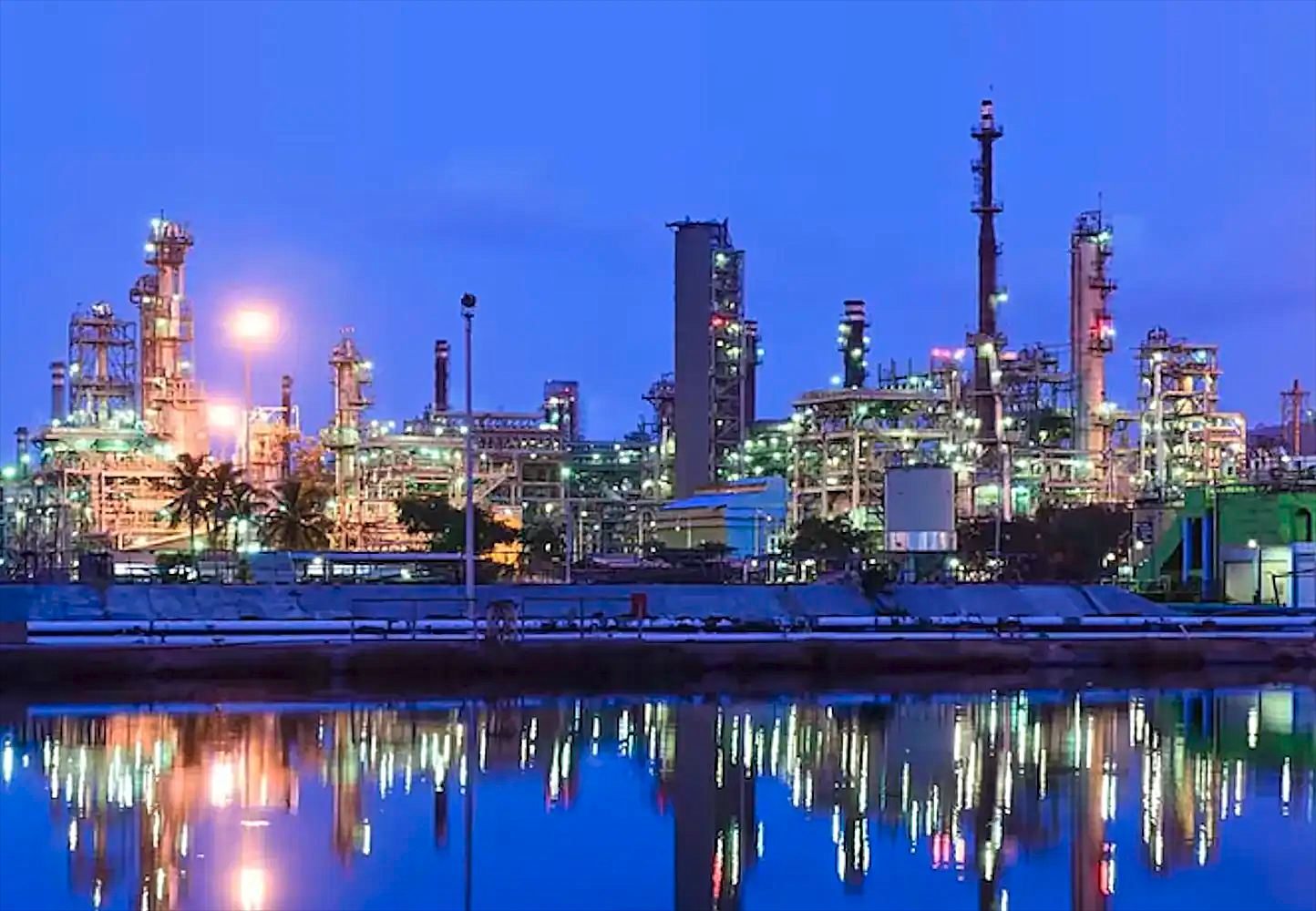
The Visakh Refinery's story is one of relentless reinvention. What began in 1957 as a modest 0.675 MMTPA facility operated by Caltex Oil Refining India on the shores of the Bay of Bengal has, over seven decades, grown into one of Asia's most sophisticated refining complexes. Nationalised and absorbed into HPCL in 1978, the refinery has undergone successive expansions — reaching 4.5 MMTPA by 1985, 7.5 MMTPA by 1999, and 8.3 MMTPA by 2010.
The most transformative chapter, however, is the Visakh Refinery Modernisation Project (VRMP) — a multi-billion dollar capital programme that has comprehensively rebuilt and expanded the refinery from the ground up. Anchored by a new 9.0 MMTPA CDU/VDU-IV train — the largest single atmospheric distillation unit commissioned in India — the VRMP pushed nameplate capacity to 15.0 MMTPA in mid-2025, making Visakh one of the largest refineries on India's east coast. The refinery surpassed this threshold in FY2024–25, setting an all-time throughput record.
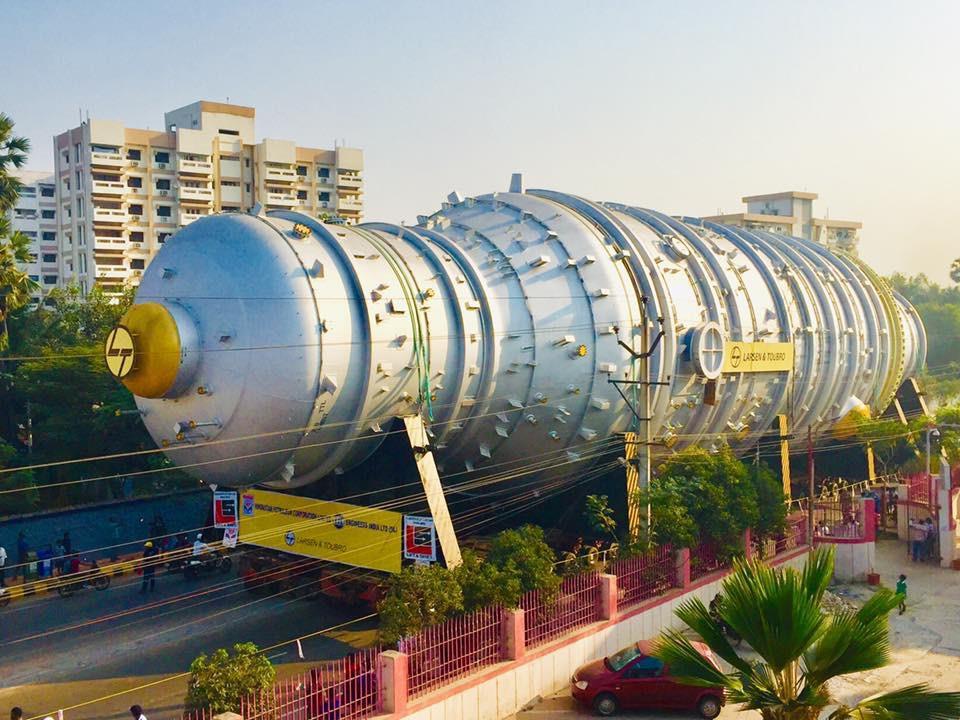
Heavy Lift News | Source: Construction Week (Jul 14, 2020)
The World's First LC-Max: Engineering at the Frontier
The centrepiece of the VRMP is the 3.55 MMTPA Residue Upgradation Facility, which processes the heaviest, most intractable fraction of crude oil — vacuum residue — and converts it into high-value transportation fuels compliant with India's stringent BS-VI emission standards.
At its core is the LC-Max technology, developed and licensed by Chevron Lummus Global (CLG). An ebullated-bed hydrocracking process operating at high temperature and pressure, LC-Max keeps catalyst particles in suspension within the reactor, enabling continuous addition and withdrawal of spent catalyst without shutting down. This makes it uniquely suited to processing the most contaminated, metals-laden residues that would rapidly deactivate conventional fixed-bed systems.
The Visakh RUF deploys three LC-Max reactors in series — each weighing approximately 2,200 tonnes with wall thicknesses of 25 cm — among the largest and heaviest hydrocracking reactors ever fabricated, all manufactured in India. Larsen & Toubro's Hydrocarbon Onshore division delivered the EPC on a turnkey basis, with Engineers India Limited (EIL) serving as Project Management Consultant.
The performance numbers are exceptional: the RUF achieves approximately 93% conversion of vacuum residue into distillates — gasoline, diesel, naphtha, and LPG — with only ~7% unconverted bottoms. Distillate yield has improved by up to 10 percentage points versus the pre-VRMP refinery configuration.
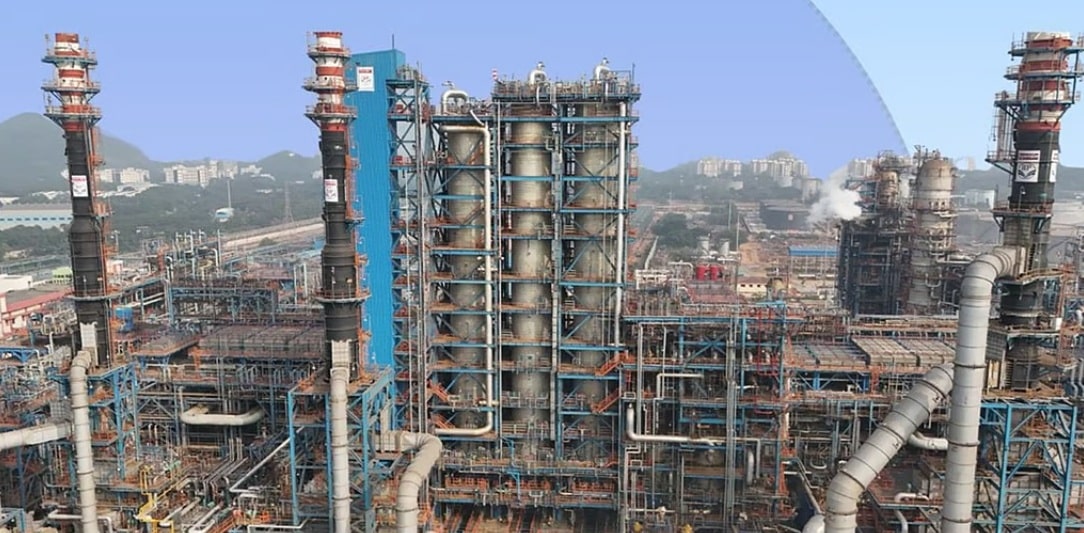
LC-Max resid hydrocracking plant | Source: Construction Week (Jan 6, 2026)
Closing the Loop: The ROSE SDA Integration
What makes the Visakh RUF particularly elegant from a process engineering standpoint is its integration with a ROSE® Solvent Deasphalting (SDA) unit, licensed by KBR. Rather than routing vacuum residue to the SDA as a pre-treatment step, the Visakh design places the SDA downstream of the LC-Max reactors — processing the unconverted vacuum bottoms from the LC-Max fractionator.
Using supercritical n-pentane as solvent, the SDA separates these LC-Max bottoms into a Deasphalted Oil (DAO) fraction — recycled hot at 260°C directly back into the LC-Max 2nd stage for further conversion — and a concentrated asphaltene/pitch stream, routed to the Pitch Solidification Unit for safe handling and disposal. The net pitch leaving the complex amounts to just ~75,000–100,000 tonnes per year — a remarkably small residue fraction for a 3.55 MMTPA residue processing complex, testament to the system's near-total conversion ambition.
Intelligence Built In
HPCL has not merely invested in hardware. The RUF is accompanied by an industry-first RUF Digital Suite — an AI-driven platform integrating real-time reactor monitoring, predictive analytics, and proprietary thermodynamic optimisation models. The system continuously tracks reactor conditions across all three LC-Max vessels, anticipates operational deviations before they occur, and optimises product yields in real time. It represents a new standard for digital refinery operations in India.
Complexity and Capability: A World-Class Configuration
With the RUF now online, the Visakh Refinery carries a Nelson Complexity Index (NCI) of 11.6 — placing it firmly among India's most sophisticated deep-conversion refineries and in the upper tier of Asian refining assets globally.
The full post-VRMP processing suite spans every major refinery conversion technology: three catalytic cracking trains including a propylene-maximising FCC-PC (Petrochemical) unit; a VGO hydrotreater; an once-through hydrocracker; continuous catalytic reforming; naphtha hydrotreating and isomerisation; diesel hydrotreating; a visbreaker; a bitumen blowing unit; two new hydrogen generation units totalling 226 ktpa licensed by Technip Energies; and new sulphur recovery plants. The refinery produces the full spectrum of transportation fuels — gasoline, diesel, jet fuel, LPG — all to BS-VI specification, alongside bitumen, propylene, and, imminently, sustainable aviation fuel (SAF) from a new co-processing demonstration plant targeting 10,000 MT/year from January 2027.
Hydrogen Generation Unit (Steam Reformer) | Source: Technip Energies
Widening the Crude Slate, Deepening the Margin
Perhaps the most strategically significant consequence of the RUF commissioning is the freedom it gives HPCL to process heavier, discounted opportunity crudes — including heavier Middle Eastern grades and potentially Venezuelan crude — that were previously unsuitable for the refinery's configuration. By converting heavy residue rather than disposing of it as low-value fuel oil, HPCL dramatically improves its per-barrel margin on every tonne of crude processed.
HPCL's chairman Vikas Kaushal confirmed in late January 2026 that the RUF was in stabilisation mode, processing lighter crudes initially, with steady-state operations targeted by end of March 2026 — at which point the shift to heavier crude grades will begin in earnest.
Looking Ahead
The Visakh Refinery's ambitions do not stop at 15 MMTPA. HPCL has announced plans to expand capacity to 18 MMTPA within four years and ultimately to 20 MMTPA, with management targeting a 16 MMTPA run rate in FY2025–26 as an interim milestone. Each expansion step will further leverage the RUF's deep-conversion capability and the refinery's growing complexity advantage.
For a facility that started life as a small coastal refinery nearly seven decades ago, the commissioning of the world's first LC-Max unit is more than a technical milestone — it is a statement of intent from India's energy sector about the scale and sophistication it is capable of achieving on its own terms.
Sources: HPCL Official Newsroom; Larsen & Toubro Press Release; Hydrocarbon Engineering; Argus Media; The Tribune; DD News; Technip Energies; Offshore Technology; Engineers India Limited.
#hpcl #visakhrefinery #india #larsen&toubro #chevronlummusglobal #kbr #clg #technipenergies #hindustanpetroleum